Fishing
Complete Guide to Striped Bass Fishing in Quebec
Discover the secrets of striped bass fishing in Quebec: prime habitats, proven techniques, peak seasons, and expert tips for successful outings.
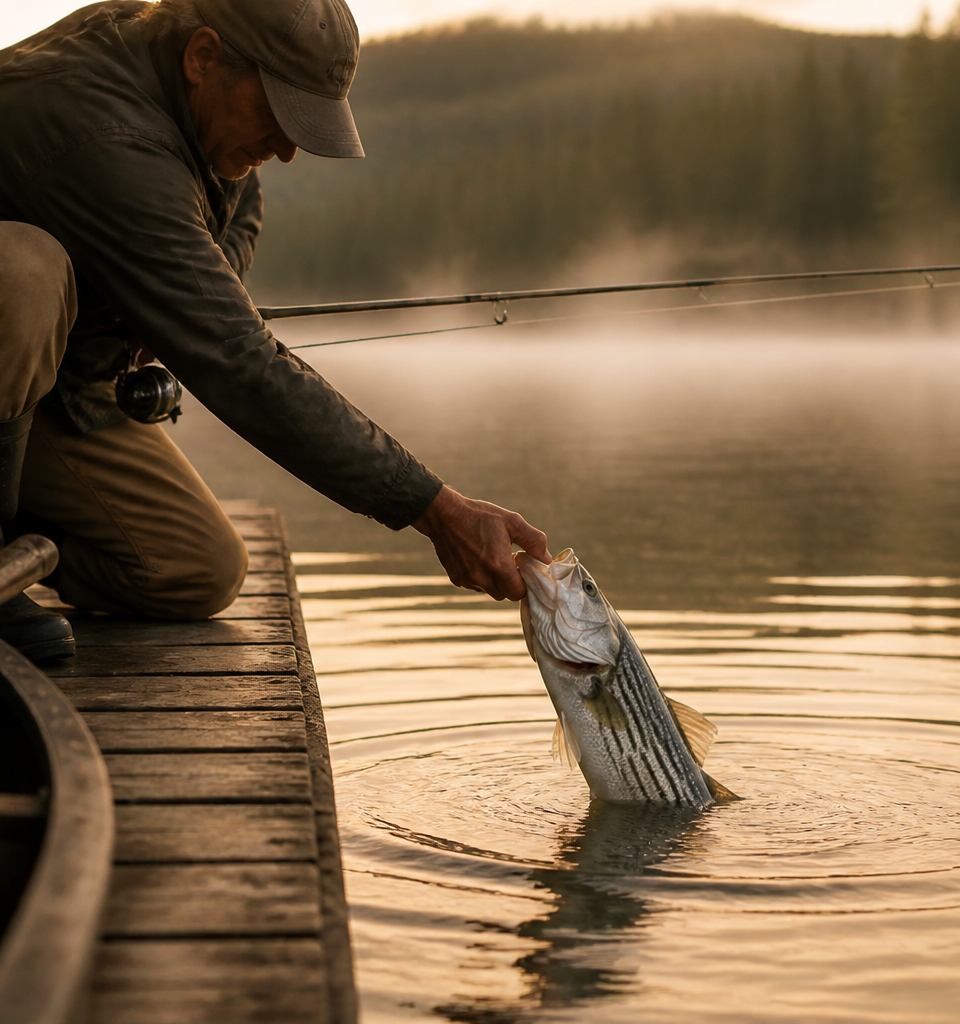
Species overview and identification
The striped bass (Morone saxatilis) is an iconic anadromous fish that continues to generate growing enthusiasm among Quebec sport anglers. Easily recognized by its elongated, robust silhouette, it sports a silvery coat with metallic reflections, often tinged with olive-green or bronze tones along its back. Its most defining characteristic is the series of seven to eight distinct, dark horizontal stripes running along its flanks, extending from the gills all the way to the base of the tail.
This predator features two separate dorsal fins; the first is supported by rigid, sharp spines, while the second possesses soft rays. Its large, cavernous mouth lacks prominent canine teeth but is lined with small patches of rough, sandpaper-like teeth designed to inhale and swallow prey whole. A powerful, slightly forked tail provides explosive propulsion when striking baitfish.
Along our coasts, landed specimens typically measure between 40 and 70 centimetres, although mature breeders can readily exceed 80 centimetres and surpass the 10-kilogram mark. Juvenile striped bass are sometimes confused with other estuarine species, but the unbroken alignment of their horizontal stripes and their streamlined body allow for unambiguous identification.
Habitat and geographic distribution
Striped bass are coastal fish that thrive in transition zones where fresh river water meets tidal saltwater. In Quebec, their presence is historically and geographically tied to the Gulf of St. Lawrence and the St. Lawrence Estuary. The southern Gulf population has seen a spectacular resurgence over recent decades, turning the Gaspé Peninsula—particularly Chaleur Bay and the eastern coastline of the peninsula—into a premier playground for surf and shore anglers.
This opportunistic hunter frequents a wide variety of marine structures. It is routinely found along wave-swept sandy beaches, around rocky points, inside coastal lagoons, and at the mouths of salmon rivers where incoming and outgoing currents concentrate forage. Barachois—coastal lagoons separated from the open sea by narrow sand spits—also serve as vital nursery areas and prime feeding grounds.
While the Gaspé remains the heart of this sport fishery, striped bass push farther up the St. Lawrence River during their summer feeding migrations, showing up throughout the Bas-Saint-Laurent and occasionally reaching the outskirts of Quebec City. The species adapts easily to wide fluctuations in salinity, roaming soft sandy bottoms and rocky reefs with equal ease.
Behaviour and seasonal patterns
The life cycle of the striped bass dictates its seasonal movements and feeding habits throughout the year. As waters begin to warm in the spring, mature adults gather in coastal estuaries to spawn, primarily in May and June. Once spawning is complete, these fish embark on an aggressive feeding migration to replenish their depleted energy reserves.
During the summer months, striped bass display strong schooling behaviour. Pods patrol the coastline, strictly timing their movements with the tides. As the tide rises, fish push into shallow flats, sand bars, eelgrass beds, and mudflats where crabs, sand shrimp, and juvenile baitfish are suddenly submerged. On the falling tide, they drop back into deeper channels, troughs, and bottlenecks to intercept forage swept out by the receding current.
As autumn approaches, their predatory drive kicks into high gear. Striped bass feed aggressively to build fat reserves for the winter ahead. They focus heavily on large schools of sand lance, capelin, herring, and rainbow smelt. When water temperatures drop sharply in late autumn, schools move toward deeper wintering grounds or sheltered estuarine basins, where their metabolism slows significantly until the following spring.
Best seasons and conditions
The prime window for striped bass fishing in Quebec runs from mid-June through late September, with peak activity hitting its stride during the heart of the summer. From opening day, fish are vigorous and actively cruising along the Gaspé coastline, capitalizing on the abundance of forage fish in the shallow surf.
Tidal conditions largely dictate your success on the water. The last two hours of the rising tide and the first two hours of the falling tide are undisputedly the most productive feeding windows. Water movement suspends nutrients, flushes out crustaceans, and exposes baitfish, triggering feeding frenzies that can often be spotted directly from shore.
Weather-wise, overcast days paired with a moderate chop are generally far superior to bright, calm conditions. Water lightly stirred up by the surf makes striped bass less wary, encouraging them to ambush prey right at the water's edge. Dawn and dusk also provide outstanding windows of action, as low light allows predators to surprise schools of baitfish in close proximity to shore.
Where and how to find it
Locating striped bass requires keen observation of the coastal landscape. Seabirds are the most reliable visual indicators from a distance: when terns and Northern gannets are repeatedly and frantically dive-bombing a specific area, it almost invariably signals a school of feeding bass driving sand lance to the surface.
On an apparently uniform beach, reading coastal structure is essential. Drop-offs, rip currents, sandbar troughs, rocky points, and foam lines created by breaking waves all act as natural ambush corridors. Bass often stage just behind the first wave break, where the churning surf stirs up bottom sediment and exposes marine invertebrates.
River mouths and tidal inlet passes connected to barachois are other critical hotspots. Currents in these bottlenecks flow continuously and funnel substantial quantities of food. Stealth is essential: walking heavily over shoreline cobble or casting a shadow over clear, shallow water can instantly spook a cruising school moving along the beach.
Recommended techniques and strategies
Striped bass fishing in Quebec is primarily pursued through two main approaches: casting artificial lures on spinning or casting gear, and saltwater fly fishing. For conventional gear, soft plastic jerkbaits rigged on jig heads are among the most versatile tools available. Slender, sand-lance-profile plastics worked with erratic twitches and pauses near bottom trigger sharp, violent strikes.
For topwater excitement, surface lures such as poppers and walk-the-dog style stickbaits are unmatched. Worked briskly over shallow flats or along rocky points, they trigger unforgettable visual strikes where fish erupt through the surface to crush the bait.
Fly anglers also enjoy phenomenal success along Quebec's shoreline. Casting sand lance imitations tied with bucktail and synthetic fibres (such as the classic Clouser Minnow or Lefty's Deceiver) on intermediate or sink-tip fly lines allows you to cover various depths with exceptional finesse.
- Favour natural colour schemes such as white, chartreuse, blue, and olive-grey in clear water.
- Switch to darker silhouettes or high-contrast, fluorescent patterns in murky or turbulent surf.
- Systematically vary your retrieve speeds and cadence until you find the exact rhythm triggering bites.
Equipment and gear
Tackling coastal surf conditions and the sheer strength of a hard-running saltwater fish requires sturdy, corrosion-resistant gear. A spinning rod between 8 and 10 feet in length, rated Medium-Heavy with a fast action, provides the backbone needed to punch long casts into stiff onshore winds and throw lures weighing 20 to 60 grams.
A saltwater-sealed spinning reel in the 4000 to 5000 size range is ideal. Spool it with 20- to 30-pound braided line to maximize casting distance and bite detection. Tying on a 20- to 30-pound fluorocarbon leader of at least one metre is essential for stealth and to prevent abrasion against sharp rocks and mussel beds.
For fly fishing, a 9-foot, 8- or 9-weight saltwater fly rod is the standard setup. Pair it with a reel featuring a smooth, powerful drag system and plenty of backing capacity. A stripping basket is indispensable to keep your shooting line from tangling in breaking waves or catching on beach gravel.
- Breathable chest waders and a windproof, waterproof wading jacket to handle surf spray.
- Quality polarized sunglasses to spot cruising fish and read bottom structure through the waves.
- Long-nose pliers for quick, safe hook removal.
Regulations, licences and ethical practices
Striped bass fishing is subject to strict management regulations designed to sustain healthy populations and protect the fishery for the long term. Open season dates, daily catch and possession limits, as well as slot size limits (length brackets established to protect juvenile fish as well as large prime spawners) vary depending on the specific fishing management zone.
The use of specific terminal tackle, notably barbless or pinched-barb circle hooks, is frequently mandatory or strongly recommended to minimize deep hooking when fishing with bait or specific rigs. Proper fish handling is critical for any fish intended for release: keep the bass in the water as much as possible, avoid touching its gills, and support its body horizontally with both hands—never hang a large bass by its lower jaw.
To consult all current regulations, open zones, and licensing requirements, visit the official website: Government of Quebec (hunting and fishing). Regulations change annually: always verify official rules before heading out.
Conservation, population and ecosystem role
The modern history of striped bass in Eastern Quebec represents a remarkable success story in ecological resilience and wildlife stewardship. Once facing severe declines in parts of the St. Lawrence during the twentieth century due to overfishing and habitat degradation, the species has rebounded dramatically thanks to targeted management, strict protections, and the robust recovery of the southern Gulf stock.
As top-tier predators in coastal and estuarine food webs, striped bass play a pivotal role in regulating populations of small forage fish and benthic invertebrates. Their widespread presence influences nearshore marine dynamics, shaping interactions across forage species and competing predators.
Biologists continue to closely monitor these populations, studying their interactions with other prized species such as Atlantic salmon and sea-run brook trout. Every angler contributes directly to conservation by following ethical catch-and-release practices and reporting tagged fish or relevant field observations to monitoring networks.
Planning a guided trip or outfitter stay
Heading out after striped bass along Quebec's vast coastline can feel intimidating given the endless expanses of shore and the complexity of local tides. Booking with professional outfitter guides transforms your experience entirely. These seasoned pros know the exact travel corridors of roaming schools, the specific rocky points that produce on low tide, and which lure colours match the water clarity on any given day.
A guided outing ensures you make the most of every tide window, whether you are casting from a boat inside sheltered bays or wading remote, wild shorelines rarely reached by casual anglers. Outfitters supply reliable water safety, premium gear tailored to marine conditions, and personalized coaching to refine your casting technique and retrieve styles.
Whether you are introducing your family to the thrill of coastal saltwater fishing or chasing a trophy-class bass on the fly, plan your next maritime adventure with confidence. To find the right accommodations and tailored guided packages in Quebec, explore outfitter offerings and book your stay through MyOutfitters.
Frequently asked questions
What is the best tide stage for catching striped bass?
The last two hours of the incoming tide and the first two hours of the falling tide are generally the most productive. Tidal currents concentrate baitfish and invertebrates, drawing striped bass into the shallows along the beach to feed aggressively.
What type of rod should I choose for shore casting?
An 8- to 10-foot Medium-Heavy spinning rod with a fast action is ideal. It delivers the casting distance needed to punch heavy lures into coastal headwinds and provides enough backbone to control powerful fish in the surf.
Which lures are best for beginners targeting striped bass?
Slender 4- to 6-inch soft plastic jerkbaits rigged on jig heads, imitating sand lance, are essential and easy to fish. Surface poppers are also top producers, delivering explosive visual surface strikes during calmer conditions.
Is fly fishing effective for striped bass in Quebec?
Yes, fly fishing is exceptionally effective along beaches, sand flats, and rocky points. A 9-foot, 8- or 9-weight fly rod paired with an intermediate or sink-tip line and baitfish patterns like the Clouser Minnow delivers outstanding results.
Do I need a boat to catch striped bass in Quebec?
No, a large portion of the sport fishery takes place on foot by wading sandy beaches, fishing rocky points, or casting from public wharves. A boat simply provides additional access to offshore reefs, shoals, and deeper tidal rips.
How should I handle a striped bass for a safe release?
Keep the fish in the water as much as possible and handle it with wet hands, supporting its belly horizontally without touching the gills. Use long-nose pliers to remove barbless hooks quickly, and revive the fish facing into the current before letting it swim away.
What are the top regions in Quebec for striped bass fishing?
The Gaspé Peninsula—particularly the Chaleur Bay coastline and the eastern tip of the peninsula—is the premier destination. Striped bass also travel up into the St. Lawrence Estuary and the Bas-Saint-Laurent throughout the summer.
Why is braided line preferred over monofilament for this fishery?
Braided line has a much thinner diameter and zero stretch, allowing for longer casts into ocean breezes and providing superior sensitivity to detect subtle takes at long distances, all while offering high abrasion resistance during hard fights.
How do seabirds help locate schools of striped bass?
Terns and Northern gannets diving repeatedly into the water signal that predatory fish beneath are herding schools of baitfish to the surface. Casting directly near these diving birds often connects you immediately with feeding striped bass.
What are the main benefits of hiring an outfitter guide?
A professional guide understands local tide timing, safe coastal access points, and exact fish movements based on daily weather. They supply the right tackle and accelerate your learning curve on productive retrieves and presentation techniques.