Fishing
Chinook Salmon Fishing in British Columbia: Expert Guide
Discover how to fish for Chinook salmon in British Columbia: run timing, legendary rivers, ocean trolling tactics, and expert advice for king salmon.
Key takeaways
- The main run extends from May through October across the Pacific coast and the province's major river basins.
- Adults stage along saltwater shorelines, deep fjords, and powerful river systems like the Fraser and Skeena.
- Downrigger trolling in saltwater and float drifting or heavy spoon casting in rivers remain the top methods.
- A provincial freshwater licence or federal tidal licence with a salmon conservation stamp is mandatory before fishing.
- Rely on heavy-duty tackle to handle the blistering runs of a predator that frequently tops thirty pounds.
How to identify Chinook salmon among other salmon species?
Chinook salmon stand apart from other Pacific salmon by their entirely black lower gums and irregular dark spots covering both their back and the upper and lower lobes of their caudal fin. Known as king salmon or spring salmon, *Oncorhynchus tshawytscha* is the largest of the five Pacific salmon species. Its bright chrome ocean coat gradually shifts to dark copper, brick red, or olive green once it enters rivers to spawn. Mature fish also develop a pronounced hooked jaw, known as a kype, especially noticeable in breeding males.
Unlike coho salmon, which have white gums bordered by black, the Chinook features an entirely dark mouth. Its body is deep, thick, and torpedo-shaped, built to push through the heavy currents of estuaries and high-flow rivers. The scales are small and firmly embedded in thick skin. The adipose fin, characteristic of salmonids, is prominent and often marked with small dark speckles.
In weight, mature Chinook routinely exceed thirty pounds, and true coastal giants still cross the legendary fifty-to-sixty-pound mark in northern river systems. Their dense muscle structure and broad caudal peduncle generate unmatched burst speed, testing the limits of heavy terminal tackle.
Where to find Chinook salmon in British Columbia?
Chinook salmon inhabit a wide range of aquatic ecosystems across British Columbia, moving between open ocean swells, sheltered coastal fjords, and massive inland river networks. In tidal waters, they patrol the entire Pacific coast, notably around Vancouver Island, the Strait of Georgia, the Haida Gwaii archipelago, and the intricate passages of the Great Bear Rainforest. Coastal waters rich in herring and needlefish serve as their primary feeding grounds throughout their marine growth cycle.
When spawning runs begin, Chinook push into the province's largest watersheds. The Fraser River drainage stands out as one of the most productive systems, where anglers also pursue white sturgeon fishing on the Fraser River: Survival guide for river giants. Farther north, the Skeena, Nass, and Kitimat river systems host legendary runs of fish famous for their exceptional size.
Secondary tributaries provide well-oxygenated gravel beds ideal for spawning. In river systems, these fish hold in deep resting pools located just downstream of heavy rapids, conserving their energy out of the main current before tackling upstream barriers.
Chinook salmon migration behaviour and life cycle
The life cycle of the Chinook salmon is an anadromous journey spanning three to seven years. After hatching in freshwater during the spring, fry remain in rivers anywhere from a few months for coastal populations to a full year for interior stocks. They then migrate out to sea as smolts, entering a period of rapid marine growth sustained by an aggressive predatory diet of forage fish, krill, and squid.
In saltwater, king salmon cruise along drop-offs and coastal shelves, shadowing schools of baitfish at depths that shift with daylight and tidal movement. Unlike species that stay near the surface, mature Chinook spend much of their adult life between twenty and eighty metres down, where water temperatures remain cold and stable.
Spawning instinct guides mature adults back to their natal streams with exceptional precision. Once they pass through the estuary into freshwater, their digestive tracts begin to shut down and they cease feeding. Strikes on lures or flies in rivers are driven by territorial aggression, reflex, or annoyance rather than hunger.
Best times for Chinook salmon fishing in British Columbia
The Chinook salmon season runs from spring through autumn, with distinct peaks depending on whether you fish saltwater or rivers. In the ocean, trophy fish arrive as early as May and June along the outer coast of Vancouver Island and around Haida Gwaii. Mid-summer, from July through late August, brings peak numbers in tidal waters, offering prime conditions to combine salmon and halibut in British Columbia: the practical guide.
In river systems, timing depends on the distance between the beat and the ocean mouth. Coastal rivers welcome their first runs by mid-June, whereas interior fisheries peak between mid-July and late September. Early fall rains and moderate river rises trigger fresh pushes of fish heading upriver.
Weather and water conditions dictate daily success. Lightly stained water following a rain event provides good cover, making fish more willing to strike. In tidal waters, slack tide periods concentrate bait schools and trigger intense feeding windows among cruising kings.
Locating Chinook salmon holding pools in rivers
Finding Chinook in freshwater requires reading the water to locate spots where heavy current transitions into slower flow. These powerful fish avoid shallow riffles and hold in deep transition pools directly below canyon stretches, boulder rapids, or river confluences. A deep pool flanked by a gravel bar creates a prime staging lane where travelling pods rest.
Outside river bends carved by erosion also provide excellent lies, especially around submerged logs and large boulders that break the bottom current. Chinook hold tight to the riverbed, using the friction of the gravel substrate to minimise energy output. A gentle boil or seam on the surface above a deep depression often signals an occupied lie.
In saltwater, locating fish relies on bathymetric charts and sonar. Rocky points exposed to tidal currents, submerged banks, and narrow channels between islands funnel plankton and baitfish, creating ambush zones where large kings actively hunt.
Effective techniques for catching Chinook salmon
Deep trolling with electric downriggers is the gold standard for targeting Chinook in coastal saltwater. This technique allows you to present flashers with spoons, hoochies, plugs, or whole frozen herring in plastic helmets precisely at the depths where fish mark on the sonar. While anglers sometimes target the top of the water column when Coho salmon hit surface lures in BC, Chinook typically require fishing near bottom structure or inside the thermocline.
In rivers, float fishing (drift fishing) is exceptionally effective. This setup suspends bait or artificials just off the riverbed beneath a balanced slip float. Cured roe skeins, soft plastic beads matching salmon eggs, or oversized yarn presentations fished on a single hook consistently trigger strikes from fresh-run kings.
Casting heavy gear with large spinners or wobbling spoons draws reactive strikes from resting fish in moderate flows. Two-handed fly fishing with Spey rods has also grown significantly: heavy sink tips paired with large, articulated streamers in bright pink, blue, or black get down into deep holding slots where kings react out of territorial instinct.
Choosing the right tackle for Chinook salmon
The sheer power of Chinook salmon demands uncompromising tackle. In saltwater, a 9-to-10.5-foot medium-heavy downrigger rod paired with a smooth, large-capacity single-action mooching reel or levelwind spooled with 50-pound braid makes a reliable setup. A 30-to-40-pound fluorocarbon leader provides essential abrasion resistance against sharp teeth and underwater structure.
For river float fishing or casting heavy hardware, opt for a stout 10-to-11-foot rod rated to throw one- to three-ounce weights. A 4000-to-5000-size spinning reel or round baitcaster with a sealed drag is necessary to turn fish intent on running downstream into fast rapids. Single, barbless hooks are mandatory across most waters to ensure solid hooksets and safe catch-and-release handling.
Fly anglers should rely on a 9- or 10-weight Spey rod in the 13-to-14-foot range, paired with a large-arbour reel holding at least 200 yards of heavy backing. Skagit-style shooting heads combined with tungsten sink tips are essential for swinging heavy flies through deep, turbulent pools.
Sport fishing regulations for Chinook salmon in British Columbia
Fisheries management in British Columbia is divided between provincial authorities for non-tidal waters and Fisheries and Oceans Canada (DFO) for tidal areas. Every angler must hold a valid fishing licence and purchase a salmon conservation stamp before targeting or retaining Chinook. On virtually all freshwater systems, single barbless hooks are mandatory to protect wild stocks.
Daily limits, size slots, and seasonal closures vary significantly by management area and run health. Certain river systems require the mandatory release of all wild Chinook to protect vulnerable stocks, permitting retention only of marked hatchery fish identified by a healed adipose fin clip. To review current regulations and fishery notices, visit the Government of British Columbia.
Regulations change annually: always verify current retention limits and fishery notices before heading out on the water.
Conservation challenges for wild coastal Chinook salmon
Wild Chinook salmon are a keystone species in the Pacific Northwest, anchoring both aquatic and terrestrial ecosystems. Every year, post-spawning salmon carcasses deliver vital marine-derived nitrogen and phosphorus into river valleys, feeding old-growth temperate rainforests and supporting wildlife from grizzly bears to bald eagles.
Wild populations face ongoing pressures from freshwater habitat degradation, shifting ocean conditions, and past commercial harvest. Furthermore, Chinook represent the primary prey of endangered Southern Resident killer whales, making sustainable fisheries management critical.
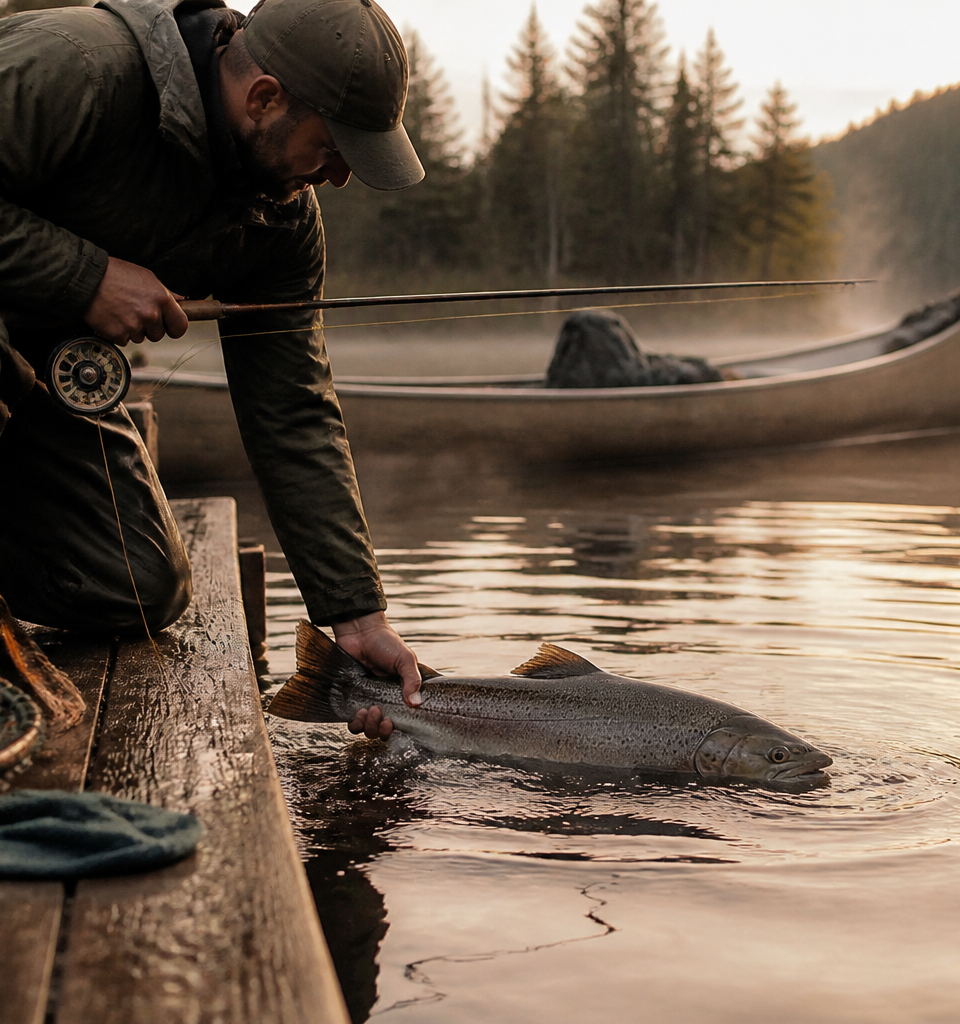
Sport anglers play an active conservation role by practicing careful catch-and-release: keeping fish submerged while unhooking, using knotless rubber nets, and minimising handling time ensure the highest survival rates for spawning fish.
Booking a Chinook salmon fishing trip in British Columbia
Booking with a professional outfitter or guide turns a remote fishing trip into a safe, productive adventure. British Columbia's coastal geography—characterised by massive tides, sudden fog, and heavy glacial currents—requires specialised local knowledge and navigation skills. An experienced guide knows exactly which pool holds fish based on daily water levels or which coastal passage lights up on the tide change.
Regional fishing lodges provide turn-key packages that include wilderness lodging, meals, well-equipped boats, and heavy tackle suited for king salmon. You can explore vetted lodge and guide options by browsing fishing outfitters in British Columbia.
To experience the adrenaline of a giant king salmon peeling line in BC's wilderness waters, plan your next guided trip through MyOutfitters and find the right destination for your season.
Frequently asked questions
When is the best time to fish for Chinook salmon in British Columbia?
The peak season runs from June through September for intercepting main runs. Saltwater trolling starts strong in early summer around outer islands, while river systems see their best action between mid-July and late August as the largest fish enter freshwater.
What are the top rivers for Chinook salmon in BC?
The Fraser and Skeena river systems are the most productive watersheds in the province. The Kitimat, Nass, and Vancouver Island rivers like the Campbell also offer excellent opportunities to land trophy salmon in scenic settings.
Do I need a special licence for Chinook salmon in British Columbia?
Yes, you must hold a valid provincial freshwater licence or federal tidal water licence, plus a mandatory salmon conservation stamp. This stamp is required even if you release all fish caught.
What is the average size of a Chinook salmon caught at a lodge?
Most adult fish landed range between 15 and 35 pounds. Northern river and coastal fisheries regularly produce kings over 30 pounds, historically celebrated as Tyee salmon when they cross the thirty-pound threshold.
What tackle should a beginner use for Chinook salmon?
A 10-foot medium-heavy rod paired with a 4000-size spinning reel or round baitcaster spooled with 40-to-50-pound braid is a versatile starter setup. Pair it with a heavy fluorocarbon leader and large spoons or spinners armed with single barbless hooks.
Can you fly fish for Chinook salmon in rivers?
Yes, two-handed Spey casting with 9- or 10-weight rods is very effective in large rivers. Heavy Skagit lines and fast sink tips are necessary to swing large, weighted streamers near the bottom where Chinook hold.
How do you tell a wild Chinook salmon from a hatchery fish?
Hatchery-raised salmon are marked by a missing adipose fin, which is clipped prior to juvenile release. A wild salmon retains an intact adipose fin on its back between the dorsal fin and the tail.
How long does a fight with a large Chinook salmon typically last?
A battle with a mature king generally lasts between 15 and 45 minutes depending on river current, fish size, and water temperature. Their sustained runs require steady rod pressure and a properly adjusted drag.
What is the difference between a Chinook salmon and a Coho salmon?
Chinook salmon have solid black lower gums and dark spots covering both lobes of their tail fin. Coho salmon have white gums edged in black and spots primarily restricted to the upper tail lobe. Chinook also grow significantly larger.
Why should you book a guided trip for Chinook salmon?
A professional guide provides safe navigation through tidal passages and swift currents, understands local run timing, and supplies fine-tuned heavy tackle, giving you the best odds of landing a trophy fish.