Fishing
Coho Salmon Fishing in British Columbia: Expert Guide
Discover top techniques, productive rivers, and prime seasons for successful Coho salmon fishing in British Columbia with expert tips from seasoned guides.
Key takeaways
- Peak season runs from late summer through late fall along coasts and rivers.
- Coho actively cruise coastal estuaries, sheltered ocean inlets, and fast-flowing coastal rivers.
- Streamer fly fishing and casting spoons with light tackle are exceptionally effective in river currents.
- A valid sport fishing licence with a salmon stamp is required for both tidal and freshwater fishing.
- Focus on slow seam edges and deep pools as rising tides push fish through estuaries.
Identifying Coho salmon among Pacific salmon species
Coho salmon, scientifically named *Oncorhynchus kisutch* and widely known as silver salmon, stand out for their brilliant metallic shine and energetic fighting style. In the ocean or fresh out of the salt, they display a steel-blue back tinged with green, bright silver flanks, and a pure white belly. Their gumline is white along the base of the lower jaw teeth, a critical feature for distinguishing them from their larger cousin, detailed in our guide on Chinook Salmon Fishing in British Columbia: Expert Guide.
During their freshwater spawning migration, Coho undergo a dramatic metamorphosis. Males develop a pronounced hooked snout called a kype, while their flanks turn brick red to deep maroon with an olive-green head. A Coho's tail fin typically features small black spots only on the upper lobe, preventing confusion with other Pacific salmon species.
Mature specimens landed in coastal river systems commonly weigh between three and six kilograms (7 to 13 pounds). Exceptional late-season fish can surpass eight kilograms (18 pounds). Their streamlined profile and dense muscle mass make them one of the most acrobatic and unpredictable game fish on the end of a line.
Where do Coho salmon live in British Columbia?
Coho salmon inhabit the entire British Columbia coastline, from southern Vancouver Island to the Alaska border. In their marine phase, schools feed along rocky shorelines, in sheltered channels like the Strait of Georgia, and around Haida Gwaii. These waters are rich in sand lance, herring, and krill, fueling rapid growth and conditioning.
When the spawning urge hits, Coho enter swift coastal rivers and major drainage basins. They run up the vast Skeena River system in the north, as well as shorter coastal streams near Campbell River and Bella Coola. Anglers looking to diversify their ocean outings often choose combining salmon and halibut fishing in British Columbia to take full advantage of fertile coastal bays.
In freshwater, Coho favour distinct holding structures over fast main currents. They seek out calm side channels, deep back eddies, submerged logjams, and the mouths of clear tributaries. This territorial behaviour in rivers makes them readily accessible to both wading anglers and small watercraft.
Understanding the wild Coho salmon migration cycle
The life cycle of Coho salmon begins in freshwater gravel beds, where fry emerge in spring after spending winter as eggs. Unlike some Pacific salmon that head straight out to sea, young Coho spend one to two full years rearing in their natal streams. During this parr stage, they feed on aquatic insects and establish strong territorial holds around woody debris.
Once they transition into silvery smolts, Coho migrate out to the Pacific Ocean for approximately eighteen months of intensive feeding. In saltwater, their aggressive appetite drives them to hunt schools of baitfish, accelerating their weight gain. This ocean phase builds their trademark predatory strike, making them quick to react to fast, flashy presentations.
In the fall of their third or fourth year, Coho salmon navigate back to their home rivers guided by an acute sense of smell. They push upstream in successive pulses, often timed with high spring tides and rising water levels following autumn rains. Once in freshwater, they gradually stop feeding but retain a strong territorial striking instinct.
When to fish for Coho salmon in British Columbia?
The prime window for targeting Coho salmon in British Columbia runs from late July through mid-November, depending on the fishery. Saltwater and coastal tidal fishing hit their peak through July, August, and September as schools gather near river mouths. Surface takes are frequent, and ocean-fresh fish deliver blistering runs and leaps.
Freshwater timing varies by latitude. In Northern BC and along the Central Coast, the first major river runs enter in late August and peak through September. Across Southern BC, Vancouver Island, and the Lower Mainland tributaries, peak river action spans October through mid-November, set against vibrant autumn scenery.
Weather conditions strongly influence fishing success. Overcast days with light rain that bumps river flows without dirtying the water trigger heavy pushes of fresh fish. Low-light periods at dawn and dusk consistently produce the most aggressive strikes on both flies and lures.
Finding the best Coho salmon rivers
Locating productive holding water on a river requires reading current seams and bottom structure. Coho avoid expending energy in heavy whitewater, preferring transition zones instead. Tailouts—where deep pools flatten out before the next drop—are prime resting spots where fish hold in pods.
Tributaries across the southern river systems offer excellent opportunities, as do adjacent waterways where anglers also pursue White Sturgeon Fishing on the Fraser River: Guide to Tackling Giants. Wood-lined bends, log-strewn pools, and slower water below tributary confluences deserve thorough prospecting. When a pod settles into a pool, subtle surface boils and rolling fish often give away their location.
In estuaries, tidal movements dictate fish behaviour. On incoming tides, Coho push into channels and cruise along sandbars hunting bait before crossing upstream into freshwater. Setting up near the estuary mouth a few hours before high tide allows you to intercept ocean-fresh, hard-striking fish as they arrive.
Best techniques for catching aggressive Coho salmon
Spin fishing with inline spinners and spoons remains a time-tested, exceptionally effective approach. Weighted spoons and spinners in fluorescent pink, chartreuse, blue, or silver produce strong flash and vibration that trigger aggressive territorial strikes. A twitching retrieve with short pauses near bottom structure or along wood cover frequently provokes hard hits.
Fly fishing is one of the most thrilling ways to target Coho in both rivers and estuaries. Stripping streamer patterns imitating baitfish or leeches on colourful hooks—featuring pink, chartreuse, or purple—delivers outstanding results. A fast, erratic strip often incites a Coho to charge and inhale the fly before it escapes.
In saltwater, coastal trolling with downriggers allows precise coverage of targeted depths. Pairing a rotating flasher with a spoon, hoochy, or baitfish imitation triggers solid takes from active Coho cruising along underwater drop-offs and kelp edges.
Choosing the right gear for Coho salmon
For river spinning, an 8.5- to 10-foot medium to medium-heavy rod paired with a 3000 to 4000 series reel provides the right balance. Spool up with 20- to 30-pound braided mainline connected to a 12- to 17-pound fluorocarbon leader, offering strength against sharp teeth and abrasion resistance around structure while remaining stealthy in clear water.
Fly anglers generally rely on a 9- to 10-foot 7- or 8-weight fly rod capable of punching bulky streamers through coastal winds. A large-arbour reel with a smooth, reliable drag system is essential for controlling sudden, fast runs. Carry floating lines for shallow tailouts along with sink-tip lines in various sink rates to work deeper holding pools.
For personal gear, durable breathable waders with felt or studded boots are vital for navigating slick, rocky riverbeds. A pair of polarized sunglasses with amber or copper lenses helps you spot fish resting in shaded seams and make precise casts.
Coho salmon fishing regulations in British Columbia
Sport fishing in British Columbia is subject to strict regulations that differentiate between tidal saltwater and non-tidal freshwater fisheries. Federal authorities manage marine areas and anadromous salmon, while the provincial government oversees freshwater environments. You must hold a valid sport fishing licence with a Pacific Salmon Conservation Stamp before casting a line.
Across most coastal rivers, single barbless hooks are mandatory to facilitate safe, quick releases. Daily harvest and possession limits vary by watershed and frequently distinguish between wild (unclipped) fish and hatchery-marked fish missing their adipose fin. For current provincial rules, regional retention limits, and seasonal closures, consult the Government of British Columbia.
Adhering to retention quotas and seasonal closures directly protects the sustainability of this resource for local communities. Regulations change yearly: always verify local orders before hitting the water.
Conserving wild Coho salmon populations
Coho salmon play an indispensable ecological role in the temperate rainforests of Canada's West Coast. After spawning, their carcasses deposit marine-derived nutrients into rivers, enriching riparian zones and supporting diverse wildlife. From bald eagles to grizzly bears, many species rely on this fall migration for survival.
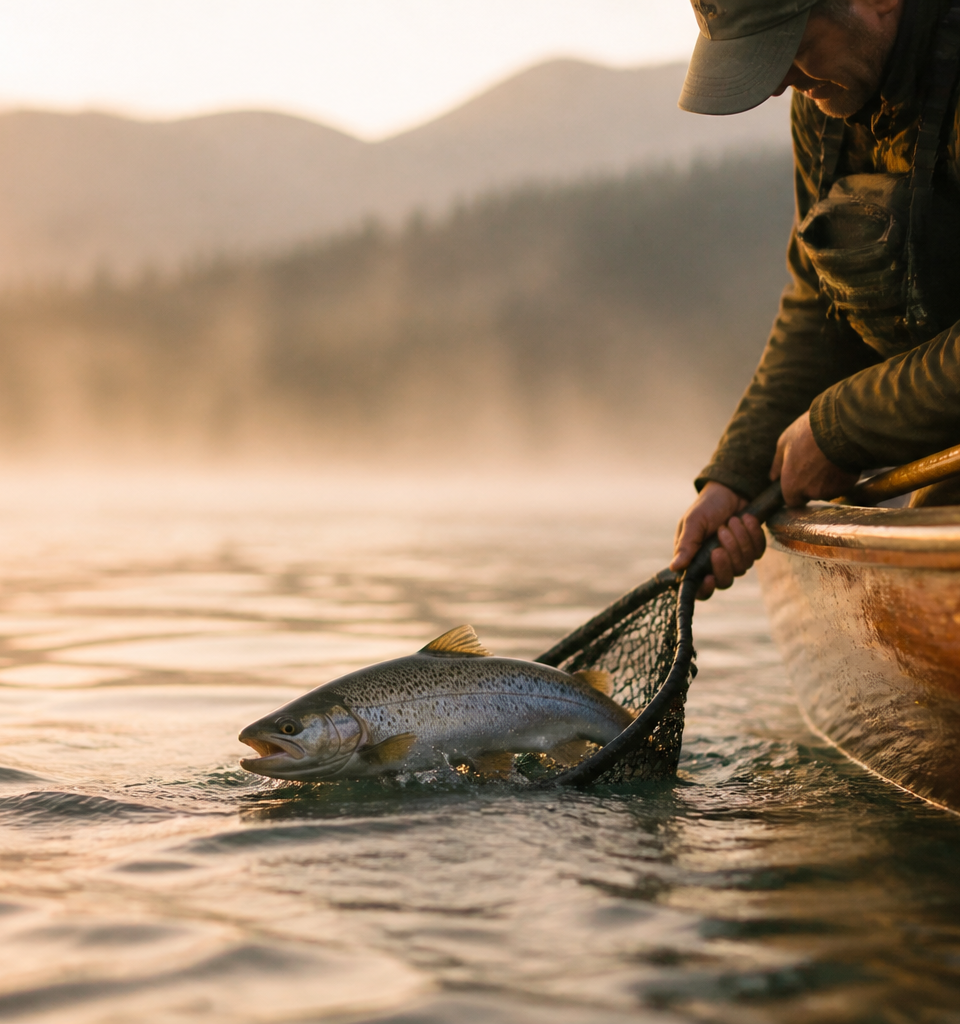
With changing river temperatures and environmental pressures, ethical angling practices are essential. When practicing catch-and-release, keep fish in the water at all times, avoid touching their gills, and use a knotless rubber net. Revive the salmon gently facing into the current until it swims away powerfully under its own strength.
Community monitoring programs and conservation hatcheries help sustain healthy populations across coastal basins. Responsible anglers minimize bank erosion and prioritize releasing large wild spawners, helping preserve this world-class fishery for future generations.
Booking a guided Coho salmon trip in British Columbia
Booking a professional guided package at an established lodge elevates a fishing trip into an unforgettable wilderness experience. Local guides possess in-depth knowledge of river levels, tides, and holding pools where active fish congregate, putting you on prime water at the best times of day.
All-inclusive packages provide top-tier gear, purpose-built jet boats or drift boats, and comfortable lodging after long days on the water. To compare trip options and plan your route in Western Canada, explore reputable fishing outfitters in British Columbia to access prime wild river systems.
Plan your next angling adventure with confidence through MyOutfitters, connecting you with verified operations and guided packages for memorable Coho salmon fishing across British Columbia.
Frequently asked questions
When to fish for Coho salmon in British Columbia?
Coho salmon fishing is productive from July through November depending on the venue. Saltwater fishing peaks from July through September, while freshwater river fishing is at its best from September to mid-November as fish move upstream to spawn.
Where to find Coho salmon in BC rivers?
Coho hold in slower water including pool tailouts, deep bends, back eddies, and logjams. They avoid heavy main currents, preferring shaded resting pools and calm seams below tributary mouths.
What spin fishing tackle works best for Coho salmon?
An 8.5- to 9.5-foot medium-heavy rod paired with a 3000 to 4000 size reel works very well. Rig up with 20- to 30-pound braid and a 12- to 15-pound fluorocarbon leader with a smooth, well-adjusted drag.
What fly rod size is best for Coho salmon?
A 9- to 10-foot 7- or 8-weight fly rod is the standard choice. It provides the backbone needed to cast weighted streamers into the wind and manage the explosive runs of river Coho.
Which lures are most effective for Coho salmon?
Weighted spinners and spoons in fluorescent pink, chartreuse, blue, or silver are top producers. Twitching jigs and large streamer flies also provoke aggressive territorial strikes from holding fish.
Are barbless hooks mandatory in British Columbia?
Yes, single barbless hooks are mandatory in almost all freshwater and tidal waters in British Columbia to minimize hook injuries and facilitate rapid, safe release of protected fish.
Can you keep Coho salmon caught in rivers?
Retention rules vary by watershed and strictly distinguish between wild and hatchery fish. Retention is frequently restricted to hatchery fish with a healed adipose fin clip. Always check current watershed regulations before harvesting.
How do you tell a Coho salmon from a Chinook salmon?
Coho have a white lower gumline at the base of their teeth, whereas Chinook have completely black gums. Additionally, Coho tails have small black spots only on the upper lobe, unlike the fully spotted tail of a Chinook.
What fishing licence do you need for Coho in British Columbia?
You need a BC non-tidal sport fishing licence for freshwater or a tidal waters sport fishing licence for ocean and estuary fishing, along with a valid Pacific Salmon Conservation Stamp.
How much does a guided Coho salmon fishing trip cost?
Guided trip pricing varies by package, ranging from day trips on drift or jet boats to all-inclusive fly-in wilderness lodge stays with meals, guiding, and gear included.