Fishing
Trophy Northern Pike Fishing in Alberta: Tactics and Top Destinations
Learn how to target giant Northern pike in Alberta, from weed-choked northern bays to southern reservoirs, using proven techniques and expert advice.
Key takeaways
- The prime season runs from late May through early autumn, with outstanding hardwater opportunities midwinter.
- Alberta Northern pike congregate in thick weedbeds, shallow bays across large boreal lakes, and submerged rocky structures.
- Topwater lures, heavy spoon lures, and jointed swimbaits reliably trigger explosive strikes from trophy predators.
- A valid Alberta provincial sportfishing licence and strict adherence to harvest limits or mandatory catch-and-release rules are required.
- Using a steel or heavy fluorocarbon bite leader protects your line from the pike's razor-sharp teeth.
Identifying and understanding Northern pike
Northern pike are immediately recognizable by their elongated, torpedo-shaped body, olive-green mottled flanks, and jaws filled with razor-sharp teeth. This freshwater apex predator features a dorsal fin positioned far back near the tail, delivering blistering bursts of speed to ambush passing prey. Light horizontal bean-shaped markings over a dark background distinguish the pike from muskellunge, which typically display dark vertical bars.
Looking closely at its flattened snout and upward-facing eyes highlights its ability to scan the water column above and ambush anything crossing its strike zone. Hundreds of needle-sharp, backward-canted teeth line its palate, preventing hooked prey from escaping. Anglers familiar with Northern pike fishing in Quebec: complete guide and techniques will find similar predatory behaviour across western waters, where rich aquatic ecosystems produce truly massive specimens.
Where does Northern pike live in Alberta?
Northern pike thrive across Alberta, spanning vast boreal watersheds in the north down to prairie lakes and irrigation reservoirs in the south. Massive northern waters such as Lesser Slave Lake, Cold Lake, and the Athabasca and Peace river drainages offer premier habitat surrounded by boreal forest and rock reefs carpeted in submerged weeds.
In central and southern Alberta, dam reservoirs and shallow prairie lakes support dense pike populations. These warmer, highly productive waters foster rapid growth rates fuelled by plentiful yellow perch and suckers. Whether you fly into remote backcountry outpost camps or launch at road-accessible provincial lakes, Alberta holds an exceptional variety of prime Northern pike waters.
Seasonal patterns of Northern pike throughout the year
Pike movements shift significantly with water temperature and annual biological cycles. In early spring just after ice-out, mature adults gather in shallow bays and flooded marshes to spawn. Following the spawn, post-spawn pike linger in sun-warmed weed flats, feeding aggressively to rebuild their reserves.
As summer progresses and surface waters warm, larger trophy fish transition toward deeper breaks, rocky points, and thick cabbage weedlines bordering deep drop-offs. In autumn, dropping water temperatures trigger intense feeding activity around mid-depth structure as pike store energy for winter. Under the ice, pike remain active hunters near green, oxygen-rich weedbeds throughout the coldest months.
When to fish for Northern pike in Alberta?
Early summer, from late May through early July, is prime time for catching aggressive Northern pike in Alberta. During these weeks, weed growth is surging, water temperatures hit the predator's ideal activity band, and trophy fish hold in shallow bays accessible to both casting and fly gear.
Autumn, from September through the first hard frosts of October, delivers a second prime window for hooking heavy, hard-fighting pike. Overcast days with a steady chop on the water break surface glare and mask boat presence. For hardwater anglers, January and February produce spectacular ice fishing on northern lakes.
Locating top Northern pike fishing spots
Finding Northern pike starts by pinpointing submerged weedlines and ambush cover. Sheltered bays, lily pad fields, broadleaf pondweed (cabbage), and ribbon grass beds are prime hunting grounds. Healthy vegetation concentrates forage fish while providing cover from which pike strike unseen.
Do not overlook rocky points extending into deep basins, narrow channels between islands, and river mouths delivering cool, oxygen-rich current. In comparing structured waters similar to the 10 Quebec outfitters to explore for pike, sharp transitions between shallow cabbage flats and steep breaklines consistently hold the heaviest Northern pike.
Proven techniques for trophy Northern pike
Casting heavy spoons remains a timeless, deadly technique across Alberta waters. Bright metallic or high-visibility painted spoons displace water and emit strong vibrations picked up by the pike's lateral line at long range. Accurate casts along weed edges worked with an erratic, pause-and-flutter retrieve reliably provoke violent strikes.
Jointed crankbaits, weedless-rigged soft plastics, and oversized spinnerbaits allow you to target varying depths effectively. For pure visual excitement, topwater frogs and walk-the-dog stickbaits produce explosive surface blowups over shallow weed cover. Fly fishing with large deer-hair streamers and synthetic-fibre patterns has also gained massive popularity for close-quarters takes.
Selecting gear for Northern pike fishing
A 7-to-8-foot medium-heavy to heavy power baitcasting or spinning rod provides the backbone required for pike. This heavy setup casts bulky lures and delivers the hooksetting power needed to drive hooks into hard, bony jaws. Match it with a durable reel featuring a smooth, stout drag system to control explosive runs.
Spool your reel with 30-to-50-pound braided line to slice through heavy vegetation without snapping. A bite leader is essential: choose a 12-to-18-inch leader of multi-strand wire, titanium, or 80-pound fluorocarbon to prevent bite-offs. Round out your gear with a large knotless rubberized landing net, long-nose pliers for safe hook removal, and protective fish-handling gloves.
Northern pike regulations in Alberta
Every angler must hold a valid Alberta sportfishing licence before wetting a line in provincial waters. Alberta enforces strict Fisheries Management Zone (PP1, PP2, NB1, etc.) regulations, including harvest limits, slot sizes, and seasonal closures to protect spawning stocks. Several premier waters enforce mandatory catch-and-release or require special harvest draw tags.
Barbless or pinched-barb hooks are strongly encouraged and mandatory in designated waters to ensure clean releases. For detailed information on current seasons, harvest quotas, and special waterbody regulations, check the Government of Alberta official regulations. Regulations are updated annually, so always verify the latest rules for your destination before heading out.
Ecological role and conservation of Northern pike
Northern pike serve as crucial apex predators in freshwater food webs. By targeting weak, diseased, or overabundant forage fish, pike maintain balanced populations of yellow perch, suckers, and minnows. Their predatory presence supports balanced fish populations and healthy lake ecosystems.
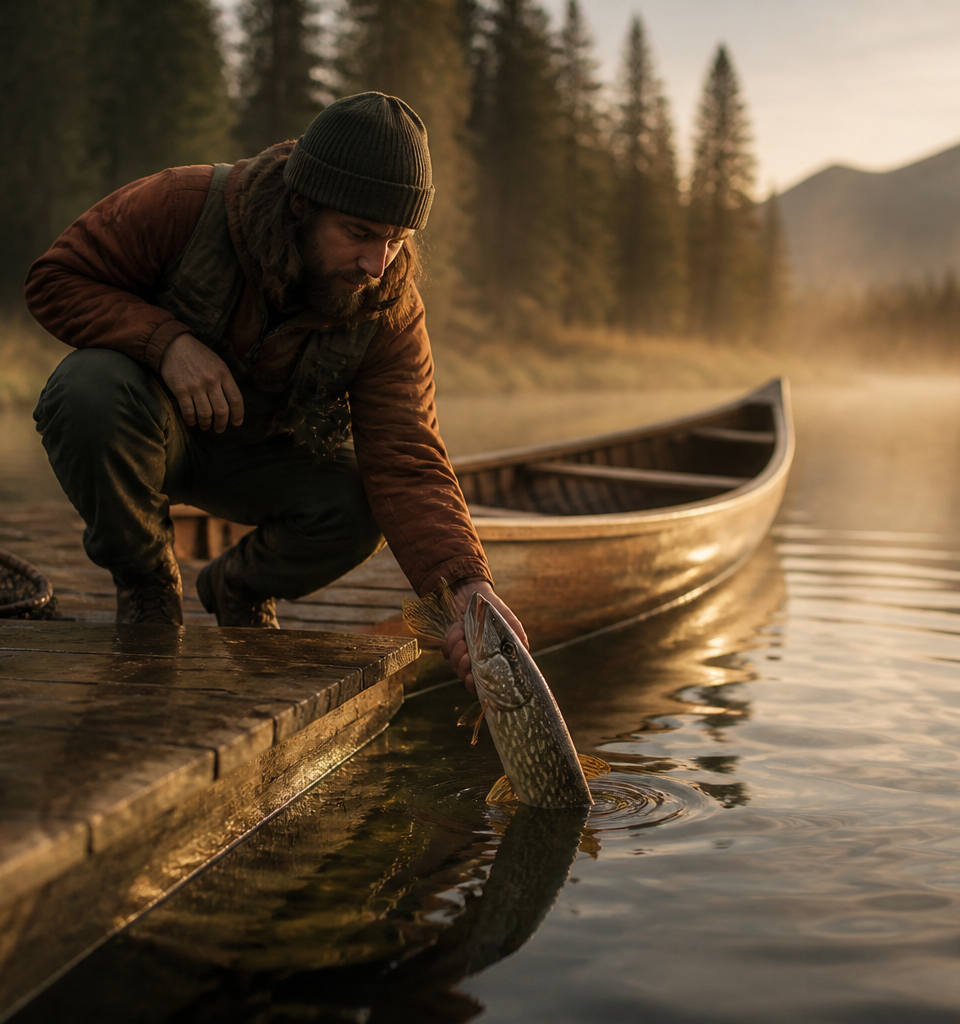
Careful catch-and-release of large breeding pike is critical to preserving Alberta's sportfishery. Big pike are almost exclusively mature females carrying vital genetics for future generations. Handling fish with wet hands, supporting their body horizontally, and keeping air exposure under a minute ensures these apex predators survive after release.
Planning your Northern pike fishing trip in Alberta
Booking a guided outfitter trip provides the safest, most effective way to access remote northern waters and connect with trophy Northern pike. Experienced outfitters supply rugged boats, knowledgeable guides who know every productive bay, and comfortable wilderness lodging. Options range from fly-in outpost camps to full-service drive-to lodges catering to groups and families.
To begin planning your western Canadian adventure, browse our curated directory. Explore our selection of 3 affordable fishing outfitters to plan your stay or view all Fishing outfitters in Alberta. Use MyOutfitters to compare verified destinations, contact outfitters directly, and book your dream Northern pike fishing adventure.
Frequently asked questions
What fishing licence is required for Northern pike in Alberta?
You need a valid Alberta sportfishing licence issued by the provincial government. Alberta residents, Canadian non-residents, and international anglers must obtain their own licence before fishing. Check whether your target lake requires a special harvest tag for pike.
What is the best time of year to catch trophy Northern pike?
Late May through late June offers the highest success rates for giant Northern pike. Sun-warmed shallows attract big post-spawn females feeding actively after the spawn. Early autumn from September through October is another prime period for heavy trophy fish.
Where do Northern pike hold in Alberta lakes?
Pike hold in dense weedbeds, cabbage beds, and sheltered shallow bays. Rocky points dropping into deep water and narrows between islands also create prime ambush spots where predators target moving baitfish.
What rod setup is recommended for Northern pike?
A 7-to-8-foot medium-heavy to heavy power rod is strongly recommended. This length and stiffness allow you to cast bulky lures, drive hooks into bony jaws, and control hard-running trophy fish around heavy cover.
Is a steel bite leader required for Northern pike?
Yes, a tooth-resistant leader is essential to prevent bite-offs and protect the fish from trailing lures. Wire, titanium, or heavy 80-pound fluorocarbon leaders provide vital protection against the pike's sharp teeth.
What lures work best for Northern pike in Alberta?
Heavy casting spoons, jointed crankbaits, and large soft swimbaits produce consistently all season. For topwater strikes over shallow weedbeds in summer, hollow-body frogs and walk-the-dog surface lures deliver violent takes.
Can you ice fish for Northern pike in Alberta?
Yes, ice fishing for Northern pike is very popular and productive on Alberta lakes. Setting tip-ups or short jigging rods with large dead bait near oxygenated weedlines regularly yields trophy pike through the winter months.
What is the daily catch limit for Northern pike in Alberta?
Daily catch and possession limits depend on the specific Fisheries Management Zone and waterbody. Many popular lakes have a zero-harvest limit or manage harvest through a special draw tag system. Always consult the official regulations before keeping fish.
How do you release a Northern pike safely?
Handle the fish with wet hands, use a knotless rubber net, and support the pike horizontally under the belly and behind the gills. Remove hooks quickly with long-nose pliers, avoid vertical holds, and revive the fish gently in the water until it swims away under its own power.
How long does an average fight with a trophy Northern pike last?
A fight with a trophy pike typically lasts between three and ten minutes, depending on water temperature and gear strength. Using adequately heavy tackle shortens fight times, preventing dangerous exhaustion and ensuring a successful release.