Fishing
Northern Pike Fishing in Manitoba: Guide to Northern Monsters
Discover the best techniques, seasons, and waters to target trophy Northern pike across Manitoba's wilderness with advice from our seasoned angling experts.
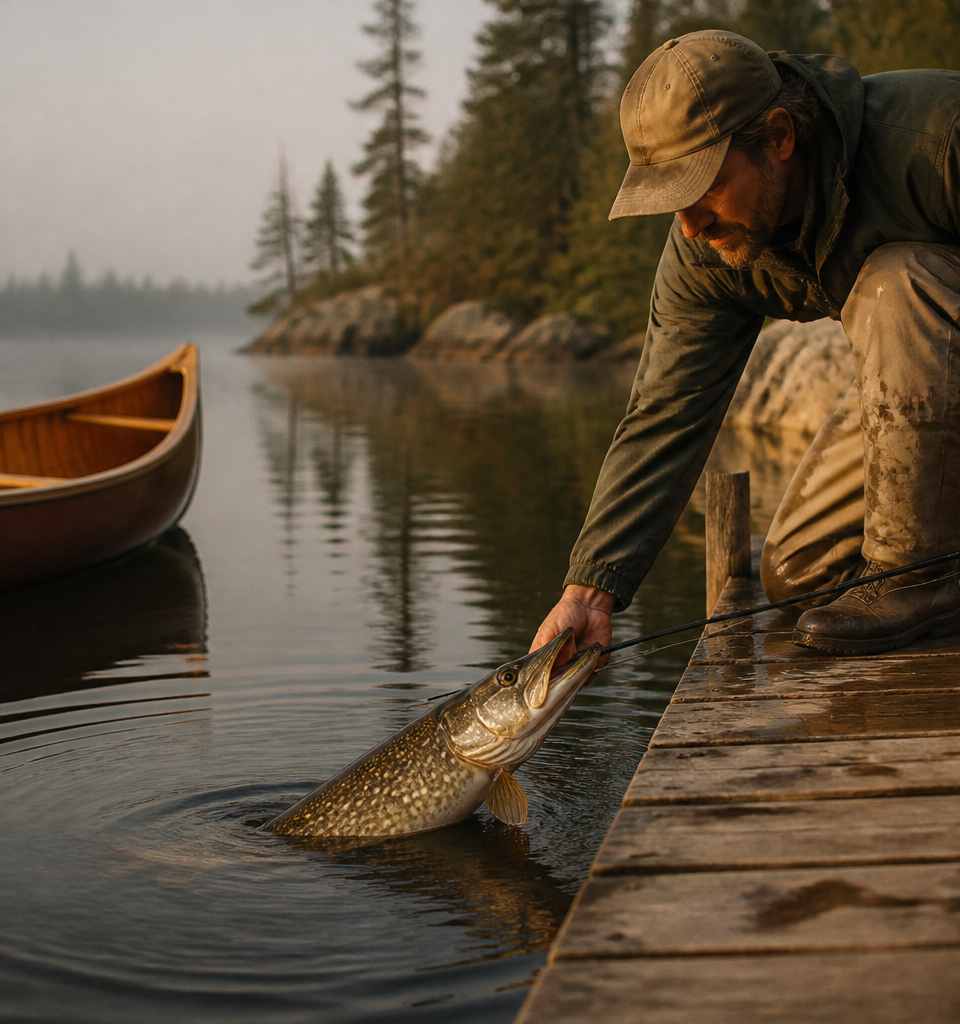
Key takeaways
- Peak fishing runs from late May through early October across major water systems.
- Shallow bays, dense weed beds, and current bottlenecks hold the largest active predators.
- Dynamic retrieves with heavy spoons, crankbaits, and oversized soft plastics trigger explosive, violent strikes.
- Anglers must hold a valid provincial sportfishing licence and comply with all applicable size limits.
- Heavy fluorocarbon or steel leaders are essential to prevent bite-offs from sharp teeth.
How to identify Northern pike in freshwater
Northern pike stand out with their elongated, torpedo-shaped body, olive-green flanks dotted with yellowish-white markings, and a duckbill snout lined with hundreds of razor-sharp teeth. This freshwater apex predator features a dorsal fin set far back near the tail, delivering explosive acceleration when ambushing prey. The light horizontal bean-shaped spots across its dark body create distinct contrast.
Across Manitoba's river and lake systems, anglers pursue qualifying Master Angler trophies that reach 41 inches or more. These massive fish display wide shoulders and thick girths built on rich diets of lake whitefish, suckers, and walleye. Confusion with muskellunge is rare in the northern reaches of the province, where Northern pike reign supreme over weed lines and rocky bays.
Where to find Northern pike in Manitoba lakes?
Northern pike thrive in virtually every lake and river system in Manitoba, from southern reservoirs to the isolated wilderness waters of the northern Canadian Shield. Vast fisheries like Lake Winnipeg, Cedar Lake, Southern Indian Lake, and the rivers of Eastern Manitoba offer a mosaic of prime habitats. Rocky reefs, submerged points, and shallow river deltas serve as consistent hunting grounds all season long.
Anglers seeking an authentic boreal adventure often compare these waters to trophy Northern pike fishing in Alberta: tips and destinations. In Manitoba, minimal fishing pressure on remote fly-in lakes allows pike to reach exceptional sizes. Cold, oxygen-rich waters fed by boreal forests and subarctic winds create an ideal ecosystem capable of sustaining massive predator populations.
Understanding seasonal trophy Northern pike behavior
Northern pike behavior is governed by water temperatures, spawning cycles, and forage movements. Right after ice-out in spring, mature fish push into shallow, sun-warmed bays and flooded backwaters filled with dead vegetation to spawn in less than three feet of water. Following the spawn, post-spawn pike linger in these warm shallows to feed aggressively and rebuild their energy stores.
As summer arrives and surface temperatures rise, trophy pike gradually transition toward deep drop-offs, open-water structure, and well-oxygenated weed edges. In autumn, cooling surface waters bring these giants back into shallow shorelines and river mouths where baitfish congregate. This dynamic mirrors the patterns seen in Northern pike fishing in Quebec: complete guide and techniques, where thermoclines dictate fish holding depths.
When to fish for giant Northern pike in Manitoba?
Late May through late June and the month of September offer the best opportunities to target giant Northern pike in Manitoba. During the early weeks of the season, pike actively feed in shallow bays, creating outstanding sight-fishing opportunities for both spin and fly anglers. Calm, sunny days warm the dark shallows, drawing large females right up toward the surface.
July and August remain productive, though success requires targeting deeper cabbage beds, main-lake points, and offshore reefs. Autumn delivers a prime trophy window: driven to feed heavily before freeze-up, monster pike strike with ferocious aggression during overcast, breezy conditions. Dark skies and a light chop often trigger the biggest fish to leave their cover and feed.
Locating big Northern pike in weed bays
Finding big Northern pike in weed-filled bays means zeroing in on distinct vegetation edges, open pockets, and areas with subtle water movement. Cabbage weed, pondweed, and lily pad beds provide prime ambush cover, allowing large predators to sit motionless while waiting for passing prey. A quiet boat approach is critical to avoid spooking fish holding in shallow water.
Careful observation of the water's surface often reveals subtle swirls, scattering baitfish, or the dorsal ridge of a cruising pike. Weedy points adjacent to deep channels and narrow gaps between islands create natural funnels. Working these staging lanes methodically with targeted casts will put lures in front of dominant fish holding on key structure.
Which techniques to use to catch Northern pike?
Casting and retrieving remains the most popular way to target Northern pike, whether working heavy spoons, noisy jerkbaits, or large soft plastics. Classic spoons in silver, gold, or red-and-white generate strong thumps and bright flash visible from long distances. Imparting sharp twitches followed by momentary pauses often triggers reflex strikes as the lure flutters on the drop.
Topwater fishing with prop baits, walk-the-dog lures, and weedless frogs delivers heart-stopping strikes over dense weed beds. In deeper waters, slow trolling along rocky ledges and deep weed lines with large deep-diving crankbaits covers expansive ground efficiently. Fly anglers also target these predators using 8- to 10-weight rods with large, flashy streamers on sinking or floating lines in crystal-clear northern bays.
Selecting the right gear for Northern pike fishing
Targeting trophy Northern pike requires a sturdy medium-heavy to heavy power rod, ideally between 7 and 8 feet long. Pair it with a baitcasting reel or a 4000- to 5000-size spinning reel featuring a smooth, dependable drag system capable of handling fish over twenty pounds. Spooling with 30- to 50-pound braided line ensures solid hooksets through bony jaws.
The leader is the most critical link in the setup: a wire leader, titanium trace, or heavy fluorocarbon leader (80- to 100-pound test) of at least 12 inches is required to withstand razor-sharp teeth. Always carry a large knotless rubber landing net to protect the fish's slime coat, along with long needle-nose pliers and jaw spreaders for safe, efficient unhooking without harming the fish or risking injury.
Regulations and licences for Northern pike fishing in Manitoba
Sportfishing in Manitoba requires a valid provincial fishing licence for both residents and non-residents before wetting a line. Fisheries managers enforce strict daily catch and possession limits, alongside slot sizes designed to protect prime breeding stock. Many northern waters mandate the use of barbless hooks to facilitate fast releases and minimize handling stress on fish.
Handle fish destined for release with care: support the body horizontally under the belly and minimize air exposure to just a few seconds for photos. For detailed management divisions, seasonal opening dates, and fish transport guidelines, visit the official Government of Manitoba website. Regulations change yearly: always verify current rules before your trip.
Protecting trophy Northern pike breeders for the future
Conserving mature breeding fish is vital to maintaining world-class sportfisheries across northern ecosystems. A Northern pike measuring over 40 inches can take 10 to 15 years or more to reach that size in cold Canadian waters. These mature females produce larger quantities of high-viability eggs than younger fish, ensuring stable, healthy fish stocks year after year.
Catch-and-release practices for trophy-class pike have become standard among quality outfitters and ethical anglers. Harvesting only smaller, abundant fish for traditional shore lunches helps preserve a balanced population structure. Respecting these apex predators ensures future generations can experience world-class angling across Manitoba's wilderness waters.
Planning a guided Northern pike fishing trip in Manitoba
Booking a guided outfitter trip is the most reliable way to access Manitoba's premier pike waters safely and efficiently. Both American plan and housekeeping lodges provide fly-in floatplane transport to remote outposts, dependable watercraft, and knowledgeable professional guides. These local experts track fish movements and adjust strategies based on evolving weather conditions.
For visiting anglers, an established outfitter simplifies logistics, equipment transport, and regulatory compliance. You can learn more about how MyOutfitters makes hunting and fishing trips easy for Americans looking for remote wilderness adventures. A guided package maximizes productive time on the water while providing comfortable lodge accommodations after a full day of fishing.
To find the right destination for your next trophy Northern pike trip, explore our vetted Manitoba fishing outfitters listed on MyOutfitters.
Frequently asked questions
When does Northern pike season open in Manitoba?
Northern pike season typically opens between mid-May and late May, depending on the provincial fishing division. Southern waters open earlier than remote northern fisheries where ice cover lingers longer. Always verify exact opening dates with official provincial regulations before planning a trip.
Where are the biggest Northern pike caught in Manitoba?
The largest pike are predominantly caught in remote fly-in lakes and major northern river systems across the Canadian Shield. These isolated waters experience minimal fishing pressure, allowing pike to reach trophy sizes exceeding 45 inches in pristine shallow bays.
What is the best lure for trophy Northern pike in Manitoba?
Heavy casting spoons remain the gold standard for Manitoba Northern pike. Oversized metallic finishes in silver, gold, and five-of-diamonds patterns generate strong vibrations and flash that draw strikes, complemented well by large jerkbaits and soft plastic swimbaits.
Do you need a steel leader for Northern pike?
Yes, using a steel, titanium, or heavy fluorocarbon leader of at least 80-pound test is essential. Pike have razor-sharp teeth that slice through standard monofilament and braid, which can lead to lost lures and injured fish.
What size Northern pike qualifies for the Manitoba Master Angler program?
A Northern pike must measure at least 41 inches in total length to qualify for Manitoba's Master Angler program. The program celebrates trophy catches across the province and strongly promotes the release of large breeding stock.
Are barbless hooks mandatory in Manitoba?
Yes, barbless hooks are mandatory for all sportfishing across all Manitoba waters. Anglers must crimp the barbs completely on spoons, plugs, and jigs using pliers to ensure quick unhooking and reduce fish injury.
How do you safely release a trophy Northern pike?
Support the pike horizontally under the belly and keep it in the water as much as possible. Use long pliers to remove hooks quickly, and gently support the fish facing into the current until it swims away under its own power.
What rod setup is best for Northern pike fishing?
A 7-foot to 7-foot-6-inch medium-heavy or heavy power casting rod provides the ideal balance. It delivers the backbone needed to cast heavy lures, drive hooks through bony jaws, and turn big fish near heavy vegetation.
Can you fly fish for Northern pike in Manitoba?
Yes, fly fishing for pike is popular and productive, especially in shallow spring bays. An 8- to 10-weight fly rod with large, flashy streamers on floating or intermediate lines produces exciting, visual surface and sub-surface strikes.
Why book a fishing trip with a Manitoba outfitter?
Outfitters provide exclusive access to remote boreal waters that cannot be reached by road. Packages include expert local guides, reliable boats, and comfortable wilderness lodging, maximizing your chances of catching trophy pike safely.