Fishing
Lake Trout / Charr Fishing in Newfoundland and Labrador: Expert Guide
Discover how to target Lake trout / charr in Newfoundland and Labrador: pristine Labrador habitats, proven trolling techniques, prime seasons, and expert advice.
Key takeaways
- The prime season runs from mid-June to early September, when cold boreal waters keep apex predators actively feeding.
- The deep, expansive lakes and wilderness reservoirs of Labrador serve as the ultimate sanctuary for these cold-water, oxygen-loving salmonids.
- Deep trolling with heavy spoons and vertical jigging with soft plastics are the most effective tactics for locating fish.
- Non-residents must hold a provincial freshwater licence and are often required to hire a licensed guide depending on the management zone.
- Bring a reliable sonar unit and waterproof layered clothing to handle unpredictable subarctic weather on large bodies of water.
Identifying trophy Lake trout / charr in freshwater
Lake trout / charr (*Salvelinus namaycush*) is easily distinguished from other salmonids by its torpedo-shaped body, deeply forked tail, and creamy-white spots across a dark gray or olive background. Unlike brook trout, which display red spots ringed with blue halos, lake trout exhibit light, worm-like vermiculations across the back, flanks, and fins. Its broad, bony head houses a powerful jaw lined with sharp teeth, perfectly adapted for seizing substantial baitfish.
In the cold waters of northeastern Canada, this apex predator grows slowly but enjoys remarkable longevity, often living beyond forty years. Coloration varies widely depending on water clarity and bottom structure: it can range from a silvery steel-gray in deep, clear bays to bronze and forest-green hues in tannin-stained waters. The heavy build and dense musculature of an adult specimen reflect its dominant role in these oligotrophic ecosystems.
Where does Lake trout / charr live in Newfoundland and Labrador?
Lake trout / charr thrives primarily in the mainland portion of the province, across the massive watersheds and vast lake systems of Labrador. The Smallwood Reservoir, Lake Ashuanipi, Lake Joseph, and the Churchill River drainage support exceptional native populations protected from major industrial impact. On the island of Newfoundland, the species is far rarer or absent from most inland waters, concentrating sportfishing activity in the northern wilderness.
These boreal waters provide pristine quality, supercharged with dissolved oxygen and cold year-round temperatures. Lake trout hold around major structural elements: drop-offs plunging tens of metres, submerged rock points, current-swept narrows, and offshore islands. To expand your angling pursuits in these same legendary territories, explore Brook trout fishing in Newfoundland and Labrador, which offers thrilling action on adjacent river systems.
Seasonal behavior of northern Lake trout / charr
Lake trout behavior is tied directly to water temperatures and the movements of schooling prey like lake whitefish and suckers. Right after ice-out in early summer, when surface waters remain frigid, fish cruise shallow rocky shoals, bays, and river mouths searching for easy meals. During this short window, surface strikes are aggressive, and heavy weight is unnecessary to reach feeding fish.
As summer progresses and the thermocline forms between 10 and 25 metres deep, lake trout retreat into the depths to stay within their preferred range of 8 to 12 degrees Celsius. They patrol steep drop-offs and deep structure, hunting by ambush. In late summer and early autumn, spawning instincts draw mature adults toward wave-washed cobble and gravel reefs for nocturnal spawning runs.
When to fish for Lake trout / charr in Newfoundland and Labrador?
The prime window to target Lake trout / charr in Newfoundland and Labrador runs from late June through early September. Right after the boreal thaw in late June, cold surface water allows for exceptional spin-casting and fly-fishing in less than five metres of water. Long subarctic summer days provide extended daylight to work productive zones.
During July and August, fishing shifts to deep-water precision on structure and thermoclines. Overcast days with a steady breeze that ruffles the surface and stirs up baitfish regularly produce the strongest bites. Early September brings another burst of aggressive activity as fish stage shallow before spawning, though weather windows tighten with early subarctic cold fronts.
Locating Lake trout / charr on large waterbodies
Finding lake trout on massive northern lakes requires sonar and quality bathymetric charts. Focus on distinct structural transitions: main-lake points dropping into the abyss, isolated underwater humps, and bottlenecks between islands where wind and current concentrate forage. These ambush points create natural feeding lanes for trophy fish.
Keep an eye on surface activity and diving birds, which often signal suspended bait schools below. In clear water, finding defined breaklines where light-coloured nearshore rocks transition into deep blue water reveals the edges where cruising predators stage. Similar dynamics apply in other major Canadian basins, as detailed in our guide to Lake trout fishing in Manitoba: Northern giants guide.
Best techniques to catch Lake trout / charr
Controlled-depth trolling remains the most efficient way to cover water when fish hold below the thermocline. Downriggers and lead-core lines keep lures running precisely within the strike zone. Large spoons in silver, blue, or pearl finishes deliver erratic, flashing action that triggers predatory strikes at moderate trolling speeds.
Vertical jigging over marked fish on defined structure is equally deadly. Drifting over deep humps while working heavy soft plastics on jigheads or solid metal vertical spoons produces reactive strikes from bottom-hugging fish. In early spring, casting large minnow-style stickbaits or shallow trolling along rocky shorelines delivers direct, hard-hitting surface strikes.
Choosing your gear for Lake trout / charr
A medium-heavy to heavy-action rod between 2.10 and 2.40 metres (7 to 8 feet) provides the backbone needed to manage heavy lake trout. Pair it with a baitcasting or conventional trolling reel equipped with a smooth, powerful drag system built for sustained deep runs. A line-counter reel helps repeat productive trolling depths with accuracy.
Spool up with 30- to 50-pound braided line to cut through water and detect subtle takes. Always tie on a 20- to 30-pound fluorocarbon leader of at least two metres for abrasion resistance around sharp rocks and invisible presentation in clear water. Stock heavy spoons (such as Williams Whitefish, Sutton, or Darting models), 1- to 2-ounce jigheads, and a large, knotless rubber-coated landing net to handle fish safely.
Lake trout / charr regulations in Newfoundland and Labrador
Freshwater sportfishing in Newfoundland and Labrador is governed by regulations designed to safeguard slow-growing populations. Non-resident anglers must hold a valid freshwater fishing licence for non-anadromous species and are generally required to use a licensed guide or outfitter when fishing beyond designated boundaries.
Daily bag limits, possession limits, and hook restrictions (often single barbless hooks in specific management areas) vary by watershed across Labrador. For complete and up-to-date details on open seasons and quotas, consult the official Government of Newfoundland and Labrador website. Regulations are subject to annual changes: always verify current rules before heading out on the water.
Conservation and sustainability of northern Lake trout / charr
Northern lake trout have a delicate life cycle marked by late sexual maturity—often reached after 10 to 15 years—and spawning cycles that do not always occur every year. This biology makes northern populations vulnerable to overharvest and habitat disruption. Catch-and-release practices for large breeding specimens are critical to sustaining these wild stocks.
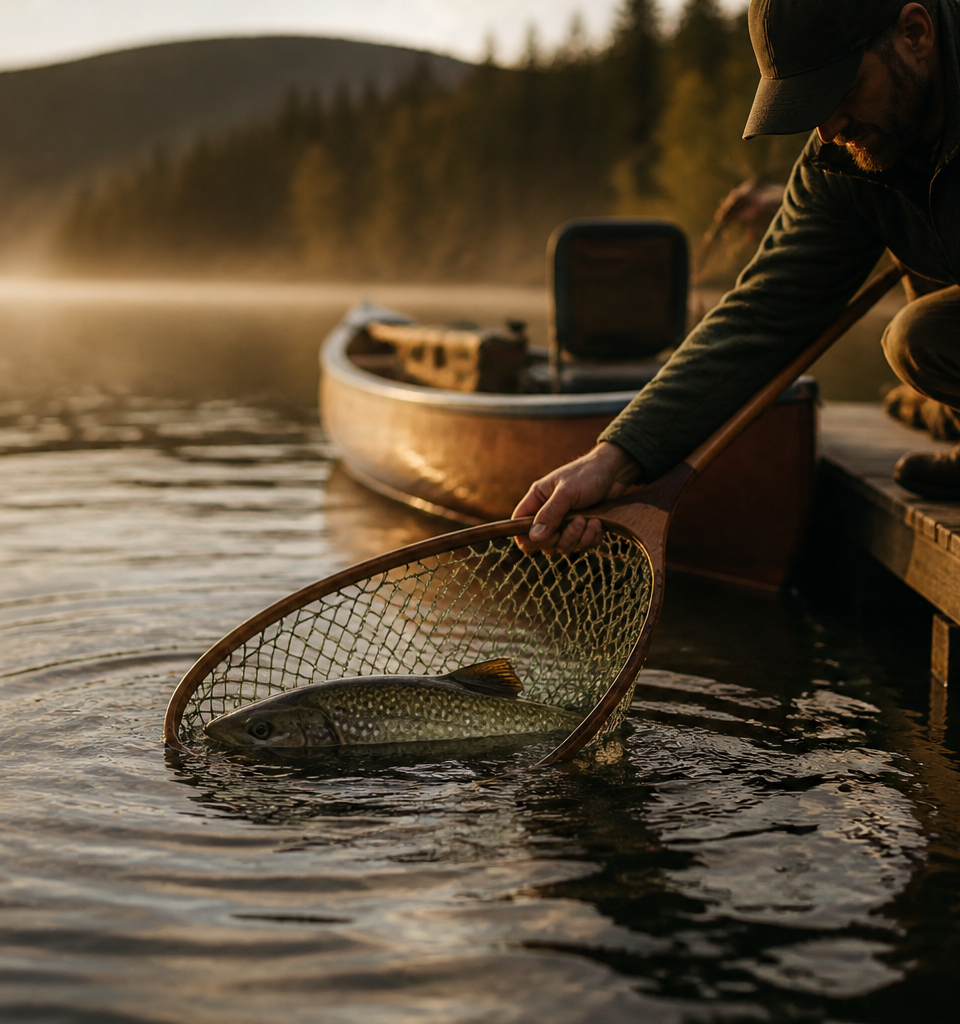
When practicing catch-and-release, minimize handling time out of the water and use long-nose pliers to remove hooks quickly. If a fish is brought up from deep water, a slow retrieval helps avoid barotrauma, and holding the fish upright in the water facilitates recovery. Protecting these untouched waters preserves exceptional fisheries, just like the stewardship highlighted in our guide on Landlocked salmon fishing on the Côte-Nord: The freshwater salmon.
Guided Lake trout / charr trips in Newfoundland and Labrador
Planning a fishing trip into the Labrador backcountry demands solid logistics given the scale and remoteness of the region. Established fly-in outfitters provide floatplane access to untouched lakes where fishing pressure is virtually nonexistent. Experienced local guides ensure quick access to prime holding areas and safe navigation across large waters prone to sudden weather shifts.
Full-service packages feature comfortable wilderness lodging, heavy-water boats, and deep knowledge of seasonal fish movements. Whether you are after your first trophy or chasing a personal best, a guided trip provides a seamless, world-class northern angling experience.
To find your next adventure on legendary Labrador waters, browse available Fishing outfitters in Newfoundland and Labrador on MyOutfitters and book your trip today.
Frequently asked questions
When does the Lake trout / charr fishing season start in Labrador?
The season generally opens as soon as the ice clears around mid-June and runs through early September. The first few weeks after ice-out offer the best opportunities to target fish feeding shallow along rocky drop-offs.
Where are the biggest Lake trout / charr caught in the province?
The largest trophies are caught in the expansive wilderness reservoirs and major lakes of mainland Labrador, such as the Smallwood Reservoir and Lake Ashuanipi. These massive water systems provide deep, cold habitats rich in forage fish.
Is a guide mandatory for non-residents fishing in Labrador?
Yes, provincial regulations generally require non-resident anglers to hire a licensed guide or book through an accredited outfitter when fishing designated inland waters in Labrador. This ensures visitor safety and fishery conservation.
What is the best lure for deep trolling for Lake trout / charr?
Heavy metallic spoons in silver, blue, or copper finishes are classic choices for deep trolling. They create strong flash and wide wobbling vibrations that trigger strikes in low-light, deep-water conditions.
What water temperature does Lake trout / charr prefer?
Lake trout / charr prefers water temperatures between 8 and 12 degrees Celsius (46 to 54°F). During peak summer warmth, fish drop below the thermocline to hold in deep, well-oxygenated basins.
Can you fly-fish for Lake trout / charr on these large lakes?
Yes, fly-fishing is effective in early summer when fish cruise shallow rocky shorelines and river inlets. Using fast-sinking lines and large baitfish streamers produces aggressive strikes.
What fishing line setup works best for Lake trout / charr?
A 30- to 50-pound braided mainline paired with a 20- to 30-pound fluorocarbon leader is the standard setup. This combination offers high sensitivity, clean lure depth control, and reliable abrasion resistance against rocks.
How do you prevent barotrauma when releasing Lake trout / charr?
Reel the fish up slowly from deep water to give its swim bladder time to adjust to pressure changes. If a fish struggles to submerge upon release, support it in the water or use a descending device to return it safely to depth.
What is the average weight of Lake trout / charr caught in Labrador?
The average weight typically ranges between 5 and 15 pounds on northern lakes, with trophies over 20 to 30 pounds landed every season thanks to the species' remarkable longevity in cold waters.
What clothing should you pack for a boreal fishing trip?
Pack a comprehensive layering system including merino wool base layers, fleece mid-layers, and a waterproof, windproof outer shell. Subarctic weather can shift from clear skies to cold rain within minutes.