Fishing
Brook Trout Fishing in Saskatchewan: Complete Guide
Discover the top spots, techniques, and seasons for Brook trout fishing in Saskatchewan, from boreal highlands to secluded backcountry lakes.
Key takeaways
- The prime open-water season runs from May through October, followed by outstanding ice fishing opportunities in winter.
- Forest lakes nestled in the boreal transition zone and spring-fed creeks hold some of the province's finest specimens.
- Delicate fly fishing, small in-line spinners, and winter micro-jigs deliver consistent and reliable success.
- A valid Saskatchewan provincial fishing licence is required for all anglers exploring the province's public waters.
- Use a subtle fluorocarbon leader to outsmart this sharp-eyed, notoriously wary salmonid.
Identifying Brook trout and their key features
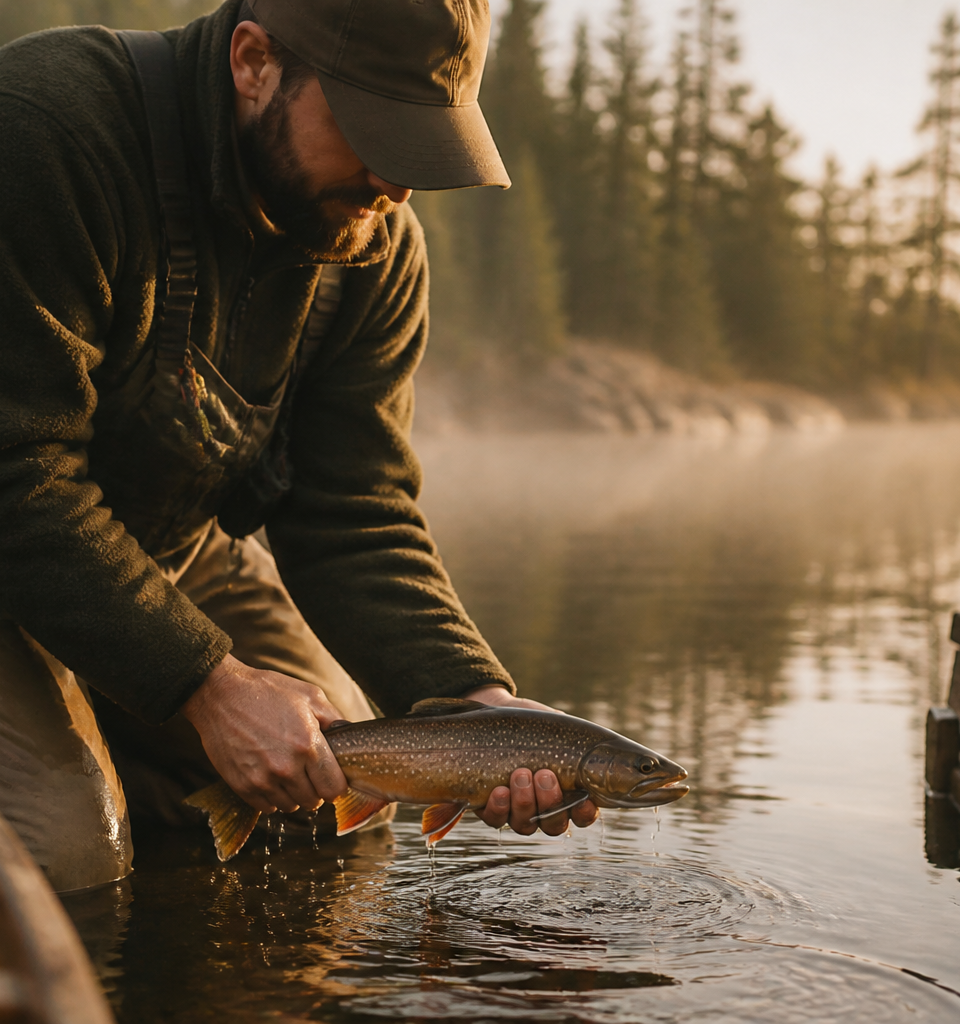
Brook trout, technically a member of the char family (*Salvelinus fontinalis*), stand out immediately with their vibrant colours and distinct vermiculated patterns across the back. Unlike true trout, this char displays a dark olive-green back marked with wavy, worm-like marbling, alongside flanks dotted with small red spots encircled by pale blue halos. Its lower fins feature a brilliant orange-red tint, bordered by a crisp white leading edge highlighted with a sleek black line.
In Saskatchewan, physical characteristics vary depending on whether the fish inhabit small forest streams or nutrient-rich boreal lakes. In lakes, Brook trout often develop deeper bodies and silvery flanks early in the season, before transitioning to a fiery crimson belly as the fall spawn approaches. Anglers familiar with Brook Trout Fishing in Ontario: Guide and Tips will find that Western Canadian specimens exhibit equally striking coloration and fighting strength.
Their wide mouth is lined with small, sharp teeth designed to grasp aquatic invertebrates, small crustaceans, and minnows securely. Brook trout remain among the most aesthetically captivating freshwater fish in North America, making every landed catch a true visual reward for the dedicated angler.
Brook trout habitat in Saskatchewan
Brook trout habitat in Saskatchewan is primarily concentrated in the boreal transition zone and the central and eastern hydrographic systems. These salmonids thrive in cool, spring-fed streams as well as several managed and stocked waters throughout provincial parks such as Narrow Hills and the higher elevations of the Pasquia and Porcupine Hills.
This species demands exceptionally clean, well-oxygenated water with temperatures ideally remaining below 18 degrees Celsius. Deep pools beneath rapids, willow-shaded bends, and the edges of beaver ponds provide premier holding water. In lake environments, Brook trout patrol rocky drop-offs, submerged weedbeds, and underwater springs that deliver a continuous supply of cool water and forage.
While the vast northern waters are famous for Pike Fishing in Saskatchewan: Pro Guide and Tips, the province's quiet boreal bays and spring-fed pockets offer an unmatched, intimate angling atmosphere. Dense shoreline vegetation from mixed surrounding woodlands provides a steady supply of terrestrial insects, enriching the trout's local diet.
Seasonal behaviour of boreal Brook trout
Brook trout behaviour in Saskatchewan is heavily dictated by water temperatures and insect hatch cycles. Following spring ice-out, fish leave deep wintering holes to cruise shallow, sun-warmed shorelines where they feed aggressively on caddis larvae and chironomids. Their metabolism ramps up quickly after the long winter freeze.
As summer arrives and warms the surface layers of lakes, Brook trout retreat toward deeper thermoclines or congregate around cold groundwater upwellings. In rivers, trout concentrate in shaded pools during hot daylight hours, becoming most active around dawn and dusk. Understanding this thermal stratification is essential to locating fish, a dynamic shared when adapting strategies for Lake Trout: Surface vs. Deep Fishing by Season.
In autumn, the onset of spawning transforms their behaviour dramatically. Males turn highly territorial and aggressive toward anything entering their space, striking large presentations and territorial fly patterns with authority to defend their spawning beds.
When to fish for Brook trout in Saskatchewan?
Late May through late June is the prime window for catching Brook trout in Saskatchewan, followed by another productive peak in September. Spring provides optimal conditions because surface waters remain cool and trout feed actively close to shores easily reached from land or small watercraft.
July and August require a more tactical approach due to summer heat. Focus outings on early mornings, late evenings, or overcast days with a light breeze that ripples the surface and builds the trout's confidence. Overcast skies frequently trigger mayfly hatches, encouraging trout to rise without fear of avian predators.
Winter also offers spectacular hard-water action across Saskatchewan. Once safe ice forms, typically between December and March, fishing boreal lakes allows anglers to target hard-fighting Brook trout through the ice in just a few feet of crystal-clear water.
Where to find Brook trout in Saskatchewan?
To locate Brook trout in Saskatchewan, focus on the managed trout lake chains of Narrow Hills Provincial Park and the forested streams of the Porcupine Hills. The famed Hanson Lake Road corridor cuts through several renowned areas where secluded boreal lakes hold thriving populations in pristine wilderness settings.
On the water, look for sharp depth transitions between two and six metres, submerged sand points, and fallen timber. Beaver dams frequently create deep, productive pools upstream where larger trout take advantage of reduced current and excellent shade. Careful shoreline reading helps pinpoint clean gravel patches where groundwater upwellings maintain steady, cold conditions.
Using a portable fish finder or light craft—such as a fishing kayak or float tube—greatly simplifies exploring these isolated lakes, which can be challenging to access effectively from shore.
Best techniques for catching Brook trout
Fly fishing and ultralight spin casting are the most effective methods for outwitting these wary salmonids. For fly anglers, stripping streamers that imitate small minnows or leeches along weed edges triggers aggressive strikes. When hatches occur, delicately presenting a mayfly or caddis dry fly on a long leader yields memorable surface takes.
With spinning gear, small in-line spinners in sizes 0 to 2 featuring silver, gold, or copper blades remain dependable staples. Retrieve your lure at a steady pace, adding slight twitches to make the blade flash just above submerged cover. Small suspending jerkbaits also excel at mimicking injured forage fish in deeper pools.
Under the ice, jigging a small, flashy spoon or a micro-jig tipped with a glow soft plastic quickly catches the eye of roaming trout. An invisible fluorocarbon leader is vital to convincing line-shy fish to commit.
Recommended tackle and gear for Brook trout
An ultralight to light spinning setup measuring 5.5 to 6.5 feet is the ideal choice. Pair the rod with a 1000- to 2000-size reel spooled with 4- to 6-pound monofilament or thin braid finished with a 4- to 6-foot fluorocarbon leader.
Fly fishers will find a 9-foot, 4- or 5-weight rod with a moderate-fast action delivers the precision required to place dry flies softly under overhanging branches. Carry a floating line for streams and an intermediate sinking line to effectively work deeper lake drop-offs in spring and autumn.
Round out your gear with a soft rubber landing net to protect the trout's delicate slime coat, long-nose pliers for quick and gentle hook removal, and a pair of amber polarized sunglasses to spot cruising fish in clear waters.
Brook trout fishing regulations in Saskatchewan
Sportfishing in Saskatchewan is governed by regulations designed to sustain high-quality salmonid fisheries. Every angler must carry a valid provincial fishing licence issued by the Government of Saskatchewan before wetting a line on public waters.
Many boreal trout waters enforce special management measures such as reduced daily limits, slot sizes, or mandatory barbless single hooks. The use of live bait is strictly prohibited in most designated trout waters to prevent the introduction of invasive species and minimize post-release mortality.
Regulations change annually: always verify local catch limits and restrictions with official authorities before wetting a line.
Brook trout conservation and catch-and-release
Brook trout serve as a sensitive biological indicator of overall watershed health due to their low tolerance for pollution and warm water. Shoreline degradation, siltation of gravel spawning beds, and rising water temperatures represent direct threats to their long-term survival.
Adopting proper catch-and-release practices ensures released fish survive. Always wet your hands before handling a trout, avoid keeping it out of the water for more than a few seconds for photos, and support it gently upright facing into the current until it swims away under its own power.
By respecting shoreline vegetation and treading lightly, anglers actively safeguard these delicate northern aquatic ecosystems for future generations.
Planning a successful guided Brook trout trip
Hiring a professional outfitter guide elevates a standard fishing trip into a seamless, highly productive adventure. Local guides possess intimate knowledge of micro-habitats, precise seasonal depths, and the exact fly patterns matching current hatches.
Outfitters provide exclusive access to remote waters, suitable boats, and comfortable accommodations in the heart of the wild. Whether you prefer a rustic outpost camp or a full-service lodge, booking through specialized Saskatchewan fishing outfitters guarantees smooth logistics and expert guidance to make the most of your time on the water.
To experience world-class angling and explore the province's premier trout waters, plan your next guided trip today on MyOutfitters.
Frequently asked questions
When to fish for Brook trout in Saskatchewan?
The ideal period runs from late May to late June and throughout September. During these weeks, surface waters remain cool and Brook trout feed aggressively along shallow shorelines and near cover.
Where to find Brook trout in Saskatchewan?
They are primarily found in managed boreal lakes around Narrow Hills Provincial Park and the Porcupine Hills. Shaded forest streams and cold groundwater upwellings also offer productive fishing.
Do you need a licence for Brook trout in Saskatchewan?
Yes, a valid Saskatchewan provincial fishing licence is mandatory for all anglers on public waters. Residents and non-residents can purchase one online or through authorized licence vendors before heading out.
What lure should you use for Brook trout in Saskatchewan?
Small in-line spinners in sizes 0 to 2 with gold or silver blades are among the top choices. Small minnow-imitating jerkbaits and light jigs also produce consistent results in deeper water.
What fly line is best for Brook trout fishing?
A 4- or 5-weight floating line is ideal for dry flies and stream fishing. For working deeper lake drop-offs in spring or fall, an intermediate sinking line helps present streamers at the right depth.
Can you ice fish for Brook trout in Saskatchewan?
Yes, ice fishing for Brook trout is popular and productive from December through March on boreal lakes. Trout stay active under the ice and strike small spoons and micro-jigs tipped with soft plastics.
How many Brook trout can you keep in Saskatchewan?
Daily harvest and possession limits vary by fishery management zone and individual waterbody. Certain lakes enforce catch-and-release rules or reduced limits, which must be verified in the current provincial regulations.
Are barbless hooks mandatory in Saskatchewan?
Barbless hooks are mandatory on many designated trout waters and strongly recommended everywhere else. Pinching your barbs allows for fast, damage-free unhooking and improves fish survival rates upon release.
What is the best water temperature for Brook trout?
Brook trout thrive in cool waters between 12 and 16 degrees Celsius. When temperatures rise above 18 degrees, their metabolism slows and they seek refuge in deeper water or near underwater cold springs.
Why book an outfitter for Brook trout in Saskatchewan?
Booking with an outfitter provides access to remote boreal waters and the expertise of seasoned guides. This maximizes your angling success while ensuring a safe, organized, and comfortable wilderness experience.