Fishing
Lake Trout / Charr Fishing in Ontario: Big Water Secrets
Discover how to fish for lake trout / charr in Ontario: deep-water habitats, trolling and jigging techniques, prime seasons, and expert outfitter advice.
Key takeaways
- Productive from spring ice-out through late autumn, with a notable peak during the October turnover.
- Found in deep, cold, well-oxygenated oligotrophic lakes across the Canadian Shield and Ontario's Great Lakes.
- Primary methods include deep-water downrigger trolling and vertical jigging with heavy lures over bottom structure.
- An Outdoors Card and recreational fishing licence are mandatory for all anglers fishing in Ontario.
- Quality sonar is essential to locate the summer thermocline and keep presentations in the strike zone.
How to identify lake trout / charr in Ontario?
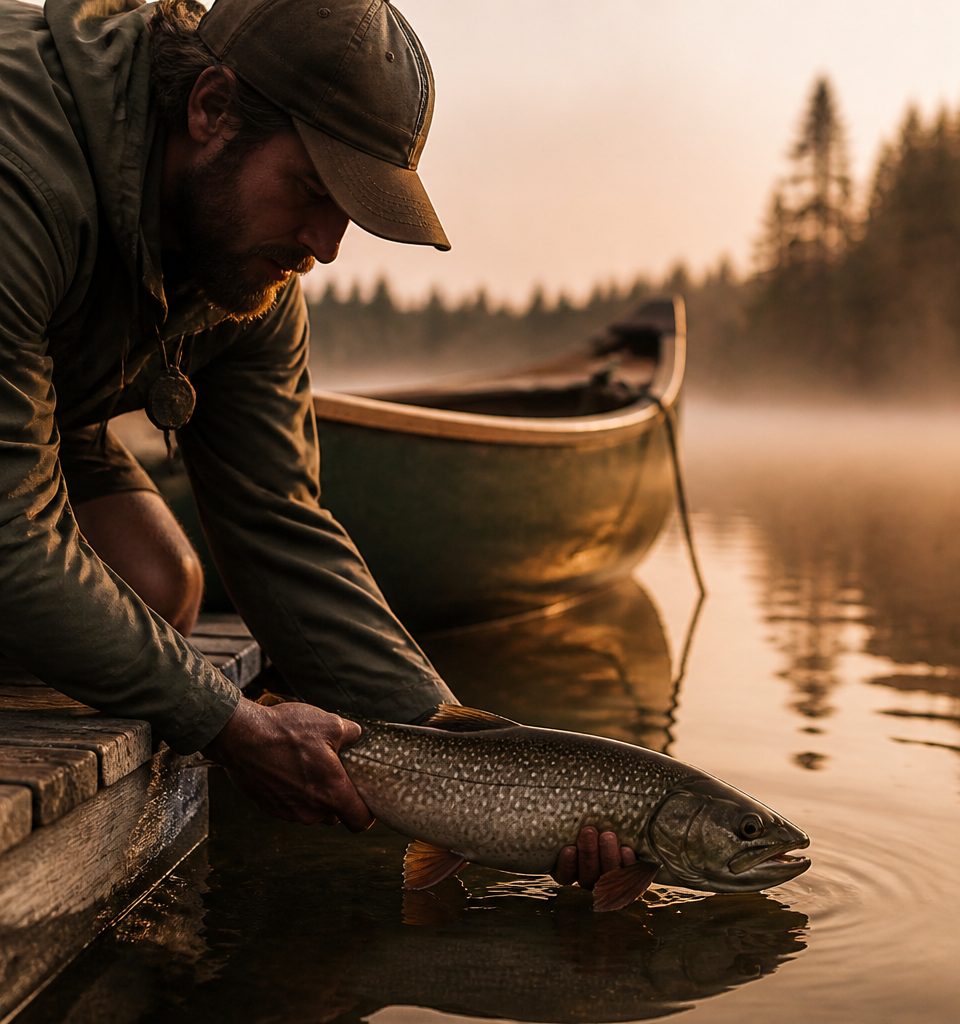
Lake trout / charr (*Salvelinus namaycush*) is easily recognized by its elongated, muscular body covered in pale yellowish vermiculations and spots over a darker background, without the red halos found on other salmonids. Its deeply forked tail distinguishes it clearly from its cousin featured in our guide to Brook Trout Fishing in Ontario: Guides and Tips. The lower fins have a distinct white leading edge, though lacking the contrasting black stripe seen on brook trout.
Coloration varies based on habitat, ranging from silvery grey in clear, expansive waters to deep bronze or nearly black in dark northern lakes. Its broad head and large mouth lined with sharp teeth reflect its role as an apex predator. In the province's premier waters, specimens reach trophy proportions comparable to fish targeted on a Lake Trout Fishing in the Northwest Territories: Freshwater Giants expedition.
Lake trout / charr habitat and distribution in Ontario
Lake trout / charr inhabit the cold, highly oxygenated waters of the Canadian Shield and the Great Lakes basin. Abundant populations thrive in Lake Superior, Lake Huron, and Georgian Bay, as well as renowned inland waters across the Algoma, Nipissing, Temagami, and Northwestern Ontario regions, including Lake Nipigon and Lake of the Woods.
This charr requires pristine water temperatures generally below 10°C (50°F). Deep oligotrophic lakes featuring sheer drop-offs, sunken humps, and steep rock points serve as primary holding areas. Lake trout frequently share the upper water column of these ecosystems with other predators, as encountered during Pike Fishing in Ontario: Expert Guide and Best Techniques.
Lake trout / charr seasonal movements and behaviour
Seasonal movement patterns are driven primarily by water temperature stratification and forage movements. Right after ice-out, when surface-to-bottom water temperatures remain cold and uniform, lake trout cruise shorelines and shallow flats to feed aggressively on minnows, ciscoes, and smelt.
As surface waters warm in early summer, fish descend to the thermocline and deep main-lake basins to remain within their preferred temperature band, typically between 15 and 40 metres (50 to 130 feet). By autumn, cooling surface waters trigger the fall turnover, drawing mature fish onto shallow gravel shoals and windward reefs to spawn, where they exhibit heightened territorial aggression.
When to fish for lake trout / charr in Ontario?
Early spring right after ice-out and early autumn offer the most accessible opportunities to catch lake trout in Ontario. In May and June, fish feed near the surface, allowing anglers to target them with light tackle and standard casting lures without specialized deep-water gear.
Midsummer remains exceptionally productive for anglers equipped to fish deep, as trout concentrate predictably in the cold water directly beneath the thermocline. Overcast days with a steady surface chop provide prime conditions, cutting light penetration and encouraging active feeding runs toward suspended bait schools.
Locating lake trout / charr in deep structure
Locating fish in large water bodies requires scanning steep breaklines, deep reefs, underwater saddles, and isolated basin holes using dependable sonar. The thermocline—where water temperatures drop abruptly—often appears on your screen as a distinct band of plankton and suspended organic matter.
Dense schools of cisco, lake whitefish, or smelt serve as reliable indicators; lake trout are usually suspended along the edges or cruising directly beneath these bait balls. Deep narrows between islands and bottleneck channels with underlying currents also concentrate baitfish and create prime ambush points.
Best lake trout / charr fishing techniques
Controlled-depth trolling using downriggers, leadcore line, or wire setups is the gold standard for presenting lures precisely at deep summer depths. Trolling slender flutter spoons, dodger-and-fly combos, or diving minnow plugs at speeds between 2 and 3 km/h (1.2 to 2 mph) allows anglers to cover water and target suspended schools efficiently.
Vertical jigging has surged in popularity as a direct, hands-on technique. Positioning the boat directly over deep structure using a bow-mount trolling motor allows anglers to work heavy metal spoons, blade baits, or large white tube jigs with aggressive hops off the bottom to provoke reaction strikes.
Essential gear for lake trout / charr fishing
A 7-to-8.5-foot medium-heavy action rod paired with a line-counter baitcasting reel provides the control needed for deep trolling. Spooling with 20-to-30-pound braided line finished with a 10-foot fluorocarbon leader offers the strength and abrasion resistance necessary for handling hard-running fish around rock structure.
For vertical jigging, a 6-to-7-foot medium-heavy spinning or casting rod with a sensitive tip and solid backbone is ideal. Tackle boxes should include classic flutter spoons like Williams Whitefish, heavy casting spoons, silver and blue minnow-style stickbaits, and 4-to-6-inch white or glow-in-the-dark soft plastic tubes mounted on heavy jig heads.
Lake trout / charr fishing regulations in Ontario
Fishing in Ontario requires a valid Outdoors Card and an applicable recreational fishing licence for residents or non-residents. Catch and possession limits, open seasons, and size restrictions vary by Fisheries Management Zone (FMZ), with specific sanctuaries, slot sizes, and gear restrictions such as barbless single hooks in effect on certain waters.
To purchase licences and review specific regulations for your destination, consult the Government of Ontario. When practicing catch-and-release, handle fish gently, especially during warm summer months when bringing them up through warm surface layers. Regulations change annually: always verify the current rules with official authorities before your trip.
Lake trout / charr conservation and ecology in Ontario
Lake trout / charr serve as a vital apex predator in cold-water ecosystems, maintaining balanced forage populations across large northern lakes. Because of their slow growth rate, late sexual maturity, and sensitivity to water quality and temperature changes, healthy stocks depend on careful fisheries management and responsible angling practices.
Anglers play an active conservation role by releasing large spawning-size specimens that sustain natural reproduction. Limiting prolonged fights from deep water minimizes thermal shock and barotrauma, ensuring that released trout can return quickly to their cold sanctuary.
Guided trips for lake trout / charr fishing
Booking a guided trip with an established outfitter gives you access to local expertise on expansive northern waters. Professional guides understand underwater structure, adapt presentations to changing weather patterns, and operate seaworthy boats rigged with advanced marine electronics.
From remote fly-in outpost camps in the Far North to full-service drive-in lodges on storied lakes, Fishing outfitters in Ontario provide the logistics and equipment needed for a memorable trip.
Explore available packages on MyOutfitters to plan your next wilderness adventure.
Frequently asked questions
When does the lake trout / charr season open in Ontario?
Open seasons vary by Fisheries Management Zone, generally opening between January 1 and late May. Spring right after ice-out offers the best shallow-water casting, while autumn provides prime trolling near rocky spawning structures before the winter closure.
How deep do lake trout / charr hold during summer in Ontario lakes?
In summer, lake trout typically hold between 15 and 40 metres (50 to 130 feet) to stay in cold water below 10°C (50°F). They position directly beneath the thermocline, suspended around deep structure or near schools of pelagic baitfish like cisco.
What is the best technique for catching lake trout / charr in midsummer?
Controlled-depth trolling with downriggers or leadcore line is the most reliable way to present lures at targeted depths. Vertical jigging with heavy spoons or soft plastic tubes over deep humps is also highly effective once fish are marked on sonar.
What lures work best for lake trout / charr in Ontario?
Silver, blue, and copper flutter spoons such as Williams Whitefish are proven producers. Slender minnow plugs, heavy metal casting spoons, and 4-to-6-inch white or glow tubes rigged on stout jig heads are equally reliable choices.
Do I need a special tag or licence to fish for lake trout / charr in Ontario?
You need a valid Ontario Outdoors Card and either a sport or conservation fishing licence. No separate trout stamp is required, but you must adhere to the specific season dates, catch limits, and size slot restrictions for the zone you are fishing.
Where are the biggest lake trout / charr found in Ontario?
The Great Lakes, particularly Lake Superior and Georgian Bay, produce trophy-class fish. Giant lake trout also thrive in deep Northwestern Shield waters such as Lake Nipigon, Lake of the Woods, and remote northern fly-in lakes.
How should you release a deep-water lake trout / charr to prevent injury?
Retrieve the fish at a steady, moderate pace to reduce the effects of rapid pressure changes. Keep the fish in the water while removing the hook, minimize handling out of the water, and support it facing into the current until it swims down on its own.
What line setup is recommended for lake trout / charr trolling?
A 20-to-30-pound braided main line provides zero stretch and excellent sensitivity for deep-water hooksets. Always tie on a 10-foot fluorocarbon leader of 15-to-20-pound test to maintain stealth in clear water.
Can you target lake trout / charr on a fly rod in Ontario?
Yes, fly fishing is effective in early spring and late autumn when trout roam shallow shorelines and reefs. An 8- or 9-weight fly rod paired with a full-sinking line and large baitfish streamers produces explosive takes in shallow water.
Why book a guided lake trout / charr trip with an outfitter?
Outfitter guides know the complex underwater topography of expansive lakes and can locate productive humps and bait schools quickly. Their specialized boats, navigation electronics, and tackle ensure a safe, efficient, and successful outing.