Fishing
Lake Trout / Charr Fishing in Manitoba: Northern Giants Guide
Target trophy lake trout in Manitoba's premier big-water lakes. Discover top fisheries, vertical jigging tactics, and expert tips for an unforgettable trip.
Key takeaways
- Spring fishing right after ice-out offers surface action before fish retreat into deep basins.
- Cold, deep Canadian Shield lakes like Clearwater Lake feature ideal rock structures for lakers.
- Vertical jigging with soft plastics and downrigger trolling remain the most consistent and productive methods.
- A valid provincial fishing licence and barbless hooks are mandatory across all Manitoba waters.
- Use leadcore line or thin braided line paired with a fluorocarbon leader to handle ultra-clear water.
Identifying lake trout / charr and distinct characteristics
Lake trout, commonly referred to as lake charr (*Salvelinus namaycush*), are distinguished by a streamlined body covered in light spots and a deeply forked tail. Unlike brook trout or cutthroat trout, they lack blue halos around their spots and feature coloration ranging from slate grey to dark olive green. A massive head and large, toothy mouth immediately reveal their status as an apex cold-water predator.
In the cold, crystal-clear waters of the Canadian Shield, these fish develop dense muscle built for open pelagic roaming. Growth rates are exceptionally slow due to northern water temperatures, meaning a fish over thirty pounds has often lived for several decades. Much like Lake trout / charr fishing in Quebec: complete guide, quick identification and proper handling of large specimens are essential to protect these valuable breeding fish.
Where do lake trout / charr live in Manitoba?
Lake trout primarily inhabit deep, oligotrophic lakes across central and northern Manitoba. These clear, nutrient-poor, highly oxygenated waters provide the cold thermal conditions essential for their year-round survival. Glacial scouring across the Precambrian Shield carved vast, deep rock basins where the species thrives.
Renowned destinations include Clearwater Lake near The Pas, Lake Athapapuskow, and Kississing Lake. Further north, remote fisheries around Lynn Lake and God's Lake support pristine populations of trophy fish. These remote waters often allow anglers to combine their hunt for lakers with other sport species, much like a Northern pike fishing in Manitoba: northern monsters guide expedition.
Seasonal behavior and movements of lake trout / charr
The lake trout's annual cycle is governed by lake thermal stratification. In spring, right after ice-out, uniform cold surface temperatures allow predators to patrol shallow waters along rocky points and emerging weed lines in search of whitefish and suckers.
As summer progresses and the thermocline establishes, lake trout descend below 10 to 12 degrees Celsius. They settle into deep basins, typically between 40 and 100 feet down, holding tight to submerged structures. In late autumn, cooling waters and shorter daylight trigger spawning runs onto shallow, wave-washed rocky reefs.
When to fish for lake trout / charr in Manitoba?
The post-ice-out window from late May to mid-June offers some of the most exciting action of the year. During this brief window, fish feed actively near the surface, allowing anglers to target them with light casting tackle or shallow trolling gear without heavy weights.
Midsummer, from July through late August, delivers reliable fishing for boats equipped with modern electronics. Although fish hold deep, their concentration around prominent underwater humps and drop-offs yields steady action once schools are located. September brings a second shallow-water flurry ahead of season closures, set against striking northern autumn scenery.
Locating lake trout / charr in Manitoba lakes
Finding midsummer lakers requires focusing on steep drop-offs, submerged reefs, and narrows linking large basins. Marine electronics help spot the distinct sonar arches of large predators suspended off the bottom or tucked along rock ledges. A similar methodical approach is detailed in Lake trout / charr fishing in Alberta: big lake secrets.
In northern Manitoba's ultra-clear lakes, fish respond strongly to light levels and wind-driven currents. Submerged reefs that intercept roaming baitfish schools make prime ambush spots. Studying bathymetric maps before drifting or trolling is the most reliable way to focus time on high-percentage water.
Effective techniques for catching lake trout / charr
Vertical jigging with large soft plastics on heavy jig heads is one of the most dynamic ways to target lake trout. Dropping a six-inch white tube bait or paddle-tail minnow straight to bottom and working it with sharp upward snaps triggers aggressive reaction strikes from territorial fish pinned to structure.
Deep trolling remains the classic method for covering open water. Downriggers, leadcore line, or bottom bouncers allow anglers to present large spoons or slender minnowbaits directly inside the strike zone. Wide wobbles and bright silver flash effectively mimic distressed pelagic baitfish.
What gear to choose for lake trout / charr?
A medium-heavy to heavy power rod from 6'6" to 7'6" provides the backbone needed to work heavy lures and control hard-running fish. For jigging, choose a sensitive graphite blank capable of telegraphing subtle pickups happening sixty feet or more below the boat.
Pair the rod with a reel featuring a smooth, powerful drag and enough spool capacity for at least 200 metres of 20- to 30-pound braided line. A long 15- to 20-pound fluorocarbon leader is vital in clear water to prevent spooking line-shy fish. Round out your tackle with heavy casting spoons, oversized tube jigs, and premium ball-bearing swivels to prevent line twist.
Manitoba lake trout / charr fishing regulations
Manitoba sportfishing is managed with strict catch and possession limits to safeguard slow-growing northern salmonid populations. Barbless hooks are mandatory across all provincial waters to support quick releases and minimize fish injury. Special management zones and seasonal closures also protect spawning fish on staging reefs.
For size limits, regional quotas, and licence purchases, consult the official guidelines published by the Government of Manitoba. Regulations change annually: always verify current rules with provincial authorities before heading out on the water.
Lake trout / charr conservation and population protection
Because of their slow metabolism in cold northern waters, lake trout take many years to reach sexual maturity and often spawn only every second or third year. Practicing catch-and-release on large breeding fish is vital for preserving these world-class fisheries. A released trophy fish continues to serve its top-tier ecological role in the food web.
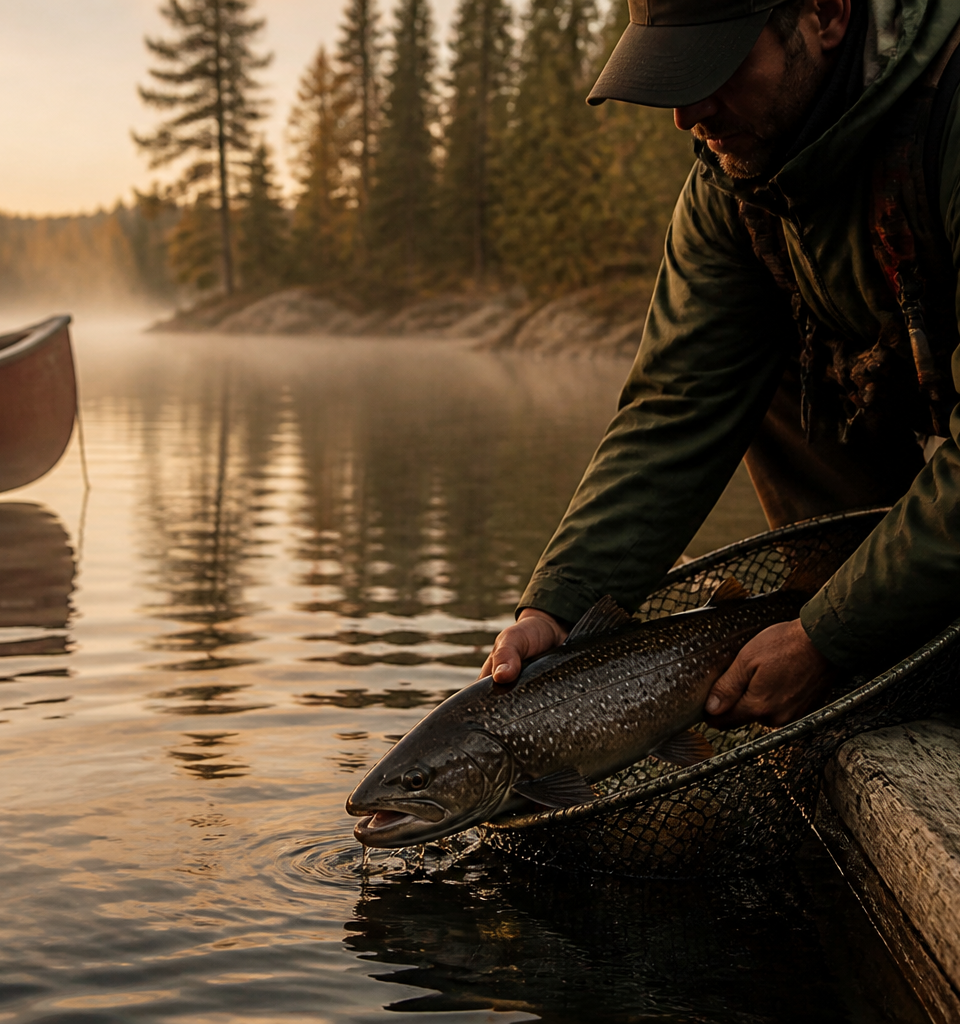
When fighting fish up from deep water, retrieve steadily and smoothly to reduce barotrauma stress. Always use a knotless rubber landing net, keep the fish in the water as much as possible, and support its body horizontally during photos. Many Manitoba fishing outfitters enforce mandatory release policies for trophy lakers to maintain exceptional fishery quality.
Planning a lake trout / charr fishing trip in Manitoba
Planning a northern Manitoba fishing trip involves choosing between drive-to lodges and remote fly-in outposts. Floatplane trips offer full wilderness immersion with minimal fishing pressure, while drive-in options provide greater scheduling flexibility.
Hiring a professional local guide can make all the difference, cutting down search time on massive, complex waterbodies. Experienced guides know how fish shift with changing weather patterns and ensure safe navigation across expansive northern lakes.
To find the right outfitter for your trip and explore premier Canadian fishing destinations, browse the vetted operations listed on MyOutfitters.
Frequently asked questions
When does the lake trout / charr fishing season open in Manitoba?
The season generally opens in mid- to late May, depending on provincial fisheries management zones and ice-out conditions. Early spring offers prime opportunities to catch fish in shallow water before summer warming sets in.
Where can you find the biggest lake trout / charr in Manitoba?
Clearwater Lake, Lake Athapapuskow, Kississing Lake, and deep northern fly-in waters are renowned for trophy-class fish. These cold, deep basins feature abundant forage and ideal habitat for growing giants.
Are barbless hooks mandatory in Manitoba?
Yes, barbless hooks are strictly mandatory for all sportfishing across Manitoba. Anglers must crimp or file down the barbs on all spoons, jigs, and hard baits before fishing.
What depth should you target for lake trout / charr in midsummer?
During July and August, focus on depths between 40 and 100 feet. Fish concentrate beneath the thermocline around submerged rock reefs, humps, and steep breaklines.
What is the best lure for vertical jigging lake trout / charr?
White or pearl 4- to 7-inch soft plastic tube jigs on 1- to 2-ounce jig heads are top producers. Soft paddle-tail minnows and heavy metal jigging spoons are also very effective.
How do you safely release a lake trout / charr caught in deep water?
Reel the fish up at a steady, moderate pace to help it acclimate to pressure changes. Keep the fish in a knotless rubber net in the water, minimize air exposure, and support its body horizontally without squeezing the gills or belly.
What line setup works best in clear Manitoba trout lakes?
A main line of 20- to 30-pound braided line paired with a 6- to 10-foot leader of 15- to 20-pound fluorocarbon provides excellent sensitivity for deep bites while remaining nearly invisible in clear water.
What is the daily catch limit for lake trout / charr in Manitoba?
Daily limits depend on the management zone and licence type, generally restricted to one or two fish with strict size limits on larger specimens. Consult the provincial fishing guide for specific rules on your destination lake.
What rod power is recommended for lake trout / charr?
A medium-heavy to heavy power rod with a fast action is recommended. This setup provides the power to work heavy lures and ensure solid hooksets in deep water.
Why book an outfitter for lake trout / charr fishing in Manitoba?
An outfitter provides secure access to remote northern waters, well-maintained boats, and the knowledge of local guides. This maximizes your fishing time on productive structure while simplifying travel logistics.