Fishing
Lake Trout / Charr Fishing in Nunavut: Ultimate Guide to Arctic Giants
Learn how to target trophy lake trout / charr in Nunavut. Expert tips, prime seasons, top techniques, and gear advice for an unforgettable Far North adventure.
Key takeaways
- The prime season runs from early July through late August, right when massive Arctic lakes shed their ice cover.
- Look for this apex salmonid in deep basins, shallow rocky bays, and tundra river mouths.
- Heavy trolling with large spoon lures and casting oversized lures around shallow structure remain the gold standards.
- A territorial Nunavut sport fishing licence is mandatory, and special access permits are required on certain Inuit-owned lands.
- Pack premium waterproof and insulated layering systems, as Arctic weather can shift drastically within minutes.
Identifying giant lake trout / charr in Nunavut
Lake trout / charr in Nunavut stand out with their deep, streamlined bodies, dark flanks mottled with pale vermiculations, and deeply forked tail fins. In the frigid waters of Canada's Far North, this apex predator often displays coloration ranging from slate grey to deep olive green, set over a pure white or amber-tinted belly depending on forage. Unlike southern populations, Arctic specimens feature remarkably dense muscle tissue shaped by an unforgiving wilderness.
Anatomically, these fish possess broad heads and powerful jaws lined with sharp teeth built to grip substantial prey. Their cryptic patterning lets them blend seamlessly against rocky bottoms and sharp drop-offs in tundra lakes. Seasoned anglers also recognize the species by the crisp white leading edges on its lower fins, a hallmark characteristic of freshwater charr.
In Nunavut, lake trout / charr reach staggering sizes while maintaining exceptional longevity. It is common to encounter fish stretching well beyond 40 inches and weighing 20 to 30 pounds, with true giants pushing well past those marks. These massive silhouettes represent decades of successful adaptation in one of the planet's harshest environments.
Where does lake trout / charr live in Arctic waters?
Arctic lake trout / charr thrive across Nunavut's vast watersheds, particularly within the Kivalliq and Kitikmeot regions. These crystal-clear water systems, fed by snowmelt and permafrost runoff, provide ideal coldwater habitat year-round. Waters like Dubawnt, Kasba, Ennadai, and Ferguson lakes stand as premier wilderness sanctuaries for trophy specimens.
Unlike temperate lakes where fish retreat beneath a warm summer thermocline, Nunavut's waters remain uniformly cold from surface to bottom throughout the open-water window. This thermal profile allows lake trout / charr to cruise shallow boulder flats, gravel beaches, and deep trenches at any time. Anglers who have experienced Lake trout / charr fishing in the Northwest Territories: Freshwater giants will find that same raw, untouched abundance across Nunavut.
Tributary mouths, rapid outflows, and narrow channels between large islands are prime hunting grounds. Natural currents concentrate nutrients along with forage schools like lake whitefish and lake cisco. These structural bottlenecks turn submerged features into high-percentage ambush points for the largest predators in the lake.
Coldwater seasonal patterns of lake trout / charr
Lake trout / charr behaviour in Nunavut is governed by the brief open-water window and prey abundance. Following ice-out in early summer, these salmonids ramp up their metabolism after months of winter dormancy. They enter an aggressive feeding period, patrolling wind-warmed shorelines under the constant glow of the midnight sun.
During midsummer, the lack of a distinct thermocline allows lake trout / charr to hunt across all depths at any hour of the day or night. A fish might breach the surface chasing bait at noon, then drop to forage along a deep saddle at midnight. This freedom of movement triggers violent, visual strikes, with fish often trailing lures for dozens of yards before smashing them.
As northern autumn nears in late August, spawning instincts kick in. Mature adults begin staging around traditional spawning shoals made up of wind-swept cobble, rubble, and gravel. Feeding activity remains intense as these predators store essential reserves before ice seals the tundra once again for ten long months.
When to fish for lake trout / charr in Nunavut?
The premier window for lake trout / charr fishing in Nunavut runs from early July to late August. Outside this summer frame, lakes stay locked under thick ice, making boat travel impossible. Each week of this short season delivers exceptional action with distinct tactical advantages.
Early July lines up with ice-out and the explosive revival of the tundra under 24-hour daylight. This is the ultimate time to intercept hungry monsters cruising in less than ten feet of water along lingering ice pans. Surface boils and shallow-water battles produce unmatched adrenaline.
August brings more settled weather patterns, though early autumn squalls can roll through. Fish are in peak condition, having packed on heavy muscle mass after weeks of continuous feeding. As nights lengthen slightly, changing light across the tundra sparks aggressive feeding runs along windblown points.
Locating lake trout / charr holding water in Nunavut
To pinpoint lake trout / charr across Nunavut's massive waters, focus on sharp breaklines, narrows, and isolated mid-lake shoals. Across vast surface acreage, underwater structure acts as a major gathering point for fish. Running onboard sonar helps reveal rocky ledges and drop-offs where trophy predators lie in wait.
Long points extending into open water create prime feeding lanes. When winds push surface water across these shelves, localized currents gather plankton and baitfish. Large lake trout / charr set up just off the downwind lip to ambush disoriented forage.
Never bypass river mouths or fast-water bottlenecks linking major lake basins. These highly oxygenated spots provide steady feeding all summer long. Scanning the surface will often reveal heavy swirls or scattering bait, sure signs that a giant predator is actively feeding below.
Top techniques for catching lake trout / charr
Heavy trolling and power casting with large lures are the top strategies for Nunavut lake trout / charr. Much like the approaches used during Lake trout / charr fishing in Quebec: Complete laker guide, presentations should be bold and aggressive to trigger fish accustomed to chasing substantial prey. A brisk trolling speed fires up the predatory instincts of territorial fish.
Casting from a drifting boat lets you work shallow points, boulder fields, and shoals with pinpoint precision. Launching heavy casting spoons or large swimbaits toward shore and retrieving them with erratic sweeps and pauses triggers crushing strikes. Hits frequently occur on the pause as the lure flutters down rocky ledges.
Vertical jigging over deep structure is lethal when fish hold tight to bottom. Working large soft-plastic tubes or heavy metal jigs right off the rock awakens neutral trout. For fly anglers, throwing oversized streamers on fast-sinking lines delivers heart-stopping takes and powerful deep-water runs.
Choosing gear for giant lake trout / charr
Handling Far North giants requires a medium-heavy to heavy casting or trolling rod measuring seven to eight feet. Your rod must feature serious backbone in the lower blank to turn powerful downward surges. Underpowered setups lead to drawn-out fights that over-exhaust long-lived fish.
Pair your rod with a reel featuring a smooth, sealed multi-disc drag loaded with at least 200 yards of 30- to 50-pound braided line. To protect against sharp teeth and jagged rock edges, always tie in a stout 25- to 40-pound fluorocarbon leader. These tackle standards align closely with the demands of Lake trout / charr fishing in Manitoba: Guide to northern giants.
Fill your tackle boxes with heavy spoons weighing 1 to 3 ounces in proven patterns like blue/silver, five of diamonds, pearl white, and high-vis orange. Pack durable deep-diving crankbaits, heavy jig heads paired with six- to eight-inch soft plastics, and heavy-duty long-nose pliers for quick, clean hook removals.
Fishing regulations for lake trout / charr in Nunavut
Sport fishing in Nunavut is governed by strict rules designed to protect the health and productivity of fragile Arctic fisheries. Every non-resident angler must hold a valid territorial sport fishing licence before wetting a line. Furthermore, certain waters crossing private Inuit-owned lands require specific access permits from regional authorities.
Single barbless hooks are mandatory across all territorial waters to minimize handling stress. Daily catch and possession limits are tightly managed, and premier trophy waters often require catch-and-release for all large breeding fish. Adhering strictly to these rules ensures this world-class fishery remains world-class.
For current management zones, quotas, and ancestral land access details, check official updates from the Government of Nunavut. Regulations change annually: always verify official rules before your trip.
Conservation and longevity of Arctic lake trout / charr
Lake trout / charr in the Far North grow at an exceptionally slow pace due to frigid water temperatures and a short feeding season. In Nunavut's lakes, a fish often takes 15 to 20 years to reach sexual maturity and pass the 10-pound mark. Large trophy specimens are frequently 50, 60, or even 70 years old.
This life history makes northern populations highly susceptible to overharvest or improper handling. Once a giant spawner is removed, the fishery takes decades to produce another fish of that caliber. As a result, outfitter guides and visiting anglers prioritize careful catch-and-release to protect these wild stocks.
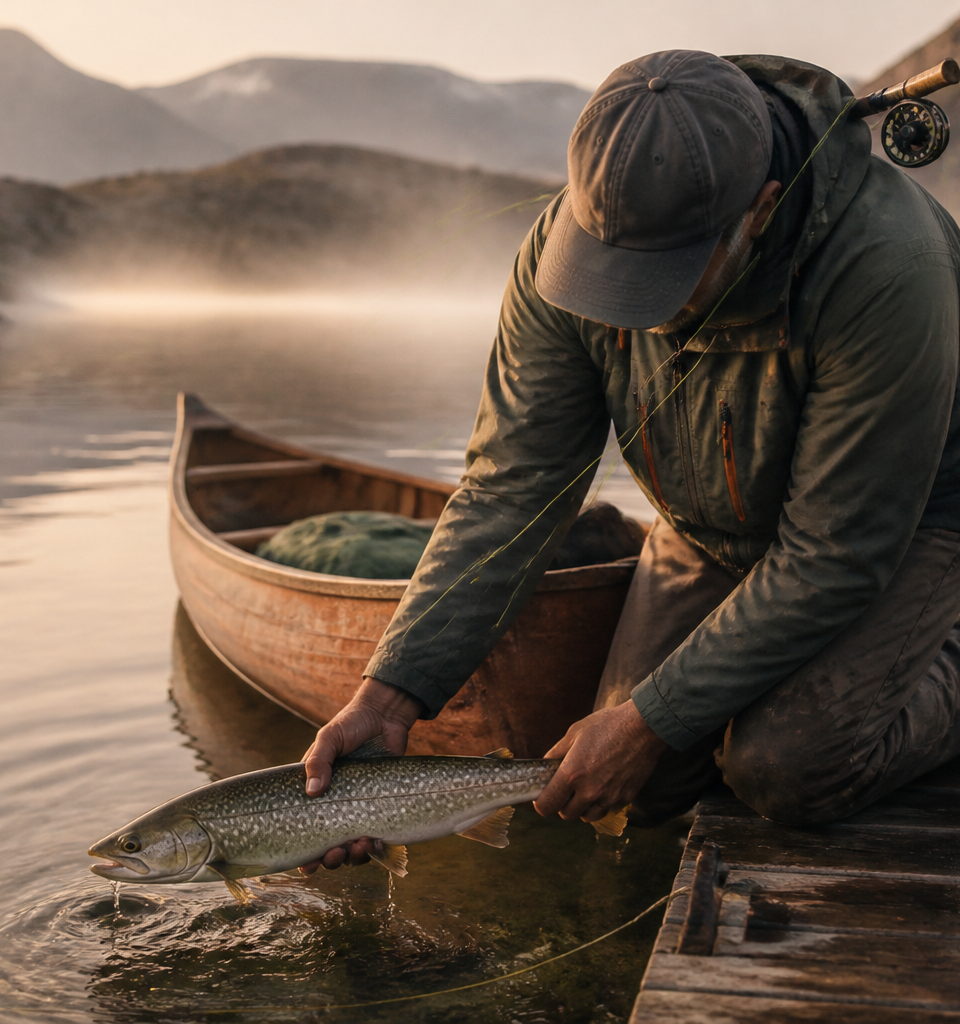
Gentle fish handling is the cornerstone of Arctic conservation. Keep fish out of the water for only a few seconds when taking photos, support their weight horizontally with both hands without squeezing vital organs, and revive them head-first in the current before release. Proper handling ensures these ancient apex predators continue to rule Arctic depths for generations to come.
Planning a lake trout / charr fishing trip
A Far North fishing expedition demands detailed advance planning. Most premier lodges and outposts across Nunavut are accessible only by air, requiring scheduled commercial flights into northern hubs followed by floatplane or ski-plane charters into remote camps. Booking an all-inclusive guided package is the most reliable way to travel seamlessly.
Professional local guides bring invaluable knowledge of shifting Arctic weather, expansive lake navigation, and fish movements. They keep you safe in remote backcountry without cell coverage and put you right on productive structure immediately. You'll gain access to pristine waters where fishing pressure is virtually non-existent.
To turn your dream of catching trophy Arctic fish across the wild tundra into reality, check out options for Lake trout / charr outfitters in Nunavut. Explore the MyOutfitters directory to find the northern outfitter that matches your goals and start planning your wilderness expedition today.
Frequently asked questions
When is the best time to fish for lake trout / charr in Nunavut?
The open-water season runs from early July through late August once lake ice clears. Early July offers fast-paced shallow-water action, while August brings more stable weather and fish in prime condition.
Where are the biggest lake trout / charr found in Nunavut?
Massive lakes across the Kivalliq and Kitikmeot regions—including Kasba, Dubawnt, and Ferguson lakes—hold world-class populations of trophy lake trout / charr. Rocky narrows, windblown points, and river outflows consistently hold the largest fish.
Do I need heavy tackle for Arctic lake trout / charr?
Yes. A medium-heavy to heavy rod spooled with 30- to 50-pound braid and a stout fluorocarbon leader is recommended. These fish routinely top 20 pounds, and their powerful deep-water runs demand dependable gear with a sealed drag.
What are the best lures for northern lake trout / charr?
Heavy casting and trolling spoons from 1 to 3 ounces in blue, silver, or fluorescent patterns are top producers. Large deep-diving plugs and 6- to 8-inch soft-plastic tubes fished on heavy jig heads are also deadly on trophy fish.
What fishing regulations apply in Nunavut?
Anglers must hold a valid Nunavut sport fishing licence and fish exclusively with single barbless hooks. Special access permits may also be required when travelling through certain Inuit-owned lands depending on your destination.
How do you access remote lake trout / charr waters in Nunavut?
Access to isolated lodges and outposts is handled almost entirely by floatplanes or charter flights departing from northern regional hubs. The absence of road access makes air charters essential for reaching these wilderness waters.
How long do lake trout / charr live in the Arctic?
In Nunavut's cold, nutrient-poor waters, lake trout / charr can live between 50 and 70 years. A 20-pound specimen has often spent more than three decades growing in these extreme conditions.
Is catch-and-release required for trophy lake trout / charr?
Catch-and-release for trophy-sized fish is strongly encouraged and often mandated by local regulations to protect mature spawning stock. Strict limits help preserve world-class sport fishing quality across these fragile waters.
What clothing should I pack for a Nunavut fishing trip?
Dress in high-performance layers: merino wool thermal base layers, a fleece or down mid-layer, and a rugged, waterproof and windproof outer shell. Arctic winds and sudden squalls make warm, weatherproof gear indispensable.
Why book a guided outfitter trip in Nunavut?
A guided package ensures safety in isolated wilderness and puts you directly on prime fishing grounds. Outfitter-coordinated flights, boats, and accommodations remove the guesswork from planning a remote Arctic expedition.