Fishing
Northern Pike Fishing in Yukon: The Ultimate Wilderness Guide
Discover how to plan a successful Northern pike fishing trip in Yukon: prime seasons, productive weed bays, proven lures, and expert outfitter advice.
Key takeaways
- Northern pike fishing in Yukon runs from early June to mid-September, peaking during the spring warm-up.
- Massive weed deltas, shallow bays, and slow-moving tributaries of large subarctic lakes hold the biggest trophy fish.
- Casting large spoons, articulated jerkbaits, and oversized soft plastics triggers aggressive strikes from these territorial predators.
- A Yukon territorial sport fishing licence is mandatory and easily purchased online before heading into the backcountry.
- A heavy-duty titanium or wire leader is essential to resist the razor-sharp teeth of this northern apex predator.
How to identify Northern pike?
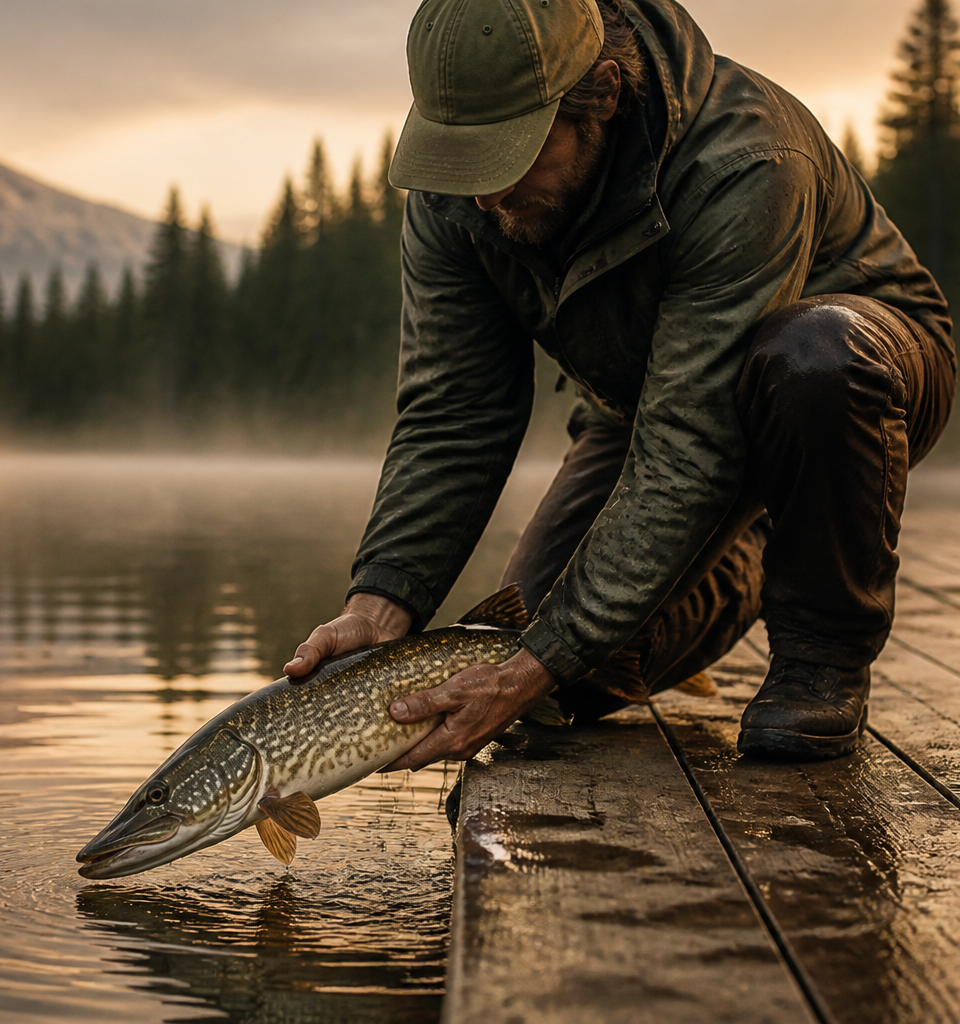
Northern pike are instantly recognizable by their elongated, torpedo-shaped body, broad duckbill-shaped snout, and olive-green flank patterned with bean-shaped yellowish spots. This camouflage allows the predator to blend seamlessly into weed beds and submerged timber. Its prominent lower jaw is lined with hundreds of sharp, backward-angled teeth that prevent any prey from escaping once seized.
In the cold, clear waters of the Far North, pike often exhibit high-contrast coloration and dense muscularity. Yukon specimens feature deep green flanks fading to creamy white bellies, with fins showing orange or reddish hues marked by dark mottling. This species thrives in pristine northern ecosystems, developing thick, heavy shoulders.
Distinguishing an adult pike from other northern game fish is straightforward. While juveniles may feature pale vertical bars rather than spots, they retain the characteristic streamlined profile and upward-facing eyes typical of an ambush hunter scanning the surface for unwary prey.
Northern pike habitat and distribution in Yukon
Northern pike are widely distributed across Yukon, primarily inhabiting shallow bays in southern lakes, river oxbows, and marshy deltas. They thrive throughout the Yukon River watershed and major lake systems such as Tagish Lake, Marsh Lake, Teslin Lake, and Mayo Lake. These water bodies offer the rich food sources and cover required for pike to flourish.
In these northern latitudes, prime pike habitat consists of calm waters where aquatic vegetation can take root despite severe winters. Shallow, wind-sheltered bays filled with milfoil and pondweed serve as natural feeding grounds. Here, water warms faster than in main river channels, boosting the predator's metabolism and attracting schools of baitfish. Anglers familiar with Northern pike fishing in the Northwest Territories: Ultimate Guide will encounter very similar subarctic habitat layouts throughout Yukon's wilderness deltas.
Further north, along the Porcupine River basin and the Old Crow Flats, pike inhabit slow-moving meanders and muskeg ponds created by the seasonal thaw. These remote areas, accessible only by floatplane or boat, hold unpressured populations that rarely encounter artificial lures, offering an exceptional wilderness fishing experience.
Northern pike behavior and seasonal cycles
Northern pike behavior throughout the open-water season is governed by water temperature, spring ice-out, and the availability of prime ambush cover. Right after ice-out—typically late May to early June depending on latitude—spawners migrate into shallow, weed-choked bays and flooded marshes to spawn in water under a metre deep, warmed by early summer sun.
Post-spawn, hungry females linger in shallow weed beds to rebuild energy reserves. Under the midnight sun, pike feed almost continuously. Unlike southern fisheries where pike turn sluggish in midsummer heat, Yukon lakes stay cool, sustaining aggressive feeding activity right through July in dense weed cover.
By late August and early September, cooler nights signal the approach of winter. Large Northern pike gradually transition toward deeper rocky points, drop-offs, and deep lake basin edges. Here, they occasionally share depth contours with other iconic northern predators, a familiar dynamic for anglers mastering lake trout fishing: expert tips, as both species frequently intercept on transition ledges.
When is the best time to catch trophy Northern pike in Yukon?
The prime window to catch trophy Northern pike in Yukon runs from mid-June to early July, with a second outstanding peak in late August. Early season coincides with large concentrations of post-spawn fish in shallow water. Pike are highly active, aggressively territorial, and responsive to a wide variety of presentations.
June offers the unique advantage of 24-hour daylight, allowing anglers to fish late into the evening when waters turn glass-calm. The absence of true night keeps fish actively hunting around the clock. Overcast days with a light chop provide ideal conditions to deceive wary, giant pike.
During midsummer (July and early August), fishing remains excellent, though tactical adjustments are necessary. Trophy fish often hold inside the thickest weed beds or along weed edges bordering cooler drop-offs. Come September's first frosts, pike feed heavily to build fat reserves ahead of the long winter freeze.
Where to find Northern pike in Yukon
To locate trophy Northern pike in Yukon, focus your efforts on calm, shallow bays between one and three metres deep, especially those carpeted with cabbage and pondweed. River deltas flowing into large lakes are prime locations, funneling nutrients and baitfish all season long.
Weed beds and lily pad clusters are essential holding zones. A big pike typically positions itself along outer weed edges or inside open pockets within dense vegetation. Rocky islands rimmed by cabbage beds and sheltered bays protected from main-lake currents are always worth thorough exploration.
In rivers and lake outlets, watch for eddy lines created by points of land, logjams, and channel pinch points. Pike avoid expending energy in heavy current; instead, they stage right on the seam between calm eddies and fast water, waiting to ambush drifting whitefish and small salmonids.
Effective techniques for catching Northern pike
The most productive techniques for triggering strikes combine casting heavy casting spoons, twitching jerkbaits, and working large soft plastics. The classic wide-body casting spoon remains an unbeatable subarctic staple: its erratic wobble and flashing reflection draw predators from afar in crystal-clear water.
Working lipless glide baits or hard jerkbaits generates explosive strikes. Sharp twitches followed by pauses of several seconds mimic a dying baitfish, coaxing cautious trophies out of heavy cover. Six- to eight-inch soft plastics rigged on weedless hooks or light jigheads allow you to probe tight weed pockets without snagging.
Fly fishing is an exhilarating and deadly method in shallow Yukon bays. Throwing large deer-hair or synthetic streamers over shallow cabbage produces ferocious topwater and sub-surface strikes. The visual thrill of seeing a massive silhouette surge from the weeds to engulf a fly right beside the boat is unmatched.
What gear should you choose for trophy Northern pike?
Recommended gear for targeting trophy Northern pike includes a 7- to 8-foot medium-heavy to heavy power baitcasting or spinning rod rated for lures between 1 and 3 ounces. A fast-action blank ensures solid hooksets into the pike's hard, bony jaw.
Pair your rod with a durable reel boasting a smooth, powerful drag, spooled with 40- to 65-pound braided line. Braid offers zero stretch for enhanced bite detection and immediate leverage around heavy weeds. A 12- to 18-inch bite-proof leader made of multi-strand titanium wire or heavy 80- to 100-pound fluorocarbon is mandatory to prevent bite-offs.
For fly anglers, a 9-foot 8-, 9-, or 10-weight fly rod paired with an aggressive weight-forward floating line is ideal for punching wind-resistant streamers. Always carry proper release tools: long needle-nose pliers, heavy jaw spreaders or hook cutters, and a large, knotless rubber-coated landing net to handle fish safely.
Northern pike fishing regulations in Yukon
Sport fishing in Yukon is subject to strict regulations aimed at conserving fish populations in fragile, slow-growth subarctic ecosystems. Every angler must hold a valid Yukon sport fishing licence before wetting a line, easily obtained online through territorial portals or from authorized local vendors.
In most territorial waters, single barbless hooks are mandatory to minimize handling stress and injury during release. Strict daily catch and possession limits apply, often paired with slot sizes requiring the immediate release of pike over a specified length to protect large breeding females. For full details on management zones, seasonal closures, and special waterbody regulations, visit the official Government of Yukon website.
Regulations change annually: always verify current rules with provincial or territorial authorities before travelling.
Conservation and protection of Northern pike populations
Due to short growing seasons and low average water temperatures, a Yukon Northern pike takes 10 to 15 years to exceed 40 inches in length. This slow growth makes northern populations vulnerable to overharvest, demanding responsible catch-and-release ethics from visiting anglers.
Practicing proper catch-and-release is vital to maintaining Yukon's world-class pike fisheries. When landing a trophy, keep the fish in the water while preparing cameras. Never hold a large pike vertically by the gills or jaw, as this causes lethal spinal and internal injuries; always support the fish horizontally with two hands under the belly and behind the head.
As apex predators, pike play a crucial role in maintaining balanced aquatic ecosystems. Across Western Canada, wildlife managers apply similar stewardship standards, as highlighted in guides like Northern Pike Fishing in British Columbia: Expert Guide. Treating every trophy with care ensures world-class fishing for future generations.
Planning a guided Northern pike fishing trip in Yukon
Booking a trip with a Yukon fishing outfitter provides access to remote wilderness waters far from roads and angling pressure. Whether you choose a rustic fly-in outpost camp on a secluded lake or a full-service luxury lodge, the experience delivers unforgettable wilderness memories.
Local outfitters and guides offer invaluable knowledge on reading subarctic waters, navigating vast lakes, and locating trophy fish throughout changing seasonal patterns. They handle remote logistics seamlessly, from floatplane charters departing Whitehorse to shore lunches cooked over an open fire.
To plan your subarctic angling adventure and find the lodge that suits your goals, explore the available Yukon fishing outfitters. Trust MyOutfitters to connect you with unforgettable experiences across Canada's premier wilderness destinations.
Frequently asked questions
When is the best time to go pike fishing in Yukon for maximum success?
The prime time is mid-June to mid-July, when shallow waters warm up and trigger heavy post-spawn feeding activity. During this window, pike concentrate in shallow weed bays, and the midnight sun allows for around-the-clock sight fishing.
Where can you find the biggest trophy Northern pike in Yukon?
The largest trophy pike are found in remote, fly-in lake systems across southern and central Yukon, as well as expansive northern river watersheds. These unpressured waters feature low fishing pressure and extensive shallow weed deltas where mature spawners thrive.
Do you need a guide to fish for Northern pike in Yukon?
Hiring an experienced guide is strongly recommended to safely navigate vast, remote northern waters and quickly pinpoint productive weed beds. Local guides understand changing subarctic weather, lake topography, and safe fish-handling practices for trophy specimens.
What is the most effective lure for Northern pike in the North?
Large casting spoons (such as Daredevles or Williams spoons in silver or five-of-diamonds patterns) remain the most dependable choice. Oversized soft swimbaits on light jigheads, hard glide baits, and surface poppers around dense weed cover are also exceptionally productive.
What rod setup is best for pike fishing at an outfitter?
A 7- to 7.5-foot medium-heavy baitcasting or spinning rod paired with a durable 3000- to 4000-size reel (or 200/300-size baitcaster) spooled with 40- to 50-lb braid provides the leverage needed to cast large lures and haul big fish out of dense cabbage beds.
Is a wire or titanium leader required for Northern pike?
Yes, a bite-resistant leader made of 30- to 50-lb titanium wire, multi-strand steel, or 80- to 100-lb heavy fluorocarbon is essential to prevent pike from biting through your mainline with their sharp teeth.
How much does a Yukon sport fishing licence cost?
Licence fees vary depending on whether you are a Yukon resident, Canadian resident, or non-resident alien. Licences are easily purchased online via the Yukon government portal or through local authorized vendors, and must be carried during every fishing outing.
Can you fly fish for Northern pike in Yukon lakes?
Yes, fly fishing for pike is extremely effective and popular in shallow Yukon bays in early summer. An 8- to 10-weight fly rod with a weight-forward floating line delivers large baitfish or leech streamers right over weed beds for explosive visual strikes.
What is the possession limit for Northern pike in Yukon?
Daily catch and possession limits vary by management zone and specific lake regulations, often featuring protected slot sizes where fish over a certain length must be released immediately. Always consult the current Yukon fishing regulations summary before fishing.
How do you properly handle a large Northern pike for release?
Support the pike horizontally using two hands—one under the belly and one supporting the tail or behind the gill plates—without hanging the fish vertically. Keep the fish in the water as much as possible, use a rubber knotless net, and use long pliers to remove hooks swiftly.