Fishing
Northern Pike Fishing in Northwest Territories: The Ultimate Guide
Discover the secrets of trophy Northern pike fishing in the Northwest Territories: prime seasons, aggressive tactics, heavy-duty tackle, and expert tips.
Key takeaways
- The prime season runs from mid-June to mid-September, taking full advantage of ice-out and the midnight sun.
- Vast, shallow, weedy bays in Great Slave Lake and northern river systems hold record-class fish.
- Massive casting spoons, topwater lures, and bulky streamers trigger violent, visual strikes.
- A valid Northwest Territories fishing licence is mandatory, along with strict barbless single hook requirements across multiple waters.
- Use a titanium or heavy fluorocarbon leader to withstand the razor-sharp teeth of these apex predators.
Identifying Trophy Northern Pike in the North
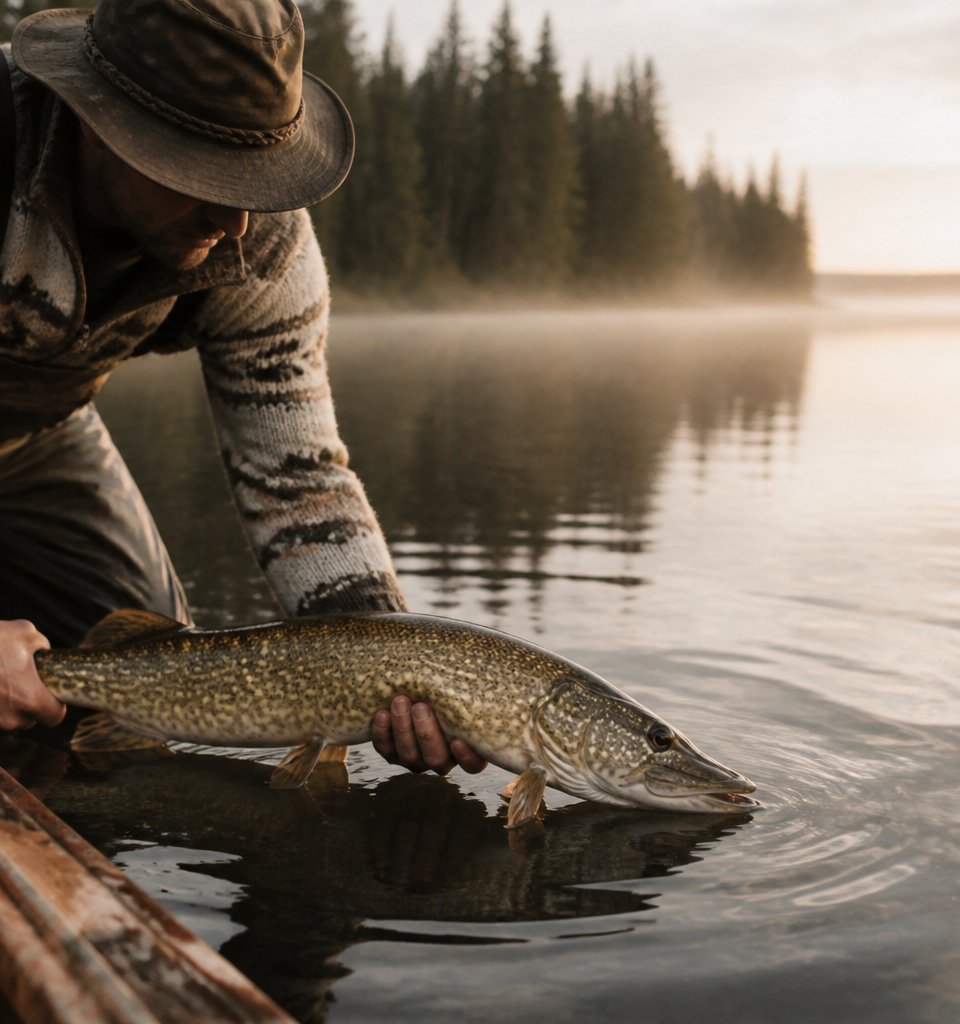
Northern pike (*Esox lucius*) in the Northwest Territories stand out for their massive girth, dark green flanks flecked with pale yellow spots, and fierce aggressiveness. In these pristine, cold waters, fish routinely exceed 40 inches in length, packing dense muscle built in demanding northern conditions. A duckbill-shaped head lined with hundreds of backward-curving teeth ensures prey rarely escapes.
Unlike southern populations highlighted in our guide to Northern Pike Fishing in Quebec: Complete Guide and Techniques, far-north pike boast remarkable longevity. Growth is slower due to short summer growing seasons, meaning trophy specimens are frequently over twenty years old. Their coloration shows striking contrast, ranging from deep olive green to rich golden bronze depending on water clarity.
To identify a genuine northern trophy, look at the width of the head and the thickness of the back right behind the gill plates. These heavy proportions reflect a steady diet of whitefish, suckers, and ciscos. A dorsal fin set far back on the body delivers explosive acceleration when ambush-hunting in weedbeds.
Northern Pike Aquatic Habitats in Northwest Territories
Northern pike thrive in vast shallow bays, river deltas, and island mazes across northern water systems. Great Slave Lake, particularly its North and East Arms, is a world-class fishery where cabbage beds flourish under continuous daylight. Navigable river channels like the Mackenzie and its tributaries also offer rich slack-water feeding grounds.
These massive waterbodies provide a wide range of structure, from shallow sandy bays warmed by inflow creeks to steep rocky drop-offs. Much like the untamed wilderness featured in our article on Northern Pike Fishing in Manitoba: Guide to Northern Monsters, the Northwest Territories offers virtually zero angling pressure across thousands of square kilometres of untouched water.
Prime structures include broadleaf cabbage beds, island points swept by light current, and shallow marsh flats that warm up quickly after ice-out. These zones concentrate baitfish, drawing large predators looking for easy calories.
Northern Pike Behavior and Life Cycle
In subarctic waters, Northern pike behaviour is driven by the short open-water season and a constant search for warmth. Right after spring ice-out, adult fish gather in the shallowest, warmest bays to spawn over submerged vegetation. During this window, their metabolism spikes after months of winter dormancy.
Once spawning wraps up, trophy females linger in the shallows for several weeks on an aggressive post-spawn feed. They stage along emerging weedlines, ambushing anything moving across their strike zone. Under the midnight sun, pike feed around the clock, creating incredible opportunities to fish right through the middle of the night.
By late summer, as shallow weeds begin to die back and surface water cools, the largest pike gradually migrate toward deeper main-lake structure. They hold on rocky points and outer bay saddles, ambushing pelagic baitfish on the move.
When to Fish for Northern Pike in Northwest Territories?
The best time to catch giant pike runs from mid-June through late August, with peak activity right after ice-out. In June, pike concentrate in less than six feet of water, making sight-fishing incredibly exciting. Endless daylight around the solstice lets you fish as long as your arms can handle it.
July generally brings warmer, more stable weather, making it ideal for casting across weedbeds by boat. Cabbage beds reach full maturity, holding dense numbers of hard-fighting predators. Warmer water temps drive aggressive behaviour, resulting in explosive topwater blow-ups.
From late August into mid-September, overnight temperatures drop fast, triggering a heavy pre-winter feeding binge. This is a prime window for targeting maximum weight, as females pack on fat reserves before freeze-up.
Where to Find Northern Pike in Clear Water?
To locate Northern pike, focus on bays sheltered from prevailing winds where water temps rise a few critical degrees. Bottoms covered in broadleaf cabbage provide preferred ambush cover for dominant fish. Using polarized sunglasses, you can often spot large silhouettes holding motionless in mid-water.
River mouths and tributary outflows create exceptional feeding stations by funneling in nutrients and warmer water. In these spots, pike often share hunting corridors with other northern giants, a dynamic explored in our guide to Mastering Lake Trout Fishing: Expert Tips.
Do not overlook dense shoreline reed beds. Pike push right into the reeds to hunt waterfowl, rodents, and baitfish, giving away their presence with heavy surface boils.
Top Techniques for Catching Aggressive Northern Pike
Casting large topwater lures and working heavy spoons are the most exhilarating and productive tactics in the North. Prop-baits, soft frogs, and walk-the-dog stickbaits produce explosive strikes over submerged weedbeds.
Fly fishing for northern pike has also exploded in popularity. Casting large articulated streamers made of deer hair or synthetic fibres (such as Dahlberg Divers and Bunker patterns) produces aggressive visual follows in gin-clear water. A strip-pause retrieve is deadly.
For fish holding along deeper drop-offs late in the season, large soft plastics on heavy jig heads or big tandem spinnerbaits let you work through the water column efficiently. Vary your retrieve speed until you dial in the day's trigger cadence.
Recommended Gear for Northern Pike in Northwest Territories
A 7- to 8-foot medium-heavy or heavy casting rod matched with a sturdy baitcasting reel featuring a smooth, powerful drag is the standard setup for trophy pike. Spool up with 40- to 65-pound braided line to haul fish out of heavy cabbage without break-offs.
A reliable leader is essential against a pike's sharp teeth. Use a 12- to 18-inch single-strand or multi-strand titanium leader, or heavy fluorocarbon in the 80- to 100-pound range. Fly anglers should opt for an 8- to 10-weight rod paired with floating or intermediate sink-tip lines.
Round out your gear with a large, knotless, flat-bottom landing net, long-nose pliers for unhooking, and a pair of heavy-duty hook cutters. Polarized sunglasses with amber or copper lenses are essential for spotting cruising fish and protecting your eyes.
Northern Pike Fishing Regulations in Northwest Territories
Sportfishing in the Northwest Territories is managed to protect the exceptional quality of trophy fisheries. Anglers must hold a valid territorial sportfishing licence, available online or through regional offices. Many major lakes enforce barbless single hook regulations to ensure quick, clean releases.
Strict catch-and-possession limits, along with protected slot sizes, protect large breeding fish across key waters. Proper handling requires keeping fish in the water as much as possible, using wet hands, and supporting their weight horizontally before release. For full details on zones, limits, and seasons, visit the Government of the Northwest Territories.
Regulations change annually: always verify current requirements before heading out.
Conservation and Ecological Role of Northern Pike
Northern pike serve as the primary apex predator in subarctic freshwater ecosystems. By culling weak, injured, or diseased fish, they help maintain balanced and genetically robust populations of whitefish, perch, and suckers.
Due to cold northern water and relatively low biological productivity, pike grow slowly. A fish over 40 inches often represents 15 to 20 years of continuous growth. Overharvesting large fish can disrupt the local aquatic food chain for decades.
Widespread practice of catch-and-release by outfitters and guides protects this world-class natural resource. Handling trophy breeders with care ensures the Northwest Territories remains a premier destination for giant pike.
Planning a Guided Expedition for Northern Pike
Planning a fishing trip to Canada's North requires solid logistics. Top fisheries are generally reached by floatplane out of hubs like Yellowknife, Hay River, or Fort Simpson. Booking a guided lodge package ensures safe travel in remote wilderness and puts you on prime water with local experts who know the seasonal movements.
To find the right lodge or outpost camp for your trip, check out available Northwest Territories fishing outfitters. Wilderness lodges provide well-equipped boats, proper tackle, and skilled guides who know how to read the weather and locate giant fish.
Start planning your northern angling adventure today and book your next trophy pike trip on MyOutfitters.
Frequently asked questions
When is the best time to fish for Northern pike in Northwest Territories?
The prime window runs from mid-June through late August, peaking right after spring ice-out in June. During these weeks, the midnight sun allows continuous fishing in shallow bays where pike congregate to feed heavily.
Where are the best Northern pike lakes in Northwest Territories?
Great Slave Lake, especially its North and East Arms, ranks among the finest trophy pike fisheries in the world. Numerous remote fly-in lakes across the Dehcho and North Slave regions also offer exceptional unpressured fishing.
What size is considered a trophy Northern pike in the Northwest Territories?
A trophy pike generally measures over 40 inches (100 cm) and can exceed 48 inches (125 cm) in northern lake systems. These fish feature heavy girths, with weights often reaching 25 to 35 pounds.
Are barbless hooks mandatory in the Northwest Territories?
Yes, barbless single hooks are mandatory on many Northwest Territories waters and strongly recommended everywhere else. This rule minimizes injury and ensures quick, safe releases for trophy fish.
What rod setup is best for Northern pike?
A 7- to 8-foot medium-heavy to heavy fast-action casting rod is ideal for throwing large lures and controlling strong fish. Fly anglers should choose an 8- to 10-weight fly rod with plenty of backbone.
Is a wire leader necessary for Northern pike?
A bite-proof leader is essential to prevent bite-offs from sharp teeth. Multi-strand titanium wire (40 to 60 lb) or heavy 80-pound fluorocarbon provides the best balance of stealth, strength, and lure action.
How do you access remote pike fishing waters in the Northwest Territories?
Most premier destinations are reached by commercial flight into Yellowknife, followed by a floatplane charter to a wilderness lodge or outpost camp. Some road-accessible fisheries exist around Great Slave Lake.
What weather gear should you pack for a northern fishing trip?
Subarctic weather changes rapidly, swinging from sunny days over 25°C to cold winds near freezing. Pack a versatile layering system, high-quality waterproof outerwear, bug netting, and sunscreen.
Can you fly fish for Northern pike in the Northwest Territories?
Fly fishing is extremely productive thanks to clear water and shallow spring bays. Large, colourful streamers and topwater poppers draw aggressive visual eats right near the boat.
Should you book a guided outfitter for Northern pike?
Booking with a guided outfitter is highly recommended for navigating large, remote northern lakes safely. Local guides know the lake structure, changing weather patterns, and where to find the largest pike throughout the season.