Fishing
Northern Pike Fishing in Saskatchewan: Expert Guide and Tactics
Discover the best techniques, prime locations, and peak seasons to target trophy Northern pike across Saskatchewan's wild lakes and legendary river systems.
Key takeaways
- From late May to mid-June, the action peaks in shallow bays that warm up rapidly under the spring sun.
- Cabbage weed beds and river inlets across the Canadian Shield hold the highest densities of apex predators.
- Heavy casting spoons, soft plastics, and oversized streamers trigger aggressive strikes from trophy specimens.
- Anglers must hold a valid provincial licence and strictly follow size restrictions and harvest limits.
- Using a steel or heavy fluorocarbon leader at all times is essential to prevent bite-offs from sharp teeth.
How to identify Northern pike?
Northern pike are easily recognized by their elongated, torpedo-shaped body, olive-green flanks marked with yellowish-white bean-shaped spots, and a duckbill-shaped snout lined with hundreds of razor-sharp teeth. Unlike muskellunge, which feature dark vertical markings on a light background, Northern pike have light spots arranged horizontally across a dark body. Their dorsal and anal fins are set far back near the tail, providing explosive burst speed for ambush attacks.
In northern Canadian waterways, as seen during Northern pike fishing in the Northwest Territories: Ultimate guide, pike possess highly developed sensory pores along their lateral lines and the underside of their lower jaw. Juvenile fish may show light, oblique bars that gradually shift into distinctive spotted patterns as they mature.
An observant angler will note that the lower half of the cheek is fully scaled, whereas the lower half of the operculum (gill cover) is scaleless. This anatomical trait reliably distinguishes Northern pike from other members of the esocid family in the field.
Northern pike habitats in Saskatchewan lakes
Saskatchewan presents a striking contrast between the vast reservoirs of the southern prairies and the countless wilderness waters scattered across the northern boreal forest and Precambrian Shield. In the agricultural south, waterbodies like Lake Diefenbaker feature expansive rocky points, sheltered coulees, and steep drop-offs where pike thrive on rich forage bases.
Heading north past Prince Albert and Lac La Ronge, the landscape transitions into a vast network of pristine lakes connected by powerful river systems like the Churchill River. Northern pike inhabit shallow weed-filled bays, submerged rock reefs, and sharp breaks that plunge into deep water.
Broadleaf pondweed beds, commonly called cabbage weed, provide prime habitat for outsized pike. These living structures deliver optimal oxygenation, exceptional ambush cover, and a steady concentration of prey species such as lake whitefish, white suckers, and yellow perch.
Wild Northern pike behaviour and seasonal patterns
The annual cycle begins right after ice-out in spring, when adult pike push into ultra-shallow, marshy bays to spawn. During this window, pike seek out pockets of water warmed by the spring sun, jumpstarting their metabolism after the winter freeze. Big post-spawn females linger in the shallows for several weeks, creating world-class sight-fishing opportunities.
As summer progresses and surface temperatures rise, territorial behaviour shifts, much like patterns observed during Northern pike fishing in Manitoba: Giant pike guide. Medium-sized fish often remain active around dense weed edges, while larger pike transition toward cooler, deeper water adjacent to main-lake points, sunken humps, and river current seams.
In autumn, dropping water temperatures draw trophy pike back into shallower feeding zones for an intense pre-winter feed. They hunt large prey to build energy reserves before freeze-up, making fall one of the best times to land heavy, hard-fighting trophy fish.
When to catch Northern pike in Saskatchewan?
Late May through early July is the prime window for high numbers of fish and aggressive shallow-water action. Extended daylight hours, emerging weed lines, and warming shallows bring active pike patrolling sandbars, rocky shelves, and weed flats.
Midsummer, through July and August, remains productive for anglers who adjust by targeting deeper structure or windblown shorelines. A steady wind pushing into a rocky point or bay mouth concentrates baitfish and triggers ambush feeding in the chop.
Fall, from late August through late September, delivers exceptional shots at trophy fish against the backdrop of vibrant autumn foliage. Cool, overcast, and breezy days spark aggressive feeding windows where big pike readily crush large presentations.
How to locate trophy Northern pike
Finding trophy pike requires targeting sharp depth transitions adjacent to rich forage areas. Backwater bays sheltered from heavy winds, carpeted with fresh green weeds and deadfall timber, consistently hold predators early in the season.
During midsummer, focus on saddle structures connecting main-lake basins or neck-down areas where current concentrates forage fish. Giant pike set up in current breaks behind large boulders or along sheer granite walls to ambush passing meals with minimal effort.
Careful surface observation also reveals active predators. Fleeing baitfish breaking the surface or sudden swirling boils over submerged weed tops signal feeding pike on the hunt.
Best techniques for catching Northern pike
Casting and retrieving remains the go-to approach for covering water and provoking reactionary strikes. Ripping classic casting spoons, large jerkbaits, or paddle-tail swimbaits on jig heads allows you to work multiple depths while triggering hesitant predators.
Topwater propbaits and walk-the-dog stickbaits deliver explosive surface strikes when pike are holding in less than six feet of water. Watching a large wake charge toward your lure before a violent surface blow-up is one of the most exciting experiences in freshwater angling, similar to the action highlighted in this Northern pike fishing in Ontario: Expert guide and top techniques.
For fly anglers, throwing large streamers tied with bucktail and synthetic flash on sinking-tip lines is remarkably productive. The pulsing, erratic movement of an articulated fly closely imitates an injured baitfish, often fooling pressured fish that ignore noisy hardware.
Tackle and gear selection for big Northern pike
A 7- to 8-foot medium-heavy to heavy power rod with a fast action provides the backbone required to cast heavy lures and drive hooks home into bony jaws. Pair it with a dependable casting or heavy spinning reel spooled with 30- to 50-pound braided line to cut through dense aquatic vegetation during tough battles.
The leader is the most critical link in your setup. Pike teeth will shear through standard monofilament instantly; always run a 12- to 18-inch leader made of titanium, multi-strand wire, or 80- to 100-pound fluorocarbon.
Proper landing and release gear protects both the angler and the fish. Long needle-nose pliers, heavy-duty hook cutters for difficult hooksets near the gills, and a large, knotless rubberized landing net ensure quick hook removal and safe handling without damaging the protective slime coat.
Northern pike fishing regulations in Saskatchewan
Sportfishing in Saskatchewan is managed by specific zones that establish daily catch limits, possession quotas, and protected size slots. These regulations are designed to safeguard trophy breeding stock, often prohibiting the harvest of more than one pike over a designated length threshold.
Every angler, whether resident or non-resident, must purchase an official provincial fishing licence before wetting a line and adhere to special regulations, such as barbless single hook rules on specific northern rivers and lakes. Check full details, zone maps, and orders directly on the Government of Saskatchewan website to ensure full compliance.
Regulations change annually: always verify current limits, seasonal closures, and local exceptions before heading out on the water.
Conservation and ecological role of Northern pike
As apex predators at the top of the aquatic food web, Northern pike play a vital biological role in maintaining balanced northern ecosystems. By preying on weak, injured, or overabundant fish, they help keep forage species and other game fish populations healthy and balanced.
Pike growth in northern waters is slow due to the short summer growing season. A fish exceeding 40 inches can take 10 to 15 years or more to reach that size, making every mature trophy irreplaceable to local spawning populations.
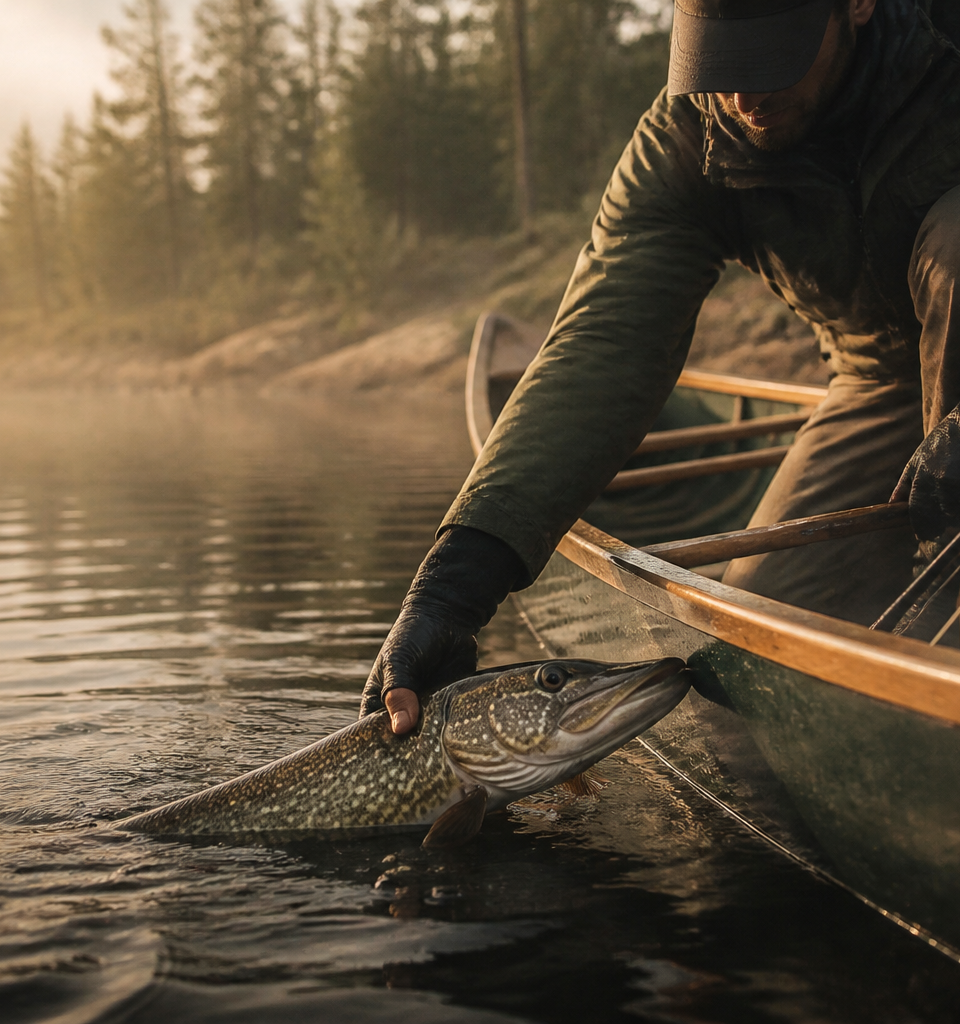
Practicing catch-and-release on trophy pike preserves these world-class fisheries for the future. Handle large fish horizontally by supporting the belly and tail without holding them vertically by the jaw, and keep out-of-water exposure down to brief seconds before releasing them promptly.
Planning a successful Northern pike fishing trip in Saskatchewan
Planning a northern fishing trip requires careful attention to logistics, lodging, and lake selection. Whether you choose a remote fly-in outpost camp or a full-service lodge on a major watershed, hiring an experienced local guide can elevate a good trip into an unforgettable adventure.
Professional guides understand structural contours, seasonal water temperature variations, and daily feeding patterns in changing weather. They keep you positioned over productive weed lines and ensure safe travel across large, remote lakes.
To find the destination that matches your wilderness travel plans, browse the options for Saskatchewan pike fishing outfitters to book your next Northern pike expedition.
Planning your outfitter fishing trip has never been easier: rely on MyOutfitters to discover top Canadian destinations, compare outfitter services, and book your next outdoor adventure.
Frequently asked questions
When is the best time to fish for Northern pike in Saskatchewan?
Late May to mid-June offers peak shallow-water action, while September provides prime opportunities for trophy-sized fish. During these cooler windows, pike feed heavily near the surface and along new weed growth.
Where are the biggest Northern pike found in Saskatchewan?
The largest pike are primarily found in northern river networks, particularly throughout the Canadian Shield and the Churchill River drainage basin. Large southern reservoirs like Lake Diefenbaker also produce exceptional trophy-class fish.
What size lures work best for Northern pike?
Lures measuring between 6 and 12 inches (15 to 30 cm) are ideal for tempting trophy fish while deterring smaller hammer-handles. Heavy metal casting spoons, large jerkbaits, and jointed swimbaits are among the top choices.
Is a bite leader necessary for Northern pike fishing?
Yes, a tough bite leader made of titanium, multi-strand wire, or 80- to 100-pound fluorocarbon is mandatory. Pike teeth cut through standard monofilament immediately, resulting in lost gear and unnecessary harm to the fish.
What type of rod is best for catching large pike?
A 7- to 8-foot medium-heavy to heavy power rod with a fast action is recommended. This setup provides the casting backbone required for large lures and delivers solid hooksets into hard, bony jaws.
How do you release a large Northern pike safely?
Support the fish horizontally using two hands—one under the belly and one near the base of the tail—without hanging it vertically. Use long pliers to remove hooks in the water and keep out-of-water exposure to an absolute minimum.
What is the legal possession limit for Northern pike in Saskatchewan?
Catch and possession limits vary across provincial management zones and generally include strict slot limits on large fish. Always check the official regulations for your specific waterbody before fishing.
Can you catch Northern pike on a fly rod?
Yes, fly fishing is highly effective, especially during spring and early summer in shallow bays. An 8- to 10-weight fly rod paired with large, flashy streamers on a bite-proof leader delivers exceptional results.
How long do Northern pike live in cold northern waters?
Northern pike in cold northern lakes can live over 20 years and grow much slower than southern populations. A pike reaching the 40-inch mark is typically between 10 and 15 years old.
Why hire an outfitter guide in Saskatchewan?
A professional guide saves time by quickly locating prime fish-holding structure on expansive wilderness waters. Guides also handle safe boat navigation around unmarked rocky reefs and ensure proper fish handling during landing and release.