Fishing
Northern Pike Fishing in Ontario: Expert Guide and Best Techniques
Discover the keys to catching trophy Northern pike in Ontario: prime habitats, seasonal patterns, top-producing lures, and tips for planning an unforgettable outfitter trip.
Key takeaways
- Northern pike can be targeted from spring through late fall, with a spectacular peak in feeding activity right after the May spawn.
- Shallow bays, dense milfoil beds, and rocky points serve as prime ambush stations across Ontario lakes.
- Heavy baitcasting with spoons, jerkbaits, and large soft plastics triggers explosive strikes in clear water.
- A valid Ontario Outdoors Card and fishing licence, along with adherence to zone-specific harvest limits, are required for all anglers.
- Always use a titanium wire or heavy fluorocarbon leader to withstand their razor-sharp teeth.
How to identify Northern pike among predatory fish
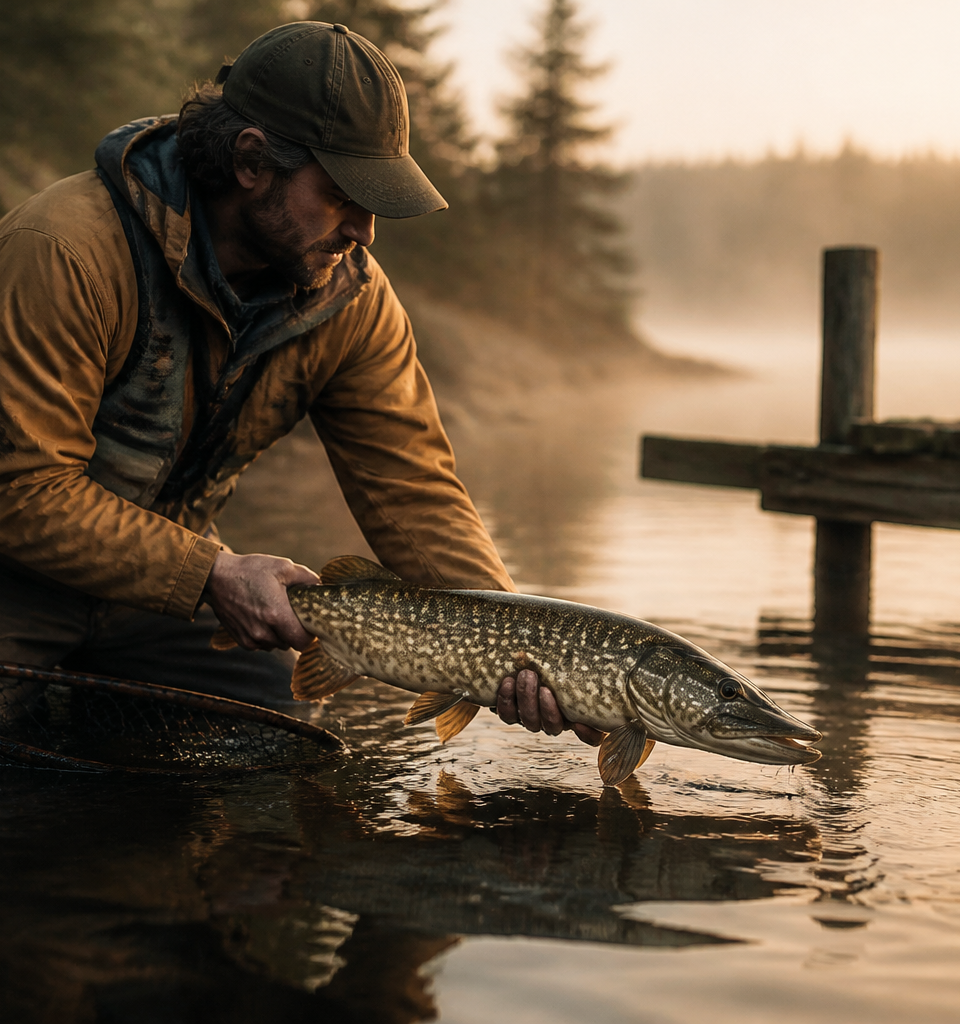
Northern pike are instantly recognizable by their elongated, torpedo-shaped body marked with light, bean-shaped horizontal spots across an olive-green to dark brown background. Their flattened snout resembles a duck's bill, armed with a powerful jaw lined with hundreds of sharp, backward-pointing teeth designed to prevent prey from escaping. The dorsal and anal fins sit far back on the body, providing lightning-fast acceleration during ambush strikes.
In Ontario waters, pike are sometimes confused with muskellunge or chain pickerel. Muskellunge typically feature dark vertical bars or spots on a lighter background and have more sensory pores under the lower jaw. Chain pickerel display a dark, chain-like pattern over their sides and rarely reach large proportions. Northern pike coloration also adapts to water clarity, often appearing darker with higher contrast in tea-stained Canadian Shield lakes.
Northern pike habitat and distribution in Ontario
Northern pike thrive across virtually every watershed in Ontario, from the Great Lakes to the remote river networks draining into James Bay. They are especially abundant in Canadian Shield lakes, where granite islands, shallow weed-filled bays, and rocky reefs create an ideal ecosystem. World-renowned waters such as Lake of the Woods, Lake Nipissing, Georgian Bay, and the vast wilderness lakes of Northwestern Ontario support massive populations of trophy-calibre fish.
This apex predator relies on aquatic vegetation for hunting cover. Eurasian watermilfoil, cabbage beds (potamogeton), and lily pad fields provide prime territory throughout much of the open-water season. Structural features like submerged rocky points, saddles, and current-swept narrows also attract giant pike, which position themselves near dense schools of forage such as lake whitefish, cisco, and yellow perch. To explore other premier Canadian destinations, see our guide on Northern Pike Fishing in Manitoba: Guide to Trophy Monsters.
Seasonal cycles and feeding patterns of Northern pike
Northern pike adjust their behavior and feeding zones based on water temperature and forage movements throughout the year. As soon as the ice melts in early spring, pike move into shallow bays, marshes, and flooded creek mouths to spawn over flooded vegetation. Following the spawn, post-spawn females linger in these warm shallow pockets to regain energy, feeding aggressively on anything within reach.
As summer progresses and surface temperatures exceed their preferred thermal range, mature pike change their habits. While juvenile fish remain in shallow weedbeds, larger adults migrate toward the thermocline, patrolling deep rocky breaks, humps, and offshore weed edges. In autumn, cooling water temperatures bring trophy pike back toward shallow structure and shoreline drop-offs, where they feed heavily to build fat reserves ahead of winter.
When is the best time to fish for Northern pike in Ontario?
Late spring and early fall offer the most productive windows for targeting trophy Northern pike in Ontario. From opening day in May through mid-June, pike concentrate in shallow water under ten feet deep, making sight fishing and casting along emergent weedlines exceptionally exciting. Warm, sunny spring days raise water temperatures in shallow bays quickly, triggering intense feeding sprees.
Fall, from September through late October, is prime time for landing the heaviest fish of the season as pike bulk up before winter. Overcast days with a steady chop break up surface glare and encourage aggressive daytime hunting. Even during the heat of midsummer, early mornings and late evenings provide outstanding action as trophy fish push baitfish onto shallow flats and structure.
How to locate Northern pike in lake structures
Consistent pike fishing relies on identifying transition zones where dense cover meets deeper water. The outside edges of submerged cabbage beds serve as underwater highways where predators wait for passing prey. Pockets and clear lanes within thick weedbeds are equally productive ambush stations that deserve careful, repeated casts during your drifts.
Deep rocky points extending toward main-lake basins and isolated offshore reefs are top structural targets to examine on sonar. Pike hold on these transitions to intercept schools of perch, smelt, or cisco. In quiet bays, spotting panfish populations can signal a productive ecosystem; check out our guide on Bluegill Fishing in Ontario: Tips and Guide to better understand these local food webs.
Effective techniques for catching Northern pike
Casting large metal spoons remains a classic, highly dependable technique across Ontario lakes. Broad, heavy spoons retrieved with erratic twitches and pauses alongside weed edges consistently provoke reaction strikes. Deep-diving crankbaits and hard jerkbaits allow anglers to pause the retrieve, suspending the lure directly in the strike zone to trigger hesitant followers.
Large paddle-tail swimbaits rigged on heavy jig heads or weedless swimbait hooks offer precision presentation around thick timber and weed pockets. When pike hold just under the surface in dense cover, topwater lures like hollow-body frogs, walk-the-dog stickbaits, and large buzzbaits produce heart-stopping surface blowups. If you enjoy targeting multiple freshwater species on structure, browse our overview of Black Crappie Fishing in Ontario: Complete Guide and Tips.
Essential tackle and gear for Northern pike fishing
A medium-heavy to heavy power baitcasting or spinning rod between 7'0" and 8'0" provides the ideal backbone for casting heavy lures and managing hard runs. A sturdy reel spooled with 30- to 50-pound braided line delivers the strength needed for solid hooksets into tough, bony jaws while pulling heavy fish out of dense weeds.
A bite-resistant leader is an absolute necessity. A 12- to 18-inch multi-strand titanium wire leader or an 80- to 100-pound fluorocarbon leader prevents bite-offs against sharp teeth. Always carry a large knotless rubberized landing net, long-nose pliers for safe hook removal, and heavy-duty wire cutters to safely cut hooks on deeply hooked fish.
Northern pike fishing regulations and licences in Ontario
All anglers aged 18 and older must hold a valid Ontario Outdoors Card along with a sport or conservation fishing licence tag issued by provincial wildlife authorities. Regulations for Northern pike vary across Ontario Fisheries Management Zones (FMZs), each enforcing specific open seasons, catch-and-possession limits, and size restrictions to protect breeding populations. Many waterbodies enforce protected slot sizes requiring the immediate release of mid-to-large-sized fish.
To purchase licences and review specific regulations for your destination, visit the official Government of Ontario website. Proper catch-and-release practices are essential: minimize handling time out of the water, support the fish horizontally with both hands rather than hanging it vertically, and revive it facing into the current before release. Regulations change annually; always verify current catch limits, open dates, and size limits for your FMZ before heading out on the water.
Northern pike conservation and population management
As apex predators at the top of the aquatic food web, Northern pike play a vital role in balancing Ontario freshwater ecosystems. By controlling forage fish populations and culling sick or weak individuals, pike maintain healthy, diverse fish communities. Robust pike populations indicate clean water, healthy aquatic vegetation, and balanced habitat.
Protecting coastal wetlands, marshes, and shoreline spawning habitat is crucial for successful reproduction. Growing angling pressure on popular lakes highlights the value of voluntary catch-and-release for mature breeders, especially large females that produce the vast majority of eggs. By respecting spawning sanctuaries and practicing careful fish handling, anglers help preserve this premier sport fishery for future generations.
How to plan a successful Northern pike fishing trip in Ontario?
Booking an outfitter or lodge is one of the most effective ways to experience trophy pike fishing in Ontario's vast wilderness. Whether choosing a drive-to lodge with full amenities or a remote fly-in outpost camp in Northern Ontario, you gain access to proven waters, reliable boats, and local insight on daily fish movements.
Professional guides know every hidden cabbage bed, reef, and current seam, helping you locate trophy fish quickly. To find the right destination and lodge for your next adventure, explore verified Northern pike fishing outfitters in Ontario.
Ready to experience powerful strikes and screaming drags in the Canadian wilderness? Plan your tailored outfitter fishing trip with MyOutfitters today and target legendary Ontario Northern pike.
Frequently asked questions
When does Northern pike season open in Ontario?
Northern pike season typically opens between early and late May, depending on the Fisheries Management Zone (FMZ) in Ontario. In southern regions, the season opens earlier in the spring, while in far northern zones, it opens closer to late May after ice-out.
What is the best lure for catching Northern pike in Ontario?
Large casting spoons in silver, gold, or classic red-and-white patterns are among the most versatile and reliable lures for Ontario pike. Large suspending jerkbaits, oversized spinnerbaits, and big paddle-tail soft swimbaits also produce exceptional results across various depths.
Where can you find the biggest trophy Northern pike in Ontario?
Trophy Northern pike are widely caught in Northwestern Ontario, Lake of the Woods, Lake Nipissing, and Georgian Bay. Remote fly-in lakes throughout the north also hold exceptional densities of unpressured, 40-inch-plus pike.
Do you need a steel leader for Northern pike fishing?
Yes, a bite-resistant leader is necessary to prevent a pike's sharp teeth from slicing your mainline. You can use flexible wire, high-grade titanium leaders, or heavy fluorocarbon of at least 80-pound test.
How many Northern pike can you keep per day in Ontario?
Daily limits depend on the specific Fisheries Management Zone and whether you hold a Sport or Conservation fishing licence, generally ranging from two to six fish per day. Many waters also enforce slot sizes restricting the harvest of larger breeding fish.
What rod and reel setup is recommended for Northern pike?
A medium-heavy to heavy power rod measuring 7'0" to 8'0" with a fast action paired with a sturdy baitcasting or spinning reel is ideal. Spooling with 30- to 50-pound braided line provides the strength needed for solid hooksets and weed management.
Can you fly fish for Northern pike in Ontario?
Yes, fly fishing for pike is popular and effective, especially during spring in shallow bays. An 8- to 10-weight fly rod with large, colorful synthetic streamers produces visual, explosive takes in clear water.
How do you safely release a large Northern pike?
Handle the fish with wet hands, keep it in the water as much as possible, and support its body horizontally with two hands without hanging it by the gills or jaw. Use long-nose pliers for quick unhooking and gently revive the fish in the water until it swims off on its own.
What is the difference between a Northern pike and a muskellunge?
Northern pike have light bean-shaped spots on a dark body, whereas muskellunge feature dark bars or spots on a lighter background. Pike also have five or fewer submandibular pores per side under their lower jaw, compared to six or more on a muskie.
Where can you buy an Ontario fishing licence?
You can purchase an Ontario Outdoors Card and fishing licence online through the official Government of Ontario portal or in person at authorized licence issuers across the province. Both Sport and Conservation fishing licence tags are available.