Fishing
Northern Pike Fishing in New Brunswick: Complete Guide
Explore New Brunswick's top waters for Northern pike. Discover proven techniques, prime seasons, and essential tips for a successful fishing trip.
Key takeaways
- From late spring through autumn, Northern pike offer steady action across southern and western New Brunswick watersheds.
- Shallow bays, dense weed beds along the Saint John River, and slow-moving tributaries serve as prime hunting grounds.
- Casting large spoons, crankbaits, and soft plastics triggers aggressive strikes.
- A provincial freshwater sport fishing licence is required before casting on New Brunswick inland waters.
- Always tie on a wire or heavy fluorocarbon leader to prevent sharp teeth from slicing your line.
How to identify Northern pike in New Brunswick?
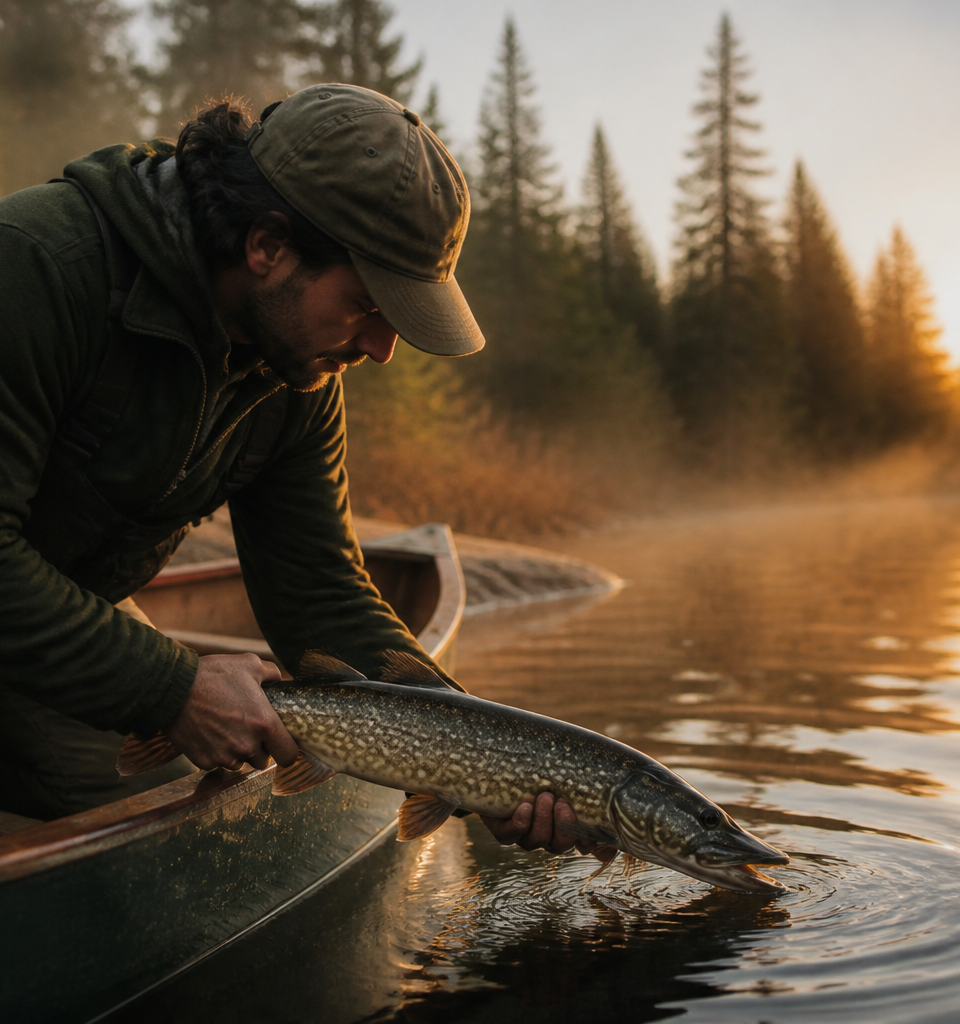
Northern pike (*Esox lucius*) is easily recognized by its elongated, torpedo-shaped body, olive-green flanks flecked with creamy-white bean-shaped spots, and a powerful jaw lined with razor-sharp teeth. Its dorsal fin, positioned far back near the tail, delivers explosive acceleration when ambush hunting. Unlike the trout or striped bass found across the province, the pike features a distinct flattened snout resembling a duck's bill.
In New Brunswick waters, take care not to confuse Northern pike with muskellunge, which share connected systems like the Saint John River. Pike display light spots on a dark body, whereas muskellunge show dark bars or spots across a lighter background. Additionally, Northern pike typically feature no more than five submandibular sensory pores per side under the lower jaw—a reliable identification check upon landing.
A pike's mouth is built for predation, equipped with hundreds of backward-pointing teeth that prevent yellow perch, suckers, and minnows from escaping. This aggressive build makes it a top-tier apex predator capable of reaching trophy sizes in the province's food-rich river basins.
Where to find Northern pike in New Brunswick?
Northern pike are primarily concentrated in the lower and middle Saint John River watershed, along with its connected lakes and thoroughfares. Large freshwater expanses like Grand Lake, Maquapit Lake, French Lake, and the expansive marsh networks around Oromocto and Jemseg hold exceptional numbers of quality fish thanks to extensive weed flats and warm summer waters.
While the province is world-renowned for Atlantic salmon fishing in New Brunswick, its slow-flowing southwestern waters offer remarkable variety for predator anglers. Unlike the cold northern salmon rivers, these low-gradient systems provide lush aquatic cover where Northern pike thrive alongside smallmouth bass and yellow perch.
The species generally avoids heavy river currents and high salinity, favouring calm bays sheltered from the wind and marshy deltas. Anglers familiar with Northern pike fishing in Quebec: complete guide and techniques will recognize similar habitat structures here, where tributary confluences and backwater ponds create ideal ambush points throughout the open-water season.
Understanding seasonal Northern pike river behavior
Northern pike behaviour follows water temperatures and prey reproduction cycles in New Brunswick waterways. Right after ice-out in spring, mature fish push into flooded lowlands, shallow bays, and riverfront marshes to spawn over submerged vegetation. Feeding activity surges as waters warm and post-spawn fish rebuild their energy reserves.
By midsummer, as surface temperatures climb in shallow lakes like Grand Lake, larger pike become more selective. Trophy specimens hold under thick lily pad carpets, along main river channel drop-offs, or in cooler holes near tributary mouths. Feeding windows tighten around early morning and dusk.
In the fall, dropping water temperatures trigger heavy feeding as pike build fat reserves for winter. Fish gather around rock structures, dying weedlines, and windblown points where baitfish congregate, delivering hard-hitting strikes and powerful battles.
Best seasons to catch Northern pike
May, June, September, and October offer the most productive pike fishing in New Brunswick. In spring, from mid-May to mid-June, emerging weed beds in two to six feet of water draw active predators on the hunt. Cooler water keeps fish mobile and feeding throughout the day.
Autumn provides the premier window for landing trophy fish. From mid-September through late October, cooling waters draw large predators into mid-depth zones reachable by casting or trolling. Overcast days with a light chop reduce light penetration, making wary heavyweights far more likely to strike.
During July and August, action remains steady for average-sized pike around vegetated areas. To connect with a trophy in high summer, focus efforts around first light or during pre-front weather shifts, when barometric pressure drops trigger ambush strikes from beneath the heaviest cover.
Finding the best Northern pike spots in New Brunswick
Locating Northern pike starts with identifying structural transitions combining thick cover and nearby deep water. Edges of pondweed, dense lily pad fields, and submerged wood along Saint John River bays provide shelter for ambush feeders. Sharp breaks between shallow flats and deeper channels act as primary travel corridors.
Tributary mouths and current bottlenecks connecting two waterbodies deserve special focus. Pike stage along current seams, tucked behind shallow shoals or reed points, waiting to ambush disoriented baitfish. Rocky shoals interspersed with submerged weeds also hold good numbers of yellow perch and bullheads.
A depth finder helps pinpoint submerged points, isolated sand flats bordered by weeds, and steep drop-offs across southern New Brunswick lakes. Scanning the surface often reveals scattering baitfish—a clear sign of an active pike hunting just below.
Proven techniques for targeting river Northern pike
Casting and retrieving remains the go-to approach for working expansive bays and weed edges in New Brunswick. Heavy in-line spinners with bucktail skirts and classic silver or gold spoons generate strong thumping vibrations and flash that pike cannot resist. A steady retrieve punctuated by erratic twitches frequently triggers violent reaction strikes.
Deep-diving crankbaits and large soft plastic swimbaits rigged on jig heads or weedless hooks excel when fish hold deep inside cover. A 5- to 8-inch paddle-tail shad worked slowly over weed tops mimics an injured forage fish. On calm summer mornings, hollow-body frogs and propbaits fished over pad fields generate explosive topwater strikes.
Slow trolling along contour lines and channel edges helps cover open water on larger lakes to locate suspended fish. Varying boat speed between 2 and 3 km/h raises and drops lures through the water column, triggering strikes from trailing fish.
Choosing the right gear for Northern pike
A 7-foot to 7-foot-6-inch Medium-Heavy to Heavy power rod paired with a durable reel provides the leverage needed to cast heavy lures and haul pike out of dense weeds. Whether you prefer a baitcasting setup for pinpoint casting accuracy or a spinning outfit for versatility, gear durability is essential when wrestling powerful fish.
Spool up with 30- to 50-pound braided mainline. Zero-stretch braid ensures solid hooksets into hard, bony jaws while slicing through aquatic weeds during the fight. A bite-proof leader is essential: run a 9- to 12-inch wire leader or a 16-inch section of 60- to 80-pound fluorocarbon.
Never hit the water without proper handling tools: a large rubberized knotless landing net, long-nose pliers for deep hook removal, and heavy-duty side cutters. These tools protect both your hands and the fish during unhooking at the side of the boat.
Regulations and fishing licences for Northern pike in New Brunswick
Sport fishing in New Brunswick is managed through defined open seasons, daily bag limits, and specific inland water regulations. All anglers, residents and non-residents alike, must hold a valid provincial freshwater sport fishing licence before wetting a line in public waters. Catch-and-possession limits vary across recreational fishery management zones.
For full details on provincial seasons, zone-specific rules, and local exceptions, consult the official Government of New Brunswick resources. Practicing catch-and-release on large breeding pike helps protect the long-term quality of the Saint John River valley sport fishery.
Regulations change annually: always verify exact season dates, size limits, and gear restrictions with provincial authorities before heading out on the water.
Conservation and Northern pike population management
Northern pike serve an essential ecological function as apex predators, balancing forage fish and minnow populations to maintain healthy aquatic ecosystems. By targeting weak or diseased fish, pike support balanced fish communities across the lakes and rivers they inhabit.
In sensitive New Brunswick waterways, interactions between native species and predator populations are closely monitored by fisheries biologists. Conservation efforts focus on protecting critical marsh and floodplain spawning grounds from siltation, agricultural runoff, and shoreline development.
Practicing ethical angling—such as pinching hook barbs, switching to single hooks, and minimizing out-of-water handling for photos—ensures high release survival rates. Thoughtful stewardship keeps these fisheries productive for generations of anglers to come.
Planning a guided trophy Northern pike trip
Booking a local fishing guide or outfitter takes the guesswork out of finding productive water on expansive river systems. Regional guides understand how daily water levels, seasonal shifts, and wind patterns dictate fish location, maximizing your time casting over trophy water.
Local outfitters provide complete packages featuring comfortable waterfront lodging, fully equipped fishing boats, and professional on-water guiding. Traveling anglers can learn how Myoutfitter simplifies hunting and fishing trips for Americans to streamline travel planning, border crossing logistics, and outfitter bookings.
To find quality accommodations and plan your next angling adventure, explore the New Brunswick fishing outfitters listed on our marketplace. Book your outdoor trip today with MyOutfitters and experience New Brunswick's world-class pike waters.
Frequently asked questions
Where can you fish for Northern pike in New Brunswick?
Northern pike are primarily found in the Saint John River watershed, Grand Lake, Maquapit Lake, and slow-moving waterways throughout southwestern New Brunswick. These waterbodies offer expansive weed beds, calm bays, and marshy thoroughfares rich in forage.
When does Northern pike season open in New Brunswick?
Freshwater pike fishing generally opens in mid-spring, around May depending on the recreational management zone. May through June delivers excellent action in emerging shallow weeds, followed by another prime peak during September and October.
Do you need a licence to fish for Northern pike in New Brunswick?
Yes, a valid provincial freshwater sport fishing licence is mandatory for all resident and non-resident anglers. Licences must be purchased online through the provincial portal or from authorized local vendors before fishing.
What are the best lures for river Northern pike?
Heavy casting spoons, large bucktail spinnerbaits, and 5- to 8-inch soft plastic swimbaits are top producers. Deep-diving crankbaits and weedless hollow-body frogs also generate aggressive strikes over dense vegetation.
What rod should you use for Northern pike fishing?
A 7-foot to 7-foot-6-inch Medium-Heavy or Heavy power rod is ideal. It delivers the backbone required to cast bulky lures, set heavy hooks, and steer powerful pike away from dense aquatic weeds.
Why is a leader necessary for Northern pike fishing?
A steel leader or 60- to 80-pound fluorocarbon trace is essential to withstand a pike's sharp teeth. Without bite protection, standard monofilament or braided line is easily sliced during the strike or fight.
How do you tell a Northern pike from a muskellunge?
Northern pike have light, horizontal bean-shaped spots across a darker green body and no more than five sensory pores under each side of the lower jaw. Muskellunge display dark spots or vertical bars on a lighter body and feature six or more pores per side.
What is the best time of day to catch Northern pike in summer?
Early morning and late afternoon until dusk offer the highest activity during hot summer months. In low-light conditions, large pike leave deep summer holding areas to hunt actively along shallow weed edges.
Can you fly fish for Northern pike in New Brunswick?
Yes, fly fishing for pike is very productive using an 8- to 10-weight fly rod with large, bulky baitfish streamers imitating yellow perch. This method offers visual strikes and hard fights along shallow spring weedlines.
How many Northern pike can you keep per day in New Brunswick?
Daily retention limits vary according to the specific waterbody and provincial fisheries management zone. Always check the current New Brunswick Fish and Wildlife summary guide to verify bag limits and size windows for your area.