Fishing
Brook Trout Fishing in New Brunswick: Complete Guide
Discover the top rivers, proven techniques, and best seasons for targeting wild brook trout and sea-run brookies across New Brunswick.
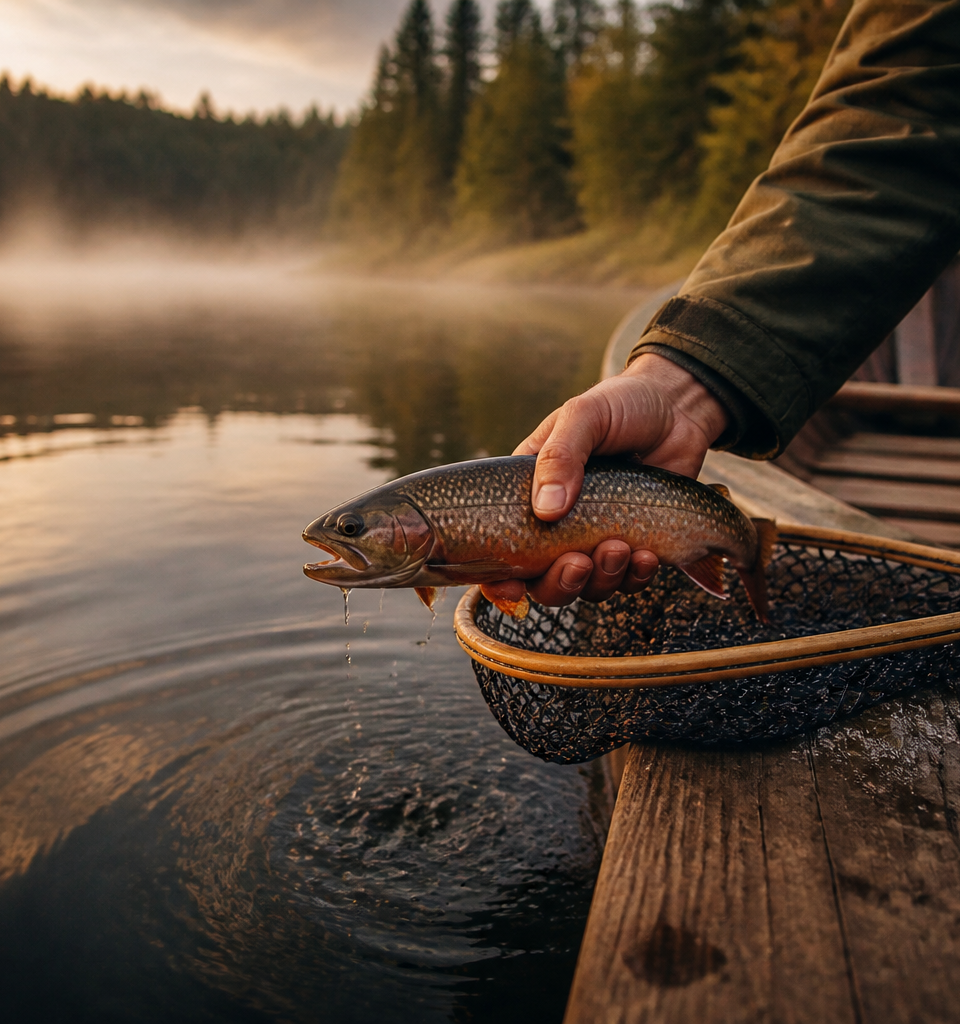
Key takeaways
- From mid-April through late September, New Brunswick rivers offer staggered openings depending on watersheds and fish activity.
- Cold tributaries of the Miramichi and Restigouche systems, along with coastal estuaries, hold outstanding resident and anadromous populations.
- Evening fly fishing and light spin casting with small metal lures are the dominant, most productive river approaches.
- Every angler must hold a valid provincial inland waters fishing licence, along with specific Crown Reserve access permits where required.
- Target shaded pools and tributary confluences during summer, as trout actively seek coldwater upwellings to feed and rest.
Identifying and understanding native brook trout
Brook trout (*Salvelinus fontinalis*), commonly called speckled trout, are readily identified by their olive-green vermiculated back, red spots haloed in pale blue along the flanks, and striking white leading edges on their lower fins. In New Brunswick, this native species displays two distinct life-history forms: resident freshwater stream trout and sea-run brook trout (salters), an anadromous form that migrates to rich estuaries to feed before returning to spawn in its natal stream.
Resident brook trout in forest headwaters often showcase dark, vibrant flanks with brilliant fiery-orange bellies, particularly mature males as autumn approaches. In contrast, sea-run brook trout entering freshwater from coastal feeding grounds display a brilliant silvery chrome sheen, temporarily masking their signature spots beneath a reflective layer of scales.
Distinguishing brook trout from other local salmonids, such as juvenile Atlantic salmon (parr) or introduced brown trout, comes down to mouth coloration and body markings. Brook trout have a pale, white mouth interior and never display true black spots across their body, setting them apart from species in the genus *Salmo*.
Brook trout rivers in New Brunswick
New Brunswick's extensive river networks offer exceptional habitat diversity for brook trout, spanning northwestern highland streams to coastal rivers emptying into the Bay of Chaleur and the Gulf of St. Lawrence. The Restigouche, Miramichi, and Nepisiguit watersheds rank among the most storied systems for targeting trophy specimens in remote, wild settings.
In the southern and central parts of the province, the Saint John River watershed and productive tributaries like the Tobique and Nashwaak feature insect-rich waters with gravel riffles and moderate flows. Coastal systems such as the Tabusintac, Bartibog, and Jacquet rivers are celebrated worldwide for their vigorous spring sea-run brook trout migrations.
These river corridors alternate between well-oxygenated riffles, slow meandering pools, and deep holding pools carved beneath undercut wooded banks. A dense forest canopy along the shoreline keeps water temperatures cool—a critical factor for trout survival and concentration during midsummer heat.
Life cycles of wild brook trout
Seasonal brook trout behaviour is driven by water temperature, spring runoff levels, and aquatic insect availability. As ice leaves river systems in April and May, fish drop out of their deep wintering pools to colonize shallow tributary runs and grassy bank margins where aquatic insect larvae thrive.
During high summer, when mainstem water temperatures push past the critical 18°C (64°F) threshold, trout congregate in coldwater thermal refuges. These critical holding areas are fed by cold subterranean springs, groundwater seepage, or the mouths of cold feeder brooks, dramatically altering fish distribution across a river system.
Autumn triggers the spawning run, typically lasting from late September into November. Mature adults push into headwater tributaries to deposit their eggs in clean, well-oxygenated gravel beds, displaying heightened territorial aggression before their winter metabolic slowdown.
When to fish for brook trout in New Brunswick?
The early season, from mid-May through late June, offers the premier window for catching large brook trout in both rivers and estuaries. Massive hatches of mayflies and caddisflies spark surface-feeding frenzies, coinciding perfectly with prime runs of sea-run brook trout pushing into tidal reaches.
Weather conditions strongly influence daily success. Overcast skies paired with light rain or settling flows following a mild rise make trout bold and far less selective toward artificial presentations.
During midsummer, focus on early dawn and the final two hours of daylight when water temperatures drop. When mainstems face extreme low water and warm temperatures, smart alternatives include exploring deeper headwater lakes or learning how to read rivers and choose flies for low-water Atlantic salmon in shared watersheds.
Where does brook trout hide in rivers?
To locate brook trout effectively, read current breaks, pool heads, and the dead-water pockets directly downstream of large boulders. Brook trout constantly work to minimize energy expenditure while positioning themselves right along the primary drift line of descending food.
Submerged structure—such as logjams, undercut clay banks, and overhanging alders—provides essential sanctuary from overhead predators. On larger New Brunswick rivers, accurate casts placed right tight along shadow lines of cliffs or fallen timber routinely trigger aggressive reaction strikes.
In tidal zones and estuaries, rising tides push sea-run trout onto shallow mudflats and eelgrass beds to hunt sand lance and grass shrimp. Scouting these flats at low tide reveals deeper submerged channels and depressions that fish will use as highways once the tide begins to flood.
Best techniques to catch brook trout
Fly fishing remains the traditional and most effective method across many New Brunswick rivers, allowing anglers to target every level of the water column. Streamers imitating baitfish or leeches produce exceptionally well in high spring flows, while weighted nymphs drifted along bottom seams take fish holding deep in fast runs.
For anglers spin casting on waters where gear is permitted, compact inline spinners in gold or silver finishes alongside small casting spoons are time-tested producers. Small minnow-profile crankbaits worked with sharp twitches also provoke aggressive territorial strikes from large resident fish holding in deep pools.
Stealth is paramount on clear waters; always wade upstream to avoid alerting fish facing into the current. To compare regional strategies across Eastern Canada, see our guide on brook trout fishing in Quebec: top tips and techniques or check out Atlantic salmon fishing in New Brunswick.
Essential gear for brook trout fishing
A 9-foot, 4-weight or 5-weight fly rod is the ideal multi-purpose setup for the vast majority of New Brunswick trout streams. When targeting large sea-run brookies in broad, wind-swept estuaries, stepping up to a 6-weight or 7-weight rod delivers the backbone needed to punch heavy streamers into stiff coastal breezes.
For spin anglers, an ultralight to light-power spinning rod measuring 6 to 7 feet paired with a 1000-to-2500-size reel spooled with 4-to-6-pound-test monofilament or light braided line with a fluorocarbon leader is ideal. Stock your tackle box with inline spinners, micro spoons, and small soft-plastic minnows.
Personal gear matters just as much: breathable chest waders or hip waders with felt or sticky-rubber traction soles are essential for navigating slick riverbed cobble. High-quality polarized sunglasses are indispensable for cutting through surface glare, spotting submerged cover, and sight-fishing holding trout.
Brook trout fishing regulations and licences in New Brunswick
Recreational freshwater fishing in New Brunswick requires purchasing an appropriate provincial angling licence before hitting the water, with separate categories for residents and non-residents. Rivers and lakes are managed under specific Fish Management Zones featuring dedicated season windows, daily retention quotas, and possession limits that must be strictly observed.
Certain renowned rivers or individual beats feature special designations, including fly-fishing-only waters or Crown Reserve waters managed through restricted draw systems. On designated scheduled salmon waters, non-resident anglers are legally required to hire a licensed guide to fish.
Barbless single hooks are strongly encouraged across all waters to ensure safe, rapid catch-and-release handling. To verify current licence fees, management zone maps, and emergency summer warm-water closures, consult the Government of New Brunswick official wildlife portal. Regulations change annually: always verify official rules before heading out.
Ecological role and brook trout conservation
Brook trout serve as a vital indicator species; their health directly reflects the cleanliness, dissolved oxygen levels, and cold temperatures of a watershed. As mid-tier aquatic predators, they regulate macroinvertebrate populations while serving as a primary food source for fish-eating wildlife like great blue herons, ospreys, and river otters.
Degraded riparian cover, siltation of clean gravel beds due to bank erosion, and rising summer water temperatures represent the primary threats facing wild populations. Local watershed groups carry out essential restoration work across the province, planting native streamside trees, stabilizing banks, and building rock deflectors to deepen critical pool habitat.
Practicing ethical catch-and-release—minimizing handling time and keeping fish submerged during warm weather—directly protects these iconic fisheries. Preserving wild, native genetics guarantees that future generations will continue enjoying world-class trout fishing throughout the Acadian forest.
Guided brook trout fishing trips in New Brunswick
Booking a trip with a professional guide or established sporting lodge turns a standard fishing outing into an unforgettable, highly productive adventure. Local guides offer deep watershed knowledge, taking you straight to active holding pools while avoiding heavily pressured stretches of water.
Full-service outfitters deliver welcoming comfort after a long day on the water, featuring private wilderness cabins, home-cooked regional meals, and traditional river transportation in shallow-draft river craft or canoes. Many lodges hold exclusive access rights to private water leases renowned for exceptional trout numbers and trophy potential.
To plan your next Eastern Canadian fishing getaway and book top sporting destinations, explore available options for New Brunswick brook trout outfitters on MyOutfitters today.
Frequently asked questions
When does brook trout fishing open in New Brunswick?
Brook trout season generally opens in mid-April and runs through late September across most provincial waters. Specific coastal sections, tidal reaches, or sensitive river stretches may feature earlier closures or delayed openers to support local conservation goals.
Where is the best sea-run brook trout fishing in New Brunswick?
Coastal rivers draining into the Gulf of St. Lawrence and Chaleur Bay—such as the Tabusintac, Jacquet, Bartibog, and lower Miramichi tributaries—offer premier sea-run brook trout fishing. Tidal estuaries and pools just above the head of tide hold the heaviest spring migrations.
Is a guide mandatory for fishing in New Brunswick?
Resident anglers can fish independently across public waters, whereas non-resident anglers must hire a licensed New Brunswick guide on designated scheduled salmon waters. Always check the exact status of your chosen river reach before planning your trip.
What licence do I need to fish for brook trout in New Brunswick?
Anglers need a valid New Brunswick recreational inland waters fishing licence (non-salmon category, or an all-species licence if fishing waters where salmon are present). Licences can be purchased online through the provincial government portal or at authorized local vendors.
What are the best flies for brook trout in New Brunswick?
Classic streamers like the Muddler Minnow, black or olive Woolly Bugger, and Mickey Finn excel during high flows and in tidal runs. During summer insect hatches, dry flies such as the Elk Hair Caddis, Adams, and Royal Wulff trigger spectacular surface takes.
What is the daily bag limit for brook trout in New Brunswick?
Daily retention limits for brook trout typically range from 5 to 10 fish depending on the specific Fish Management Zone and individual waterbody regulations. Always consult the current year's provincial angling summary for precise bag, possession, and length limits.
What is the best time of day to catch brook trout?
Early morning right after sunrise and the final two hours before dusk produce the strongest feeding activity. In midsummer, these hours bring cooler water temperatures, coaxing larger trout out of deep thermal refuges to feed actively in riffles and runs.
Can you use spin gear for brook trout in New Brunswick?
Yes, spin fishing is permitted on many lakes and general-regulation rivers across New Brunswick, excluding stretches designated as fly-fishing-only. Small inline spinners such as Mepps or Panther Martin patterns are among the most reliable lures for these waters.
How do you locate thermal refuges for brook trout in summer?
Look for the mouths of small, spring-fed feeder brooks, shaded groundwater upwellings, and deep, well-oxygenated canyon pools. When mainstem river temperatures exceed 18°C (64°F), brook trout pack tightly into these coldwater sources.
What fly line weight is best for New Brunswick trout rivers?
A weight-forward floating line in a 4-weight or 5-weight paired with a 9-foot rod is the most versatile setup for mid-sized rivers. For targeting large sea-run brook trout in windy tidal estuaries or throwing heavy streamers, a 6-weight or 7-weight line is recommended.