Fishing
Lake Trout / Charr Fishing in Alberta: Secrets of the Big Lakes
Discover how to target Lake trout / charr in Alberta: boreal habitats, deep trolling tactics, tackle setups, and expert advice for a successful trip.
Key takeaways
- Spring fishing right after ice-out offers the best opportunities to target fish feeding near the surface.
- Deep, cold lakes across northern Alberta and the foothills hold the most productive populations.
- Deep trolling with downriggers or heavy divers remains the go-to approach throughout the summer.
- A valid provincial sportfishing licence is required before wetting a line.
- Modern sonar units are essential for locating the thermocline and pinpointing bait schools.
How to identify Lake trout / charr when caught
Lake trout / charr stands out from other salmonids with its elongated, torpedo-shaped body marked by light spots over a darker background, along with a deeply forked tail. Colouration ranges from olive-grey to dark green, transitioning to a pale or creamy white belly. Unlike brook trout or cutthroat trout, it never displays red spots ringed in blue or vivid orange slashes along the flank. Its robust head and wide mouth packed with sharp teeth reflect a predatory lifestyle built for deep lake environments.
Examining the lower fins reveals a fine white leading edge without the distinct black stripe found on brook trout. To compare identifying traits across species, explore our guide on Brook trout fishing in Alberta: complete guide. The skin feels smooth, with tiny scales embedded deeply beneath a protective mucus layer.
This freshwater predator exhibits remarkable longevity, frequently living past thirty years in cold western Canadian waters. Slow growth rates in low-temperature ecosystems make mature trophy specimens especially vital to natural recruitment.
Where to find Lake trout / charr in Alberta?
Lake trout / charr thrives in large, deep, oligotrophic, and well-oxygenated waterbodies across northern Alberta and select foothills reservoirs. Premier fisheries in the boreal forest and Canadian Shield transition zones include Lake Athabasca, Cold Lake, and Peerless Lake. These clear-water systems feature sustained depths where water temperatures rarely exceed ten to twelve degrees Celsius.
Throughout most of the year, fish hold in the lower water column, frequenting basins from twenty to over sixty metres deep. They steer clear of shallow, weedy bays favoured by warm-water game fish. If you plan to target predators in shallow weed beds, our guide on Trophy northern pike fishing in Alberta: secrets and destinations covers those distinct habitats in detail.
Underwater structure dictates fish location across Alberta lakes: steep drop-offs, sunken humps, and extended points create prime ambush lanes where Lake trout / charr intercept schools of lake whitefish and cisco.
Behaviour and seasonal cycle of Lake trout / charr
Seasonal thermal stratification dictates the behaviour of Lake trout / charr throughout the year. Immediately after ice-out, when surface temperatures remain uniform from top to bottom, fish cruise shallow shorelines and rocky points to feed actively. This short window provides rare opportunities to hook fish on light casting tackle or fly gear in less than five metres of water.
As summer sunlight warms upper water layers, thermal stratification pushes fish below the thermocline into preferred temperature zones between six and ten degrees Celsius. Schools position tight to deep structure, timing their feeding runs around the movements of pelagic baitfish, with peak activity typically occurring at dawn and dusk.
In autumn, dropping water temperatures trigger spawning activity in late September and October. Mature adults congregate over wind-swept, shallow rocky shoals and reefs, where females broadcast eggs directly among coarse rubble without excavating a redd.
When to fish for Lake trout / charr in Alberta?
Early open-water season from late May through mid-June provides the most exciting action for surface and shallow-water presentations. During this post-ice period, fish feed aggressively after the long winter, striking lures worked in the upper water column. Overcast, cool conditions extend feeding periods along shoreline breaks.
From July through late August, anglers must target deeper basins. Calmer summer days offer optimal boat control for precise trolling and vertical presentations, allowing lures to run consistently through holding zones without spooking fish in clear water.
Winter brings productive ice fishing opportunities across northern lakes. Setting up over submerged humps and deep drop-offs in twenty to thirty metres of water allows anglers to jig heavy spoons and soft plastics for hard-fighting winter fish.
Locating deep holes for Lake trout / charr
Consistently finding fish requires careful map study to identify prominent bottom transitions. Bathymetric charts and electronic mapping highlight underwater points extending into main-lake basins, sunken saddles between islands, and steep cliffs. These contour lines concentrate baitfish and draw in active predators.
Sonar units are critical for pinpointing the thermocline, the distinct layer where water temperatures drop sharply. In midsummer, fish marks often appear directly below this boundary, suspended between fifteen and thirty metres deep. Scan high-percentage structure to confirm the presence of forage before deploying lines.
When exploring options with Fishing outfitters in Alberta, you will find that local guides pay close attention to prevailing winds. Steady winds push surface water and plankton toward windward shorelines, generating subsurface currents that concentrate baitfish against adjacent points and drop-offs.
Effective techniques to catch Lake trout / charr
Controlled-depth trolling with downriggers is a primary method for presenting lures through summer holding zones. Attaching your line to a downrigger release clip allows flutter spoons or minnow plugs to run at the precise depth identified on sonar, leaving the rod unweighted once a strike occurs.
Vertical jigging has become increasingly popular across Alberta lakes for its hands-on presentation. Once fish are located on sonar, position the boat directly above them and lower large white soft-plastic tubes or heavy metal spoons to the bottom. Work the bait with steady upward sweeps and controlled drops to provoke reaction strikes on the fall.
In early spring, flat-line trolling with shallow-diving minnow baits or spoons works exceptionally well. Planer boards help run lines away from the boat wake, preventing clear-water fish from spooking before the lure passes.
Essential tackle and gear for Lake trout / charr
A medium-heavy to heavy power rod between seven and eight and a half feet provides the backbone required to handle strong runs and heavy headshakes. Match it with a line-counter trolling reel for downrigger presentations or a 4000-size spinning reel for vertical jigging, equipped with a smooth, reliable drag system.
Mainline setups benefit from thirty to fifty-pound braided line, which delivers thin diameter, reduced water resistance at depth, and immediate hooksets. Always run a fifteen to twenty-pound fluorocarbon leader measuring ten to fifteen feet to maintain an invisible presentation in clear northern lakes.
Proven lures include large flutter spoons in silver, blue, or copper patterns, slender minnow plugs matching cisco or whitefish, and one to two-ounce jig heads paired with six-inch white or pearl soft tubes. A large, knotless rubber landing net protects the fish's slime coat during landing.
Regulations for Lake trout / charr fishing in Alberta
Sportfishing in Alberta operates under strict regulations designed to protect wild salmonid populations. Anglers aged sixteen to sixty-four require a valid provincial sportfishing licence before heading out. Many northern lakes enforce specific possession limits, protective size ranges (slot limits), or mandatory catch-and-release rules.
Barbless hooks are encouraged and mandatory on designated provincial waters. In addition, bait bans and natural bait restrictions apply across many cold-water fisheries to reduce hooking mortality and prevent the introduction of aquatic invasives. Review current rules and purchase licences directly through the Government of Alberta.
Regulations change annually: always verify possession limits, open seasons, and local sanctuary boundaries in the official guide before your trip.
Conservation and sustainable management of Lake trout / charr
Due to slow growth rates and late maturity, Lake trout / charr populations are sensitive to harvest pressure. In northern waters, fish often take more than ten years to reach initial spawning maturity. Releasing large mature spawners helps sustain natural recruitment over the long term.
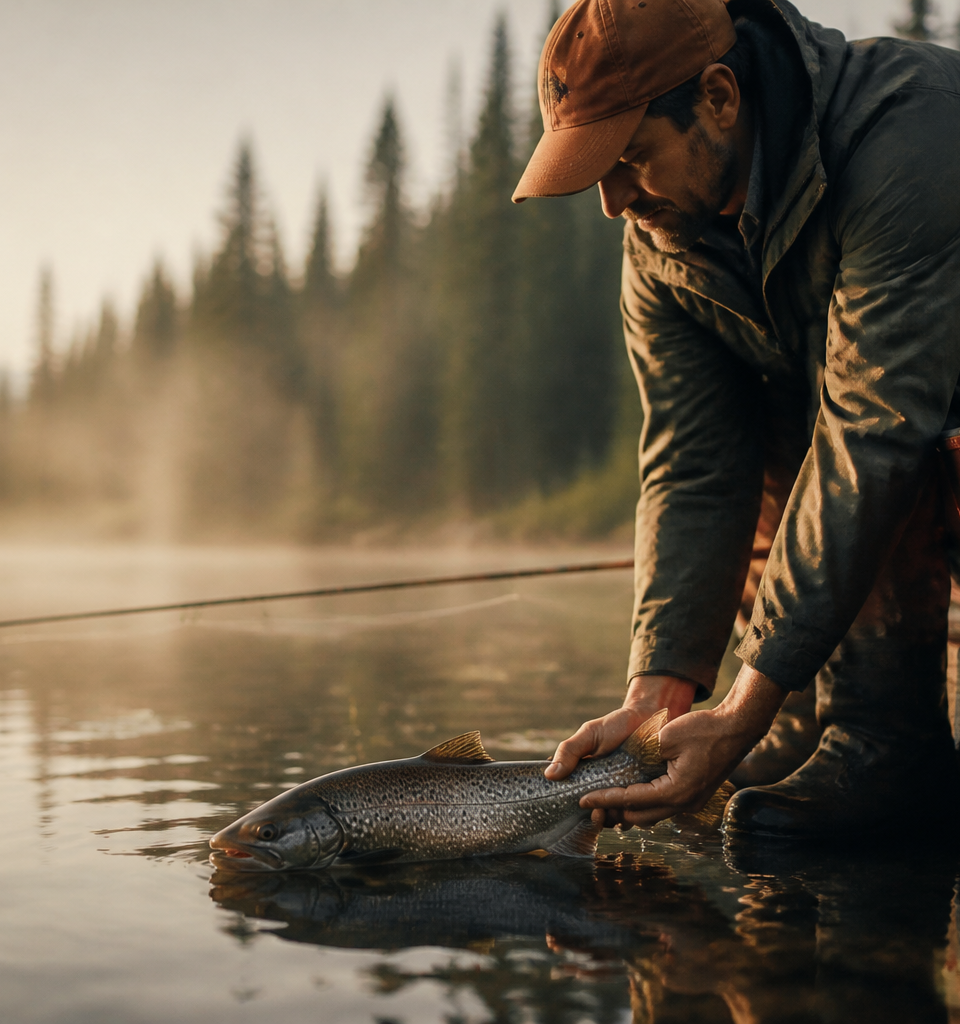
Fish brought up from deep water require careful handling to mitigate barotrauma. Retrieve fish at a controlled pace to allow swim bladder pressure adjustments, keep them in the water while unhooking, and avoid lifting them vertically by the gill plates.
As apex predators in northern aquatic food webs, healthy populations reflect pristine water quality and balanced ecosystems. Careful catch-and-release practices protect this cold-water resource for years to come.
Guided trips for Lake trout / charr in Alberta
Booking a professional guide or staying at a specialized fishing lodge provides direct access to prime deep-water structure. Given the scale of northern waterbodies and rapidly shifting weather patterns, an experienced guide provides local knowledge of productive bathymetry and daily feeding movements. For lodging ideas in the West, review these 3 budget-friendly fishing outfitters to plan your trip.
Fly-in and remote boat-in destinations give anglers access to lightly fished waters with minimal pressure. These operations supply well-equipped boats featuring downriggers and quality electronics to maximize productive time on the water.
Whether targeting a trophy fish or planning a remote backcountry getaway, explore vetted packages across MyOutfitters to plan your next trip.
Frequently asked questions
When is Lake trout / charr surface fishing best in Alberta?
Surface fishing is most productive in spring right after ice-out, from late May to mid-June, while surface water temperatures remain cold.
Where are the largest Lake trout / charr found in Alberta?
The largest fish inhabit deep, cold northern lakes such as Lake Athabasca, Cold Lake, and Peerless Lake, where large forage populations support steady growth.
What depth should I target for Lake trout / charr in summer?
In midsummer, target basins between fifteen and forty metres deep, where fish hold below the thermocline in water temperatures between six and ten degrees Celsius.
What lures work best for deep trolling Lake trout / charr?
Large silver, blue, or copper flutter spoons and slender minnow plugs fished on downriggers at confirmed sonar depths produce consistent results.
Are barbless hooks required in Alberta?
Barbless hooks are mandatory on specific waterbodies and strongly recommended across the province to minimize injury and support clean catch-and-release.
How long do Lake trout / charr live in northern lakes?
They frequently live thirty to forty years or more in cold northern waters, with a ten-pound fish often being twelve to fifteen years old.
What line setup is best for vertical jigging Lake trout / charr?
A thirty-pound braided mainline paired with a fifteen to twenty-pound fluorocarbon leader provides low stretch for solid hooksets and clear-water stealth.
Can you ice fish for Lake trout / charr in Alberta?
Yes, ice fishing is popular from December through late March on large northern lakes, using heavy tubes and jigging spoons over deep structure.
What licence do I need to fish for Lake trout / charr in Alberta?
Anglers need a valid Alberta provincial sportfishing licence for the current season, along with any special tags required for managed trophy waters.
How should I release a Lake trout / charr caught in deep water?
Bring the fish up at a steady, moderate pace to reduce barotrauma, keep it in the water while unhooking, and support it horizontally until it swims away under its own power.