Fishing
Brook Trout Fishing in Manitoba: Expert Guide
Discover the secrets of Brook trout fishing in Manitoba: legendary northern rivers, seasonal strategies, essential tackle, and outfitter advice.
Key takeaways
- The prime season runs from late May through early October, highlighted by spectacular fall activity during the spawn.
- Wild rivers in northeastern Manitoba and oxygenated pools across subarctic watersheds hold the largest native specimens.
- Fly fishing with articulated streamers and light spin casting with small spoons produce the most consistent action.
- A valid Manitoba fishing licence is mandatory, and barbless hooks are strictly required across the entire province.
- Hire a professional guide to safely navigate remote river systems and pinpoint productive holding water.
Identifying Brook trout in wild waters
Brook trout are easily recognized by their dark flanks adorned with vibrant red spots haloed in blue, alongside crisp white leading edges on their lower fins. A member of the char family (*Salvelinus fontinalis*), this fish displays dark, worm-like markings called vermiculations across its back. In Manitoba, specimens residing in large northern rivers develop exceptionally deep, muscular bodies and intense coloration as water temperatures cool.
Belly coloration ranges from pearlescent white to brilliant fiery orange on spawning males in the fall. A nearly square tail, unlike the deeply forked tail of lake trout, allows for quick species identification. Anadromous or migratory fish found in coastal Hudson Bay river systems often show a much brighter, silvery hue during their summer migrations.
Where to find Brook trout in Manitoba?
Native Brook trout thrive primarily in the majestic rivers of northeastern Manitoba that drain into Hudson Bay. Legendary waterways like the Gods River, the Hayes River, and tributaries of the Nelson River deliver world-class wild fisheries. Unlike populations highlighted in Brook trout fishing in Quebec: Tips and techniques, northern Manitoba fish benefit from vast, food-rich river systems where they grow to extraordinary proportions.
Beyond the remote northern river networks, Manitoba also manages stocked reservoirs and pits throughout the Parkland region. These southwestern stillwaters offer accessible, complementary opportunities for stillwater anglers. However, pristine northern rivers remain the premier destination for trophy Brook trout, where fish hold in fast rapids, rock shelves, and deep, icy pools.
Brook trout behavior and feeding habits
Brook trout constantly seek cold, highly oxygenated water with temperatures remaining below 16 degrees Celsius. In flowing water, they hold strategically behind large boulders, along seam lines, or near tailouts below rapids to intercept drifting food without expending unnecessary energy. They are opportunistic predators with razor-sharp feeding instincts.
Their diet features a wide array of aquatic invertebrates, leeches, stonefly nymphs, and forage fish such as sculpins and minnows. During heavy mayfly or caddis hatches, trout readily rise to the surface. As autumn approaches, their territorial aggression spikes dramatically, triggering savage strikes on large lures and streamers swung through holding pools.
When to fish for Brook trout in Manitoba?
The open-water season spans from late May to early October. Following spring ice-out, hungry trout feed actively in shallow river sections warmed by early sunshine. June and July bring peak dry-fly opportunities driven by abundant insect hatches throughout long northern days.
Autumn unquestionably offers the most memorable fishing on northern rivers. In September, male Brook trout develop vibrant spawning colors and pronounced kypes on their lower jaws. Crisp, overcast days trigger aggressive feeding behavior as mature fish move out of deep lake basins and run up rocky tributary rivers.
Locating wild Brook trout in Manitoba
Locating Brook trout in Manitoba rivers requires reading current seams and recognizing underwater structure. Cold tributary confluences, plunge pools below waterfalls, and gravel riffles are primary staging areas. Undercut banks shaded by thick boreal vegetation also provide prime shelter for large, wary fish.
On large, remote rivers, deep runs below major rapids hold trophy fish through the heat of midsummer. Focus on transition zones where boiling white water smooths into slick holding pools. These lies allow trout to monitor drifting food lanes while staying out of the heaviest current.
Best techniques to catch Brook trout
Fly fishing is the premier approach for pursuing Manitoba char, whether drifting nymphs beneath the surface or stripping large sculpin streamers through current seams. Quartering downstream casts paired with sharp, erratic strips trigger aggressive reaction strikes. Anglers targeting multiple species often combine this pursuit with Pike fishing in Manitoba: Monster guide across interconnected northern waters.
For spin anglers, heavy inline spinners and small silver or gold spoons excel in turbulent holding water. Small suspending minnow plugs measuring five to eight centimetres match local baitfish perfectly when worked slowly against current seams. Slow, precise presentations kept close to bottom structure remain the key to enticing wary trophy trout.
Essential gear for Brook trout fishing
A 9-foot, 6-weight or 7-weight fly rod provides the power needed to punch through northern winds and manage heavy river fish. Match your rod with a sealed-drag reel spooled with versatile floating line, and carry sink-tip lines to reach deep river runs. As covered in Brook trout fishing in Alberta: Complete guide, sturdy tackle is essential when battling powerful fish around sharp rock structure.
For spin fishing, a 6'6" medium-light, fast-action rod paired with a 2500-size reel works best. Spool up with 10-to-15-pound braided mainline tipped with an 8-to-10-pound fluorocarbon leader to handle abrasive rocks while maintaining sensitivity. Quality breathable waders, studded wading boots, and a soft rubber landing net round out your essential river gear.
Brook trout fishing regulations in Manitoba
Sport fishing in Manitoba is strictly regulated to protect fragile aquatic resources. All anglers must purchase a valid Manitoba fishing licence before wetting a line. A core province-wide rule requires the exclusive use of barbless hooks, facilitating quick and gentle unhooking.
Specific possession and size limits apply across regional fisheries management zones, with several northern trophy rivers designated as strict catch-and-release waters for large fish. To review detailed zone maps, season dates, and catch limits, visit the official Government of Manitoba website. Regulations change annually; always verify the current official rules before your trip.
Conserving native Brook trout populations
Northern Manitoba's wild Brook trout populations represent an irreplaceable genetic resource reliant on pristine boreal ecosystems. Slow growth rates in subarctic waters make these fish particularly vulnerable to overharvest and habitat disruption. Practicing responsible catch-and-release handling is critical to safeguarding the fishery.
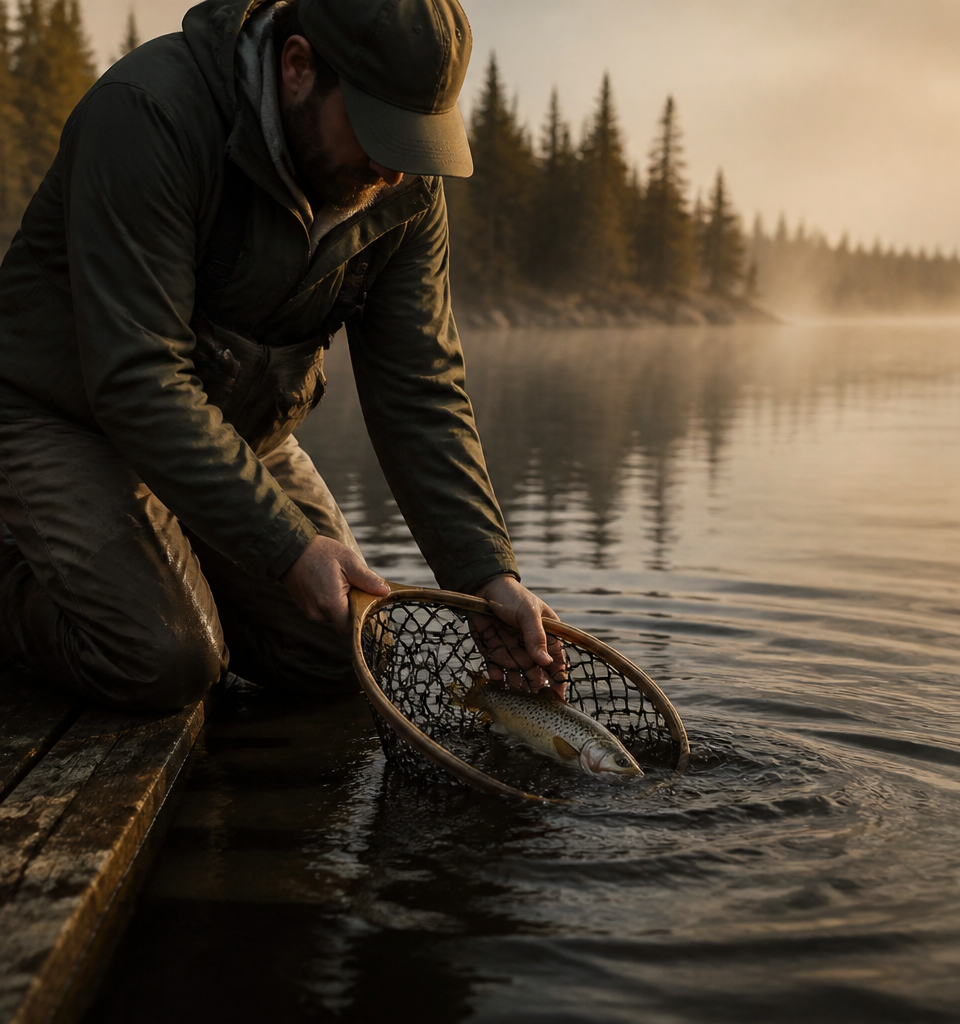
Keep the fish submerged in the net while removing barbless hooks with long-nose pliers. When taking a photograph, keep the trout out of the water for only a few seconds and support its body horizontally without squeezing the gills or abdomen. These conservation practices ensure Manitoba remains a world-class destination for trophy wild trout for generations to come.
Planning a successful guided Brook trout trip
Reaching Manitoba's premier Brook trout rivers generally requires a floatplane flight into remote wilderness fly-in camps on the Canadian Shield. Booking with established outfitters pairs you with professional guides who know every rapid, pool, and productive fly pattern. These experts provide critical river safety in completely isolated northern terrain.
American and European plan packages typically include chartered air transfers, comfortable riverside lodging, and specialized boats built for navigating swift rapids. Discuss your goals with your outfitter ahead of time to lock in prime dates aligned with seasonal peak activity on your chosen river.
To plan an unforgettable northern angling adventure, browse the Fishing outfitters in Manitoba listed on MyOutfitters and secure your trip with certified partners.
Frequently asked questions
When does Brook trout fishing season open in Manitoba?
The fishing season generally opens in late May and runs through early October. June, July, and September offer the most productive river conditions and aggressive feeding activity.
Where are the largest Brook trout found in Manitoba?
Wild rivers in the province's northeastern region, notably the Gods River and Hayes River systems, produce the largest native specimens due to strong currents and abundant forage.
Are barbless hooks mandatory for Brook trout fishing in Manitoba?
Yes, barbless hooks are mandatory across Manitoba for all game fish. You must crimp or file down the barbs on all flies, lures, and hooks before fishing.
What fly line is best for river Brook trout in Manitoba?
A 6-weight or 7-weight rod with a weight-forward floating line covers most river situations. Carrying a sink-tip line is recommended to get streamers down into deep plunge pools.
What are the most effective lures for Brook trout in Manitoba?
Small casting spoons in silver or gold and weighted inline spinners are top producers. Minnow-imitating crankbaits measuring five to eight centimetres are also highly effective.
What size is considered a trophy Brook trout in Manitoba?
The Manitoba Master Angler program officially recognizes a Brook trout as a trophy catch once it reaches a minimum length of 20 inches (approximately 51 cm).
Can you fish for Brook trout in southern Manitoba stillwaters?
Yes, several managed lakes and pits throughout the Parkland region offer excellent stillwater angling for stocked Brook trout, easily accessible by small boat or float tube.
When do Brook trout display their best spawning colors?
September is the best time to see brilliant spawning colors. Males develop fiery orange-red bellies and pronounced kypes as water temperatures cool.
How do you access remote Brook trout rivers in northern Manitoba?
Access to northern rivers is primarily by floatplane or chartered bush plane out of regional hubs such as Thompson. Guided outfitter packages generally include these fly-in transfers.
Do you need a special licence for remote Brook trout rivers in Manitoba?
A standard Manitoba provincial angling licence is required for most waters, though specific northern rivers have designated catch-and-release rules and special local restrictions.