Fishing
Lake Trout / Charr Fishing in the Northwest Territories: Freshwater Giants
Discover the secrets of Lake trout / charr fishing in the Northwest Territories: legendary waters, proven tactics, prime seasons, and expert advice for a memorable trip.
Key takeaways
- The prime season runs from late June to mid-September, right after the ice clears from massive Arctic lakes.
- Lake trout / charr inhabit deep basins, rocky drop-offs, and even surface waters across vast subarctic lakes.
- Deep trolling with heavy spoons and vertical jigging with large soft plastics are top-producing tactics.
- A valid territorial sport fishing licence is required before wetting a line.
- Pack heavy-duty gear and waterproof layering systems, as northern weather shifts rapidly even in midsummer.
Identifying trophy Lake trout / charr in the Northwest Territories
Lake trout / charr (*Salvelinus namaycush*) is an iconic apex predator reaching legendary sizes in pristine northern waters. Characterized by a robust, torpedo-shaped body, its colour ranges from silvery grey to dark olive-green, covered in pale cream or yellowish spots. A deeply forked tail and a maw lined with sharp teeth reflect its role as the dominant predator in subarctic lakes.
In cold northern ecosystems, these fish boast remarkable longevity, with some specimens living beyond 50 years. This slow growth rate gives Northwest Territories lakers incredible muscle density and exceptional power. Unlike southern populations encountered during Lake trout fishing in Quebec: A complete guide, northern lakers regularly exceed 30 to 40 pounds.
Where to find Lake trout / charr in the Northwest Territories
Lake trout / charr thrive throughout cold, deep watersheds across the Northwest Territories, boasting world-class numbers in Great Bear Lake and Great Slave Lake. These massive inland seas feature deep trenches, sheltered bays, and submerged reefs that offer the ideal habitat for trophy specimens.
The East Arm of Great Slave Lake, renowned for towering cliffs and crystal-clear water, is a globally recognized destination for giant lakers. Further north, tundra river mouths and remote chains of lakes hold exceptional populations, frequently sharing structure with fierce predators covered in our guide to Pike fishing in the Northwest Territories: Ultimate guide.
Seasonal behavior of Lake trout / charr
Seasonal movements in the Far North depend heavily on cold water temperatures and the short open-water season. Subarctic lakes stay cold near the surface for much of the summer, disrupting the typical thermal stratification seen in southern waters.
Following ice-out, Lake trout / charr roam shallow flats and surface waters pursuing cisco and suckers. As summer progresses, fish spread out between mid-depth rocky humps and deeper basins before starting their pre-spawn movements toward wave-washed, shallow reefs in late August and September.
When to fish for Lake trout / charr in the Northwest Territories
Prime fishing begins in late June and continues through mid-September. The early weeks right after ice break-up—late June to mid-July—offer thrilling action as giant trout cruise shallow bays and surface zones.
August delivers consistent weather and long fishing hours under the midnight sun, keeping fish active around the clock. By late August, cooling water triggers aggressive feeding ahead of the fall spawn, presenting exceptional opportunities before early autumn frosts set in.
Locating Lake trout / charr in northern waters
Locating fish in vast northern waters requires targeting prominent bottom contours like underwater points, steep drop-offs, and neck-down channels between islands. Canadian Shield topography forms natural travel corridors where baitfish gather.
Watching diving birds and reading your sonar help identify schools of bait and plankton layers. In ultra-clear waters similar to those found when Lake trout fishing in Manitoba: Giant fish guide, trout spot lures from considerable distances, making drop-offs and light-transition zones prime targets.
Best techniques for catching Lake trout / charr
Deep trolling with downriggers or heavy bottom-bouncers is a proven method for covering water. Large, heavy flutter spoons trolled at moderate speeds produce loud thumps and bright flashes that call fish up from the depths.
Vertical jigging over isolated structure using large soft-plastic swimbaits on heavy jig heads produces ferocious bites. Position your boat directly over marks on the sonar and work the lure with sharp upward snaps. During early season, shallow trolling or casting large crankbaits over rock reefs delivers thrilling rod-in-hand action.
Essential gear for Lake trout / charr fishing
Trophy fish test tackle with powerful runs and hard headshakes. A 7- to 8-foot medium-heavy to heavy casting or trolling rod with a fast action provides the necessary backbone.
Pair it with a sturdy baitcasting or large spinning reel equipped with a smooth, heavy drag and spooled with 30- to 50-pound braided line. Always tie on a 20- to 30-pound fluorocarbon leader to protect against abrasive teeth and sharp rocks while keeping your presentation stealthy in crystal-clear water.
Regulations for Lake trout / charr fishing
Sport fishing in the Northwest Territories is managed carefully to protect delicate northern aquatic ecosystems. Anglers must hold a valid territorial fishing licence and follow all zone limits, size restrictions, and mandatory barbless hook regulations.
Consult official guidelines, sanctuary closures, and licensing details via the Government of the Northwest Territories. Regulations change annually: always verify current limits and local restrictions with official authorities before planning your trip.
Conservation and ecological role of Lake trout / charr
As top predators in cold freshwater lakes, Lake trout / charr are vital to the ecosystem balance of northern waters. Slow growth and late sexual maturity leave them vulnerable to overharvest.
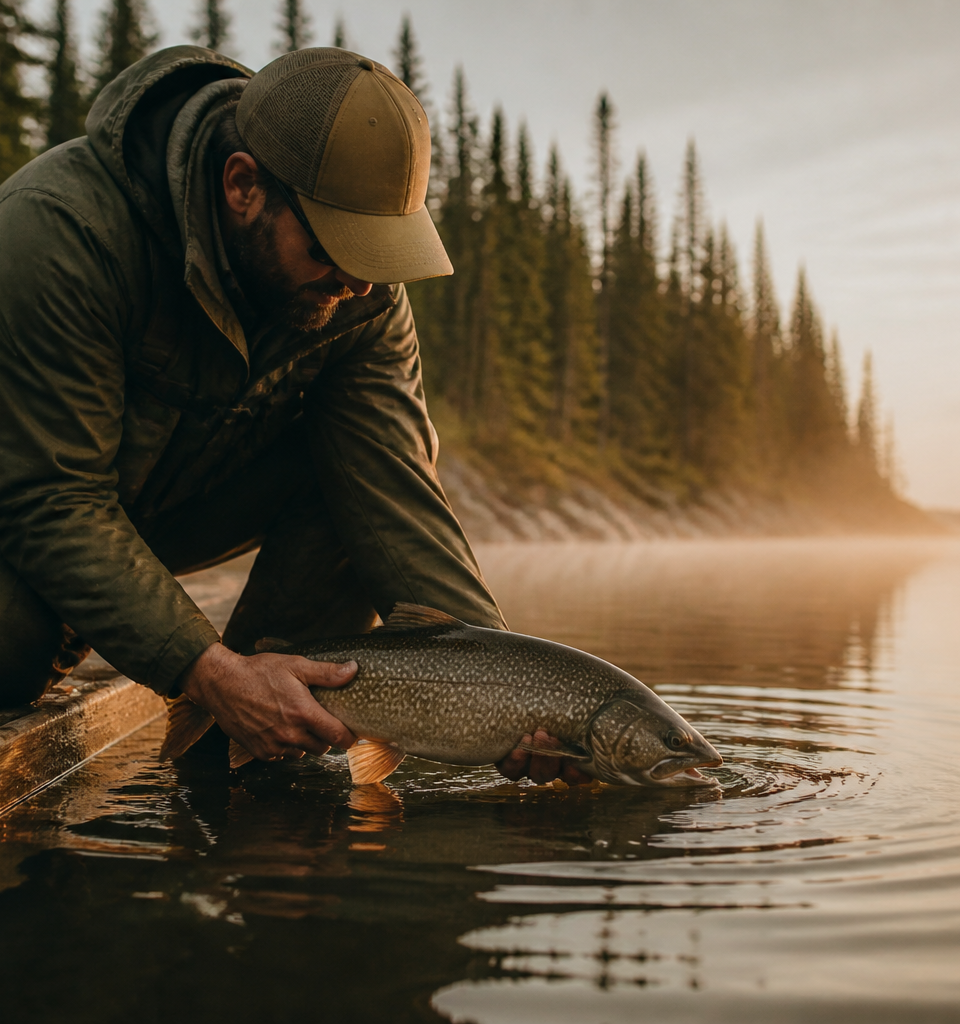
Practicing careful catch-and-release on mature fish is standard practice among visiting anglers. Minimizing air exposure, using knotless rubber nets, and supporting heavy fish horizontally while reviving them ensures these ancient trophies continue to thrive.
Guided Lake trout / charr fishing trips in the Northwest Territories
Planning a remote northern trip requires detailed logistics and skilled guides. Local outfitters know the complex water systems, changing weather patterns, and shifting fish locations throughout the summer.
Fly-in fishing lodges provide direct access to secluded waters alongside reliable boats and safety gear. Explore all options and book your wilderness adventure with Northwest Territories fishing outfitters.
Browse guided packages on MyOutfitters to plan your trip and land the fish of a lifetime in Canada's north.
Frequently asked questions
When does the Lake trout / charr season start in the Northwest Territories?
The open-water season generally begins in late June as soon as the ice breaks up on major lakes. It runs through mid-September, featuring exciting early-season surface action for trophy fish.
Where are the biggest Lake trout / charr caught in the Northwest Territories?
Great Bear Lake and the East Arm of Great Slave Lake are premier destinations for giant fish. These deep, cold lakes support some of the highest densities of 30-plus-pound trout in the world.
What tackle should I use for trophy northern Lake trout / charr?
Choose a heavy or medium-heavy rod paired with 30- to 50-pound braid and a strong fluorocarbon leader. A dependable reel with high line capacity and a smooth drag is crucial for handling long, powerful runs.
Do I need a guide to fish for Lake trout / charr in the Northwest Territories?
Hiring an experienced guide is highly recommended due to the vast size of northern lakes and the remote wilderness setting. Guides ensure safe navigation and quickly locate productive structures across changing conditions.
What is the average size of Lake trout / charr in the Northwest Territories?
Average catches range between 10 and 20 pounds on trophy lakes, with fish over 30 pounds landed regularly. True giants pushing 40 to 50 pounds make these subarctic waters world-renowned.
Can you fly fish for Lake trout / charr in the North?
Yes, fly fishing is very effective during ice-out in June and July when trout cruise shallow shorelines. A 9- or 10-weight fly rod paired with large streamers delivers exciting, visual surface and mid-depth strikes.
How long do subarctic Lake trout / charr live?
Subarctic Lake trout / charr can live from 40 to over 60 years because of their very slow metabolism in near-freezing waters. This long lifespan makes catch-and-release essential for maintaining trophy populations.
Why do Lake trout / charr stay near the surface in midsummer in the NWT?
Surface water temperatures in large northern lakes remain cold throughout the summer, rarely exceeding 10 to 12 degrees Celsius. This allows trout to comfortably feed near the surface without retreating to deep basins.
What are the most productive lures for giant Lake trout / charr?
Heavy, large-profile flutter spoons in silver, gold, or blue are classic trolling favourites. Large paddle-tail swimbaits on heavy jig heads are unmatched for vertical jigging over deep structure.
How do you properly release a trophy Lake trout / charr?
Keep the fish in the water using a knotless net and avoid lifting it vertically by the gills. Support it horizontally beneath the belly for quick photos and revive it facing into the current until it swims away under its own power.