Fishing
Lake Trout / Charr Fishing in British Columbia: Expert Guide
Discover the secrets of Lake trout / charr fishing in British Columbia: deepwater habitats, peak seasons, proven techniques, and premier outfitter trips.
Key takeaways
- Spring ice-out and autumn provide the best opportunities to target this apex predator near the surface.
- The deep, cold oligotrophic lakes of central and northern British Columbia hold the province's strongest populations.
- Deep-water downrigger trolling and vertical jigging with large soft plastics are the most effective tactics.
- A valid provincial freshwater fishing licence and compliance with regional quotas and seasonal closures are strictly mandatory.
- Use a quality fish finder to locate the thermocline and handle deep-caught fish carefully to ensure successful catch-and-release.
Identifying Lake trout / charr on the water
Lake trout / charr, scientifically named *Salvelinus namaycush* and often called lakers or grey trout, are easily distinguished from other salmonids by their streamlined dark bodies covered in light spots. Their colouration ranges from slate grey to deep olive green, contrasting with a creamy white belly. A deeply forked tail is their most obvious anatomical signature, setting them apart from brook trout and native rainbow trout.
Unlike other sportfish, Lake trout / charr possess a massive head and powerful jaws lined with sharp teeth adapted to a strictly piscivorous diet. Their lower fins sometimes show a faint white leading edge, but without the distinctive black accent stripe found on brook trout. For anglers familiar with Brook trout fishing in British Columbia, the robust build and elongated silhouette of the lake trout leave no doubt about its identity as a deepwater giant.
Their exceptionally slow growth rate in cold water makes them remarkably long-lived. A trophy-class specimen may be several decades old, commanding respect the moment it surfaces through the crystal-clear waters of western lakes.
Where does Lake trout / charr live in British Columbia?
Lake trout / charr primarily inhabit the large, deep, cold lakes of the Central Interior, the Cariboo region, and Northern British Columbia. Strong populations thrive in major waterbodies such as Stuart, Quesnel, Babine, and Fraser lakes, as well as Tagish and Atlin lakes near the Yukon border. These expansive glacial waters provide the oligotrophic conditions essential to their demanding metabolism.
This apex predator requires exceptionally well-oxygenated water with optimal temperatures between eight and twelve degrees Celsius. Much like the patterns seen when Lake trout fishing in Alberta: deep lake secrets, British Columbia populations seek out lakes with complex underwater structure, moving between vast abyssal trenches and steep rocky drop-offs.
An abundant forage base of lake whitefish, minnows, and kokanee also drives their distribution. In these wilderness basins, Lake trout / charr find the ideal balance to flourish well away from urban angling pressure.
Understanding the seasonal movements of Lake trout / charr
Lake trout / charr behaviour is dictated by the thermal stratification of lakes throughout the year. Right after ice-out, when water temperatures are uniformly cold from top to bottom, fish patrol shallow shorelines and sunlit bays in search of an easy meal. This is a prime, fleeting window when shore anglers and small-boat fishermen can target them without specialized deep-water gear.
As summer sun warms the upper layer and establishes the thermocline, Lake trout / charr retreat to the depths, remaining below the warm surface layer. They settle into trenches from twenty to over sixty metres deep, adjusting their daily feeding movements to match schools of baitfish.
In the fall, cooling surface waters and lake turnover trigger the spawning run. Mature adults leave the abyss and move onto wind-swept, shallow rocky shoals, broadcasting their eggs without building a redd before returning to deep water for the winter.
When to fish for Lake trout / charr in British Columbia?
May and June, along with September and October, are the premier months to target Lake trout / charr in British Columbia waters. In spring, cold surface temperatures keep fish in the shallows where they feed aggressively following ice-out. Strikes are savage, and surface fights on light tackle are unmatched.
Summer requires patience and precise technical execution, though fishing remains highly productive for anglers equipped with downriggers and quality sonar. During hot July and August days, early morning and dusk offer prime feeding windows as winds subside on large lakes.
Autumn brings fish back up toward the surface before seasonal closures or the onset of freeze-up. Weather conditions can be harsh, but the aggressive appetite of pre-spawn lakers more than makes up for unpredictable northern elements.
How to locate Lake trout / charr in deep lakes
To consistently find Lake trout / charr, focus on underwater points, sheer drop-offs, and narrow channels between islands. These contours create currents that concentrate kokanee and whitefish, instantly drawing hunting predators. Deep holes adjacent to shallow rocky flats serve as prime resting and ambush zones.
Using detailed bathymetric mapping paired with modern sonar makes all the difference on expansive waters. Scan the water column carefully to locate the thermocline, which usually shows up as a faint, scattered band on the display.
Once you identify their preferred temperature zone, focus your efforts just beneath this transition line. Trophy specimens frequently hug the bottom structure or suspend mid-depth directly below schools of forage fish.
Best techniques for Lake trout / charr
Slow trolling with downriggers is the gold standard for presenting a lure at the exact target depth. Maintaining speeds between 2.5 and 4 kilometres per hour, large flutter spoons, slender minnow plugs, and flasher-and-fly or meat-rig combos realistically mimic an injured baitfish.
Vertical jigging has also surged in popularity across western lakes. This direct approach involves positioning the boat over fish marked on sonar and working heavy metal jigs or large soft-plastic tube jigs loaded with scent. If you have experienced Lake trout fishing in Quebec: complete guide, you will recognize the same heart-stopping strike on the drop.
During early spring, flat-line trolling on the surface with lead-core line or planer boards allows you to cover vast shoreline areas and trigger explosive strikes from actively cruising predators.
Choosing gear for Lake trout / charr
A medium-heavy rod between 2.1 and 2.6 metres (7 to 8.5 feet) provides the backbone needed for deep trolling. Pair it with a line-counter conventional reel, which lets you repeat successful depths with pinpoint accuracy.
Spool up with 30- to 50-pound braided line to cut through deep water without creating excessive bow, and finish with a discreet fluorocarbon leader of at least 20-pound test. Fluorocarbon offers excellent abrasion resistance against sharp rocks and toothy jaws.
For lures, rely on heavy metal spoons in silver, blue, or chartreuse finishes, large white tube jigs from 10 to 15 centimetres, and deep-diving crankbaits. Always carry a large landing net with rubber-coated mesh to protect the fish's protective slime coat during landing.
Regulations and licences for Lake trout / charr in British Columbia
All anglers aged 16 and older must hold a valid provincial freshwater fishing licence. Depending on the specific waterbody, additional conservation surcharges or Classified Waters endorsements may be required. Possession limits, legal size slots, and daily quotas vary considerably from one management region to another.
Single barbless hooks are standard across the province to ensure quick, safe releases. Many waters also feature seasonal closures to protect fall spawning reefs, as well as bait bans to prevent juvenile fish from swallowing hooks deeply.
Always review the official regulations published by the Government of British Columbia before heading out. Regulations change annually: verify catch limits, gear restrictions, and local closures before launching your boat.
Conserving Lake trout / charr populations
Due to their late sexual maturity and slow growth rates in cold water, Lake trout / charr are highly vulnerable to overharvest. In northern British Columbia, a female may take over a decade to reach breeding maturity. Removing a large trophy removes an irreplaceable genetic contributor from the fishery.
As apex predators, Lake trout / charr keep forage populations balanced and maintain the biological health of northern aquatic ecosystems. A thriving population is a direct indicator of clean, cold, well-oxygenated water.
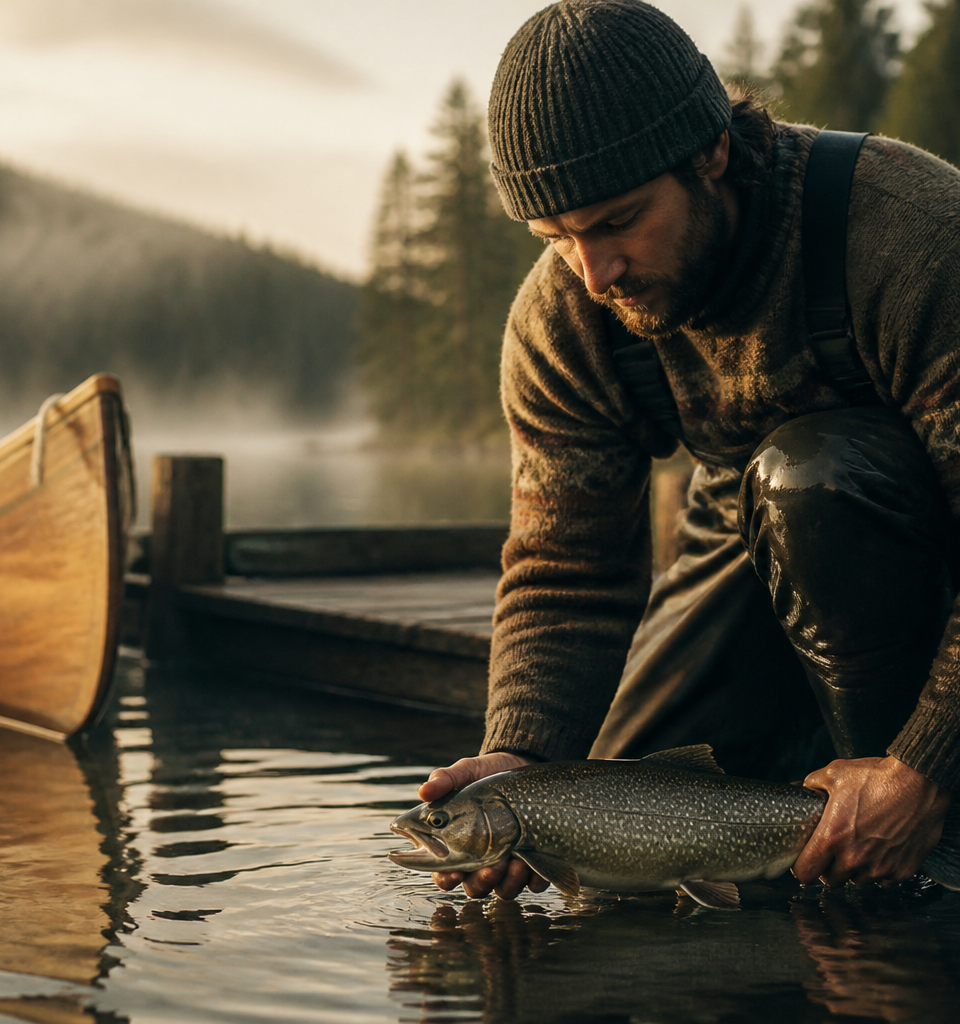
Sport anglers increasingly practice selective harvest and catch-and-release. When bringing a fish up from deep water, reel slowly to allow it to depressurize safely without barotrauma, and keep handling time out of the water down to a few seconds.
Booking an outfitter for Lake trout / charr in British Columbia
Hiring a professional outfitter or guide is the best way to maximize your success on massive, unpredictable waters. These remote destinations demand safe, seaworthy boats built for heavy chop and an intimate knowledge of underwater hazards.
Experienced guides know which deep holes produce under shifting weather conditions and supply the specialized heavy tackle required to fish extreme depths. Choosing from licensed Fishing outfitters in British Columbia guarantees comfortable wilderness lodging and seamless trip logistics.
For an unforgettable adventure on British Columbia's premier waters, rely on MyOutfitters to find the right guided trip tailored to your wilderness fishing goals.
Frequently asked questions
When is the best time to fish for Lake trout / charr in British Columbia?
Fishing is exceptionally productive in spring from May through late June, as well as in the fall throughout September and October. During these seasonal transitions, cold surface waters bring trophy fish close to shorelines and shallow shoals where they are easiest to target.
Where are the biggest Lake trout / charr found in British Columbia?
The largest specimens inhabit deep, cold lakes in central and northern British Columbia, including Stuart, Quesnel, Babine, Tagish, and Atlin lakes. These expansive, lightly pressured waters provide ample forage and the undisturbed habitat necessary for fish to grow over decades.
What is the best depth for Lake trout / charr in summer?
In midsummer, Lake trout / charr typically hold between 20 and 50 metres deep, just beneath the lake's thermocline. They seek water temperatures below twelve degrees Celsius, making downriggers or heavy wire-line setups essential to reach their strike zone.
What tackle is recommended for deep trolling for Lake trout / charr?
A medium-heavy trolling rod paired with a line-counter reel is the standard setup. Spool with 30- to 40-pound braided main line and attach a tough fluorocarbon leader to withstand abrasion from deep structure and sharp teeth.
What are the best lures for catching Lake trout / charr?
Large flutter spoons in silver, blue, or chartreuse, slender minnow plugs imitating whitefish or kokanee, and large white soft-plastic tube jigs are top producers. When trolling deep, running a rotating flasher or dodger ahead of your lure significantly boosts visibility.
Do I need a special licence for Lake trout / charr in British Columbia?
You must hold a valid British Columbia freshwater angling licence, and certain lakes require Classified Waters or conservation endorsements. Always review the regional regulations before your trip to ensure compliance with specific gear restrictions and catch limits.
How do you safely release a Lake trout / charr caught in deep water?
Retrieve the fish slowly to minimize pressure shock and prevent barotrauma, and never hang the fish vertically by its jaw. Use a knotless rubber net in the water, remove hooks promptly with long-nose pliers, and support the fish horizontally in the water until it swims away under its own power.
What makes Lake trout / charr different from other trout species?
Lake trout / charr are true char, featuring light spots on a dark body and a deeply forked tail. Unlike rainbow or cutthroat trout, they live almost exclusively in deep lakes and maintain a predatory, fish-based diet throughout their adult lives.
Why do Lake trout / charr grow so slowly in northern waters?
Cold water temperatures and short summer feeding seasons slow the metabolism and growth rates of Lake trout / charr. Due to this physiology, a ten-pound fish in a northern lake is often fifteen to twenty years old or older.
Why should I hire a guide for Lake trout / charr fishing in British Columbia?
A professional guide ensures safety on vast wilderness lakes prone to sudden weather shifts and knows how to navigate complex underwater shoals. Guides provide specialized deep-water boats, high-end electronics, and proven tackle to put you on productive water immediately.