Fishing
Brook Trout Fishing in Ontario: Tips, Tactics, and Seasons
Discover the best techniques, prime seasons, and top rivers for Brook trout fishing in Ontario, from the legendary Nipigon waters to remote northern wilderness lakes.
Key takeaways
- The prime season runs from the spring opener in May through late summer across northern rivers.
- Brook trout require cold, clean, and highly oxygenated waters, thriving in shaded pools and rocky tributaries.
- Dry fly fishing, nymphing, and casting small metal spoons or spinners remain the most productive river methods.
- A valid Ontario fishing licence with the appropriate conservation or sport fishing tag is mandatory for all resident and non-resident anglers.
- Use a stealthy fluorocarbon leader to outsmart wary trophy trout in crystal-clear water.
How to identify Brook trout and its key features
Brook trout (*Salvelinus fontinalis*), commonly called speckled trout or brookies, are distinguished by their dark back adorned with worm-like golden vermiculations and flank patterns featuring bright red spots surrounded by blue halos. Unlike true trout, brook trout display distinct, crisp white leading edges bordered by a black stripe along their pectoral, pelvic, and anal fins. During the autumn spawning run, mature males develop a brilliant fiery orange-red belly and a pronounced kype on their lower jaw.
This native char features a streamlined body engineered for the brisk currents of Ontario's rivers and streams. The tail fin is nearly square with a very slight fork, making it easy to distinguish from lake trout. Their flesh—ranging from pale pink to rich coral red depending on a diet rich in crustaceans—makes them one of the most prized game fish on the table.
Where does Brook trout live in Ontario?
Brook trout inhabit a diverse range of freshwater ecosystems across Ontario, from turbulent Canadian Shield rivers to the coastal streams flowing into Hudson Bay. World-renowned waters include the legendary Nipigon River—home of the long-standing world record—as well as the pristine watersheds of Algoma, Algonquin Provincial Park, and far-northern river networks near James Bay. Many anglers pair their wilderness pursuit with Northern pike fishing in Ontario: Expert guide and best techniques when exploring these sprawling northern systems.
These fish thrive in small forested creeks as well as deep, cold lakes. In northern coastal regions, certain populations exhibit anadromous or coaster behaviour, migrating into brackish estuaries before ascending rivers to spawn. Further west, river systems share similarities with Brook trout fishing in Manitoba: Expert guide, delivering exceptional fish numbers within untouched backcountry settings.
Brook trout behaviour and seasonal movements
Brook trout behaviour revolves strictly around water temperature and food availability. Following ice-out in spring, trout move out of deep lake basins and wintering river pools to actively cruise shallow bays and sun-warmed stream mouths. They feed aggressively on emerging aquatic insect larvae, minnows, and leeches to rebuild energy stores depleted over winter.
During peak summer, once surface temperatures exceed 18 degrees Celsius (64°F), brook trout seek thermal refuges near underwater springs, deep shaded pools, and oxygen-rich rapids. In the fall, spawning instincts push mature fish up into gravel-bottomed feeder streams, where females clear redds to deposit their eggs—a timeframe marked by intense territorial aggression.
When to fish for Brook trout in Ontario?
The premier window for Ontario Brook trout fishing extends from late May through mid-July, coinciding with major insect hatches. Sunny yet mild spring days bring fish to the surface, setting up thrilling visual dry fly action. Calm mornings and late evenings provide the most consistent feeding windows throughout the open-water season.
In midsummer, overcast days with light drizzle or a steady breeze create excellent fishing conditions by reducing surface glare. Fall delivers another burst of intense feeding activity right before the season closes. Anglers targeting Great Lakes tributaries often split their autumn calendar between brookies and Coho salmon fishing in Ontario: Complete Great Lakes guide to capitalize on the dynamic seasonal runs.
How to locate the best Brook trout pools and structure
When reading a river for Brook trout, focus on slack-water seams behind large boulders, undercut banks, and the tailouts of fast rapids. These ambush points allow trout to expend minimal energy while intercepting drifting food. Cold tributary inflows entering wider river systems act as major fish magnets throughout the warmer summer months.
On lakes, target submerged drop-offs, wind-blown rocky points, and structural cover like sunken timber. A stable boat or canoe allows you to methodically cast along the transitions between deep weedlines and hard rocky bottoms. Booking with Fishing outfitters in Ontario provides direct access to prime backcountry waters with the added benefit of local guide knowledge.
Effective techniques for catching Brook trout
Spin fishing with small inline spinners or spoons in gold, copper, and silver finishes is one of the most dependable tactics in Ontario. Silver spoons accented with red or blue dots closely mimic native baitfish and trigger aggressive reaction strikes. Work your lures with a steady, twitching retrieve interspersed with brief pauses to let the spoon flutter down through the water column.
Fly fishing represents the ultimate approach for selective brookies. Casting dry flies such as the Adams, Elk Hair Caddis, or large Mayfly imitations during hatches produces memorable surface takes. For deeper pools and faster runs, dead-drifting weighted nymphs or stripping streamers like the Woolly Bugger and Muddler Minnow will consistently coax larger, bottom-hugging specimens.
Choosing the right gear for Brook trout
A 6- to 7-foot ultralight to medium-light spinning rod paired with a 1000 to 2500 size reel forms a versatile setup for Ontario waters. Spool up with 6- to 10-pound braided main line tied to a 4- to 8-pound fluorocarbon leader. This combination delivers the sensitivity required to detect subtle takes while maintaining essential stealth in clear waters.
For fly anglers, a 9-foot 4- or 5-weight fly rod covers most stream and inland lake conditions. When tackling large, wind-swept northern rivers where trophy brook trout exceed four pounds, stepping up to a 6- or 7-weight rod helps punch heavy streamers into the wind and gives you the backbone needed to manage powerful fish in heavy current.
Brook trout fishing regulations and licences in Ontario
All anglers fishing in Ontario must carry a valid Outdoors Card paired with either a Sport Fishing Licence or a Conservation Fishing Licence. Season dates, daily catch and possession limits, and tackle restrictions vary significantly by Fisheries Management Zone (FMZ). Certain world-class rivers mandate single barbless hooks or enforce artificial-lures-only rules to protect sensitive native stocks.
To purchase your licences and review zone-specific regulations, visit the official Government of Ontario website. Proper fish handling, rubber landing nets, and minimizing air exposure are essential when practicing catch-and-release. Regulations change annually: always verify current rules with provincial authorities before heading out.
Conservation and the future of Brook trout
Brook trout are prime bioindicators due to their strict sensitivity to water pollution, rising temperatures, and siltation over gravel spawning beds. Protecting shoreline tree canopies and maintaining unobstructed aquatic corridors are vital for sustaining Ontario's wild char populations. Seasonal sanctuaries and targeted stocking programs further safeguard this ecological treasure.
Practicing selective harvest and voluntary catch-and-release helps preserve the quality of trophy fisheries across Northern Ontario. Releasing large, mature spawners while keeping only permitted, smaller specimens for a shore lunch ensures healthy wild populations for future generations.
Booking a Brook trout fishing trip in Ontario
Booking a wilderness outfitter is the most reliable way to access remote lakes and wild river systems across Northern Ontario. Outfitters offer comprehensive packages that include comfortable cabin lodging, reliable watercraft, and the expertise of seasoned guides who know the seasonal movements of local fish. Whether you choose a classic fly-in outpost on an isolated lake or a drive-to lodge suited for a family adventure, an outfitter trip provides safety, comfort, and exceptional angling.
Start planning your next Ontario wilderness adventure today by exploring the verified lodging and guiding options available on MyOutfitters.
Frequently asked questions
When does Brook trout season open in Ontario?
The open season generally begins between late April and late May, depending on the specific Fisheries Management Zone (FMZ). In northern management zones, openers often align with late spring ice-out.
Where can you catch the biggest Brook trout in Ontario?
The Nipigon River and northern tributaries flowing into Hudson Bay and James Bay hold the largest trophy Brook trout. The Algoma region and Algonquin Provincial Park also support high-quality fisheries with substantial fish.
What lures work best for Brook trout?
Small metallic spoons and inline spinners in silver, gold, or copper are top performers. Classic patterns featuring red accents or paired with a trailing fly readily trigger strikes from cautious trout.
Do you need a special licence to fish for Brook trout in Ontario?
You need a valid Ontario Outdoors Card accompanied by a Sport or Conservation fishing licence tag. Select trophy rivers also enforce special local regulations, such as mandatory catch-and-release.
What fly line weight should you use for Brook trout?
A weight-forward 4- or 5-weight floating line handles most small streams and inland lakes. For large northern rivers subject to strong winds and heavy streamers, a 6- or 7-weight line is recommended.
Can you ice fish for Brook trout in Ontario?
Yes, ice fishing for Brook trout is permitted in designated Fisheries Management Zones with open winter seasons. Always verify specific waterbody exceptions in the provincial regulations before setting tip-ups.
What is the ideal water temperature for Brook trout?
Brook trout feed most actively in water temperatures between 10 and 16 degrees Celsius (50 to 60°F). When temperatures climb past 18 to 20 degrees Celsius, feeding declines and trout retreat to cold-water refuges.
How do you properly release a Brook trout?
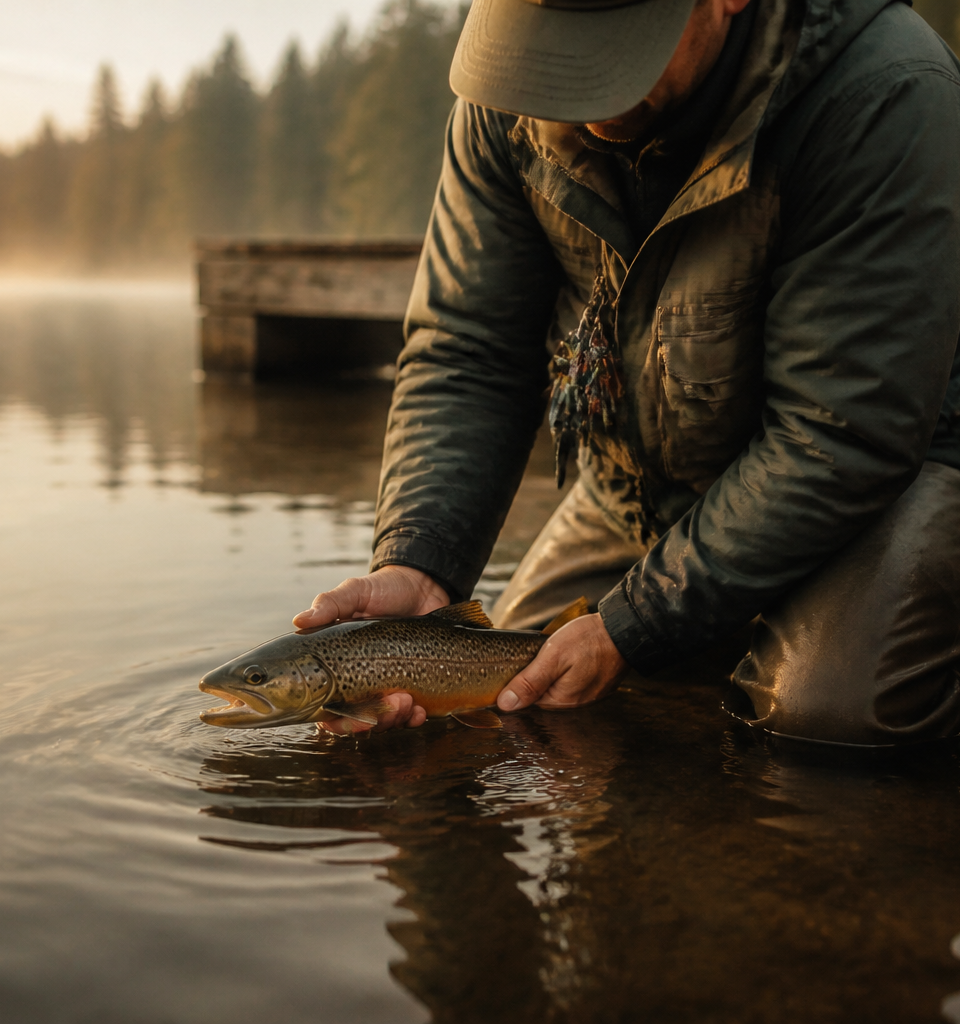
Handle the fish with wet hands, avoid touching the gills, and land it using a soft, rubberized net. Support the trout facing into the current to revive its gills before letting it swim away under its own power.
How many Brook trout can you keep per day in Ontario?
Daily catch and possession limits depend on your licence type (Sport or Conservation) and the specific Fisheries Management Zone. Limits typically range from 1 to 5 fish per day, with many zones enforcing slot sizes.
Why use a fluorocarbon leader for Brook trout?
Fluorocarbon has a refractive index very close to water, making it virtually invisible underwater. This stealth prevents line-shy Brook trout from spooking in clear, calm river pools and lakes.