Fishing
Brook Trout Fishing in Prince Edward Island
Discover the secrets of Brook trout fishing in Prince Edward Island, from cold-water spring creeks to renowned coastal sea-run estuaries.
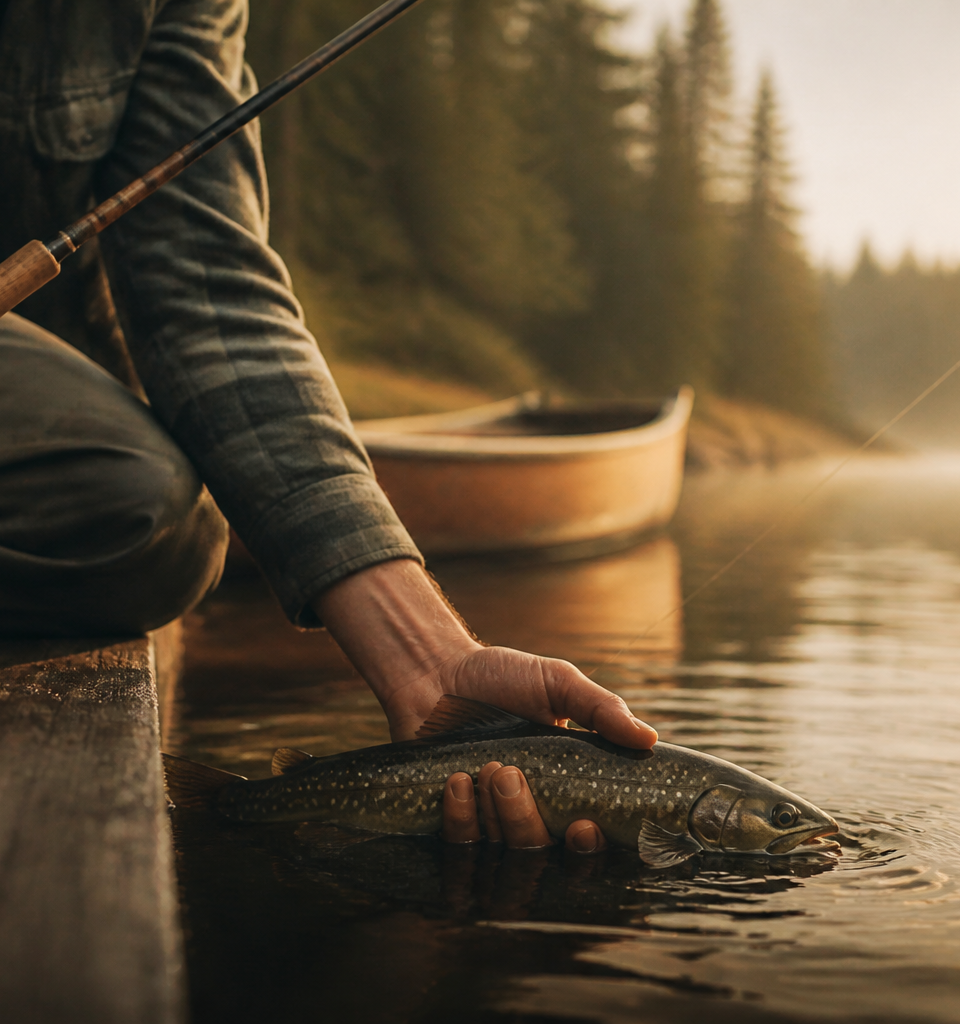
Key takeaways
- The main season runs from spring through early autumn, with notable peaks in activity during rising spring tides.
- Sandy spring-fed streams, cool deep pools, and marine estuaries are the primary habitats of island Brook trout.
- Fly fishing with mayfly imitations or small saltwater baitfish patterns delivers the most consistent results.
- A valid provincial freshwater sport fishing licence is required for all anglers exploring island rivers.
- Target the cooler morning hours to take advantage of well-oxygenated water and maximize your catch rates on the river.
How to identify Brook trout in rivers?
Brook trout are easily distinguished by their olive-green back marked with dark, worm-like vermiculations and their flanks dotted with red spots surrounded by pale blue halos. In island rivers, resident specimens often display deep, dark tones contrasted by a bright orange belly, especially in males as the autumn spawning period approaches. Their lower fins feature a crisp white leading edge highlighted by a distinct black line, which sets them clearly apart from other salmonids.
In Prince Edward Island, a key distinction must be made between resident stream trout and anadromous sea-run trout (salters). When a Brook trout spends several weeks feeding in the saltwater of the Gulf of St. Lawrence, its coloration transforms dramatically into bright, chrome-silver flanks. The vermiculations and red spots temporarily fade, giving the fish a sleek, shiny profile that closely resembles a small Atlantic salmon.
In the hand, they reveal a muscular body and smooth skin with tiny scales, typical of the char family. Their tail is nearly square with only a slight fork, which is why they are often called squaretails. A wide mouth armed with sharp conical teeth reflects an opportunistic predator capable of taking aquatic invertebrates as well as substantial swimming prey.
Brook trout habitats in Prince Edward Island
Brook trout thrive in the cold, spring-fed streams that wind across the province's rolling landscape. Island geology, dominated by red sandstone and a dense network of groundwater upwellings, creates steady-flowing streams where water temperatures remain cool even during the peak of summer. Renowned systems such as the Morell, Dunk, West, and Hillsborough rivers hold dense populations supported by rich riparian cover.
Estuaries and brackish coastal lagoons represent a unique habitat that defines angling across the Maritimes. Much like Brook trout fishing in Nova Scotia, the transition zones where fresh water meets the sea provide exceptional feeding grounds packed with sand shrimp, amphipods, and sand lance. Trout stage in these rich waters to feed heavily and pack on weight before migrating upriver.
In the upper reaches of island watersheds, deep bend pools, wooden bridge structures, and beaver ponds provide vital structural cover. These areas offer shelter from avian predators while concentrating drifting food items. Maintaining healthy forest canopies along riverbanks remains critical to preserving the cool thermal refuge necessary for the species' survival.
Migratory behaviour of anadromous sea-run Brook trout
Sea-run Brook trout follow a seasonal migration pattern dictated by forage availability and water temperatures. Following the spring ice-out in May, a significant portion of the population leaves river systems to enter coastal bays and nutrient-dense estuaries. During this marine stay of several weeks to two months, their growth accelerates on a high-calorie diet of sand shrimp and Atlantic silversides.
This migratory cycle mirrors dynamics found in other coastal regions, such as Brook trout fishing in New Brunswick. Once summer sun warms shallow bays above eighteen degrees Celsius, trout begin their return migration into river systems. They actively seek cold tributary confluences and deep, spring-fed holding pools.
In autumn, spawning instincts take over, guiding mature fish upstream to clean gravel beds in the upper watersheds. Sea-run trout mingle with resident fish to spawn in well-oxygenated riffles. Once spawning is complete, most adults drop back down into deeper, calmer pools and ponds to overwinter under the protective ice.
When to fish for Brook trout in Prince Edward Island?
Spring, particularly from mid-May through late June, offers the finest opportunities to target large sea-run Brook trout. During this window, salters move actively with incoming and outgoing tides in the lower river sections. Overcast days paired with large tidal coefficients encourage schools to cruise along eelgrass beds and sandy points.
Summer fishing calls for a strategic approach focused on dawn and dusk. When the midday sun beats down, trout metabolism slows, and fish gather in cool thermal refuges where oxygen levels remain highest. Spate conditions following warm summer rain, however, can trigger intense feeding spurts on terrestrial insects washed into the current.
Late season in September brings a surge of territorial aggression as fish take on brilliant spawning colours. Cooler days and lower light levels prompt trout to move out of deep hiding spots into riffles and pool heads. Stable weather with steady barometric pressure remains the most favourable time to fool cautious trophy fish.
Where to find Brook trout in estuaries?
Transitions between sandbars, tidal channels, and eelgrass beds are prime holding water in estuaries. Sea-run trout patrol these structural edges looking for schools of small baitfish disoriented by the current. Rocky points that generate seams, back-eddies, and current breaks are also premium ambush lies for feeding predators.
Rising tides represent the premier tactical window to work mudflats and shallow bays. As saltwater pushes inland, trout use the rising water cover to forage across flooded flats loaded with marine invertebrates. Once the tide turns to ebb, concentrate your casts along deeper outflow channels where fish retreat to avoid being trapped on drying flats.
Further inland, target undercut riverbanks, submerged root systems, and gravel tail-outs above deep pools. To compare freshwater stream strategies with larger mainland watersheds, explore our guide on Brook trout fishing in Quebec. On the island, stealth is essential: because streams are often narrow and crystal clear, casting a shadow across the water is enough to spook the largest trout in the pool.
Effective techniques for Brook trout fishing
Fly fishing remains the premier and most rewarding method on Prince Edward Island rivers. In estuaries, stripping streamers that imitate baitfish or shrimp triggers aggressive reflex strikes from hunting sea-run trout. Classic patterns such as the Muddler Minnow, Mickey Finn, Black Ghost, or articulated sand lance imitations produce consistent results when swung across tidal currents.
In freshwater sections, nymphing beneath the surface is deadly for fish hugging bottom structure when no hatch is present. A Hare's Ear or Pheasant Tail nymph tied with a tungsten bead gets down quickly through the water column. When mayflies or caddis emerge in the evening, switching to dry flies delivers explosive surface takes.
For anglers using light spinning tackle where regulations permit, small gold or silver inline spinners in sizes zero to two work exceptionally well. A precise cast toward the opposite bank followed by a slow, steady retrieve tight to structure often provokes decisive strikes. Vary your retrieve speed until you find the cadence that triggers active fish.
Ideal gear for Brook trout fishing
A nine-foot 5-weight or 6-weight fly rod is the most versatile setup to punch through coastal winds and handle strong sea-run fish. On tight inland streams, a shorter eight-foot 4-weight rod offers better casting accuracy beneath overhanging brush. A fly reel with a smooth, sealed drag system ensures reliable performance against corrosive saltwater spray in island estuaries.
For fly lines, a weight-forward floating line covers most dry fly and surface nymphing scenarios. In deep pools and fast tidal channels, adding a sinking leader or using an intermediate sink-tip line is essential to keep your fly in the strike zone. Carry fluorocarbon tippet rated from six to ten pounds to combine low visibility with abrasion resistance around sharp structure.
For light spin casting, a six-foot light to medium-light action rod matched with a 1000 to 2500 size reel spooled with six-pound monofilament provides ideal balance. Personal gear should include breathable chest waders or hip waders with traction soles for navigating muddy or sandy bottoms. A functional wading vest, a stripping basket for managing fly line in the surf, and amber-tinted polarized sunglasses complete the setup.
Brook trout fishing regulations in Prince Edward Island
Sport fishing in Prince Edward Island is governed by specific open seasons, daily bag limits, and tackle restrictions depending on the watershed and river section. Many renowned stretches are strictly managed as fly-fishing-only water, often requiring single barbless hooks. Mandatory catch-and-release rules apply to large breeding fish on several river systems to safeguard recruitment.
Anglers must purchase a provincial freshwater sport fishing licence prior to fishing, and conservation stamps may be required for designated waters. Conservation officers and local watershed groups monitor catch limits and compliance closely. For current zone boundaries, season dates, and catch quotas, visit the official Government of Prince Edward Island website.
Good on-water stewardship involves simple, vital handling practices during catch-and-release. Keep fish in the water as much as possible, handle them only with wet hands, and use a knotless rubber landing net to protect their slime coat. Regulations change annually; always verify official rules with provincial authorities before planning your outings.
Conservation and the future of island Brook trout
Island Brook trout populations face real environmental pressures related to sediment runoff and intensive agricultural land use. The province's iconic red soil, while fertile, erodes easily during heavy spring and autumn rains, threatening to silt up clean gravel beds essential for egg incubation. Rising summer water temperatures represent another critical concern for this cold-water salmonid.
Fortunately, an active network of community watershed groups works directly on river enhancement and habitat restoration. These teams install current deflectors, stabilize vulnerable banks with native plantings, and clean impacted gravel beds. Their efforts have reopened miles of blocked stream corridors while maintaining deep, oxygenated, free-flowing channels.
Anglers play a frontline role in conservation by adopting catch-and-release practices and reporting habitat concerns. Voluntary stewardship, along with diligent cleaning of wading gear to prevent the spread of aquatic invasive species, helps ensure that this treasured wild fishery remains resilient for future generations.
Outfitters for Brook trout fishing in Prince Edward Island
Booking professional guides and staying with Prince Edward Island fishing outfitters is the most reliable way to maximize your success on the water. Local guides hold intimate knowledge of tidal movements, pool access, and productive patterns that casual visitors often overlook. Their guidance allows you to adapt techniques quickly as coastal weather shifts.
Guided packages frequently include high-end gear matched to island rivers, as well as transport to productive estuary hotspots. Whether you want to refine your roll cast on a quiet river bend or wade the surf for sea-run trout at first light, a seasoned local guide turns every outing into a safe and memorable trip.
To plan your next Eastern Canadian fishing trip, rely on MyOutfitters to find the lodging and guided services that match your goals.
Frequently asked questions
When does Brook trout season open in Prince Edward Island?
The freshwater sport fishing season generally opens in mid-April and runs through late autumn depending on the river system. The prime window for targeting sea-run Brook trout in coastal estuaries spans from mid-May through late June during peak spring tides.
Do you need a licence to fish for Brook trout in Prince Edward Island?
Yes, all anglers aged sixteen and older must hold a valid provincial freshwater sport fishing licence. Non-residents can purchase seasonal or short-term licences online or through authorized local vendors before heading out.
Where can you catch sea-run Brook trout in Prince Edward Island?
The estuaries and lower sections of the Morell, Dunk, West, Hillsborough, and Mill rivers offer prime fishing for anadromous trout. Sandbars, tidal channels, and river mouths on these systems concentrate the largest schools of sea-run fish in spring.
What flies work best for sea-run Brook trout in estuaries?
Baitfish and shrimp imitations such as the Muddler Minnow, Mickey Finn, Black Ghost, and articulated sand lance patterns are highly effective. Choose contrasting colours and flash materials that stand out in moving brackish water.
Can you use spin-casting lures for Brook trout in Prince Edward Island?
Yes, light spin casting with inline spinners or small spoons is allowed on many waters, though several prime river sections are strictly designated as fly-fishing-only. Always check specific river regulations before fishing with hardware.
What is the daily catch limit for Brook trout in Prince Edward Island?
Daily bag limits typically range between two and five fish depending on the river and time of year. Certain rivers enforce complete catch-and-release or protective slot sizes to preserve breeding populations.
What basic gear is recommended for island Brook trout?
A nine-foot 5-weight or 6-weight fly rod with a floating line is ideal for handling coastal winds and larger sea-run fish. For spin fishing, a light to medium-light rod spooled with six-pound monofilament provides the right mix of sensitivity and control.
What is the difference between resident Brook trout and sea-run trout?
Sea-run trout are Brook trout that migrate to saltwater estuaries to feed, taking on a bright chrome-silver appearance and growing much larger. Resident Brook trout spend their entire life in fresh water, keeping their dark olive backs and vibrant red spots.
Are barbless hooks required in Prince Edward Island?
Barbless or pinched-barb hooks are mandatory on many managed river stretches to ensure clean catch-and-release. Even where not legally required, using barbless hooks is strongly encouraged to protect wild fish.
Why hire a fishing guide in Prince Edward Island?
A local guide understands complex tide tables, private access points, and current insect hatches. Their on-water expertise saves valuable time and puts you onto the most productive pools safely.