Fishing
Brook Trout Fishing in British Columbia
Discover the secrets of Brook trout fishing in British Columbia: productive stillwaters, prime seasons, effective flies, and expert tactics for success.
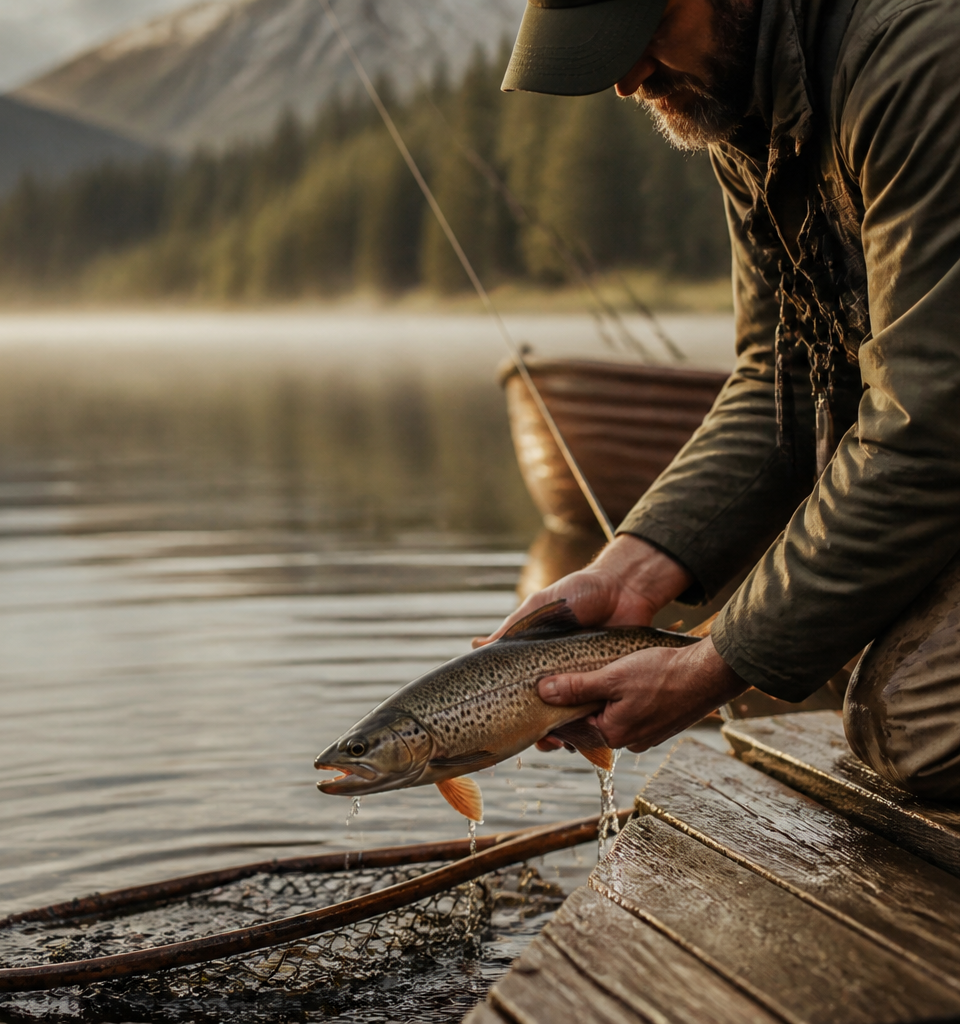
Key takeaways
- Spring fishing right after ice-out offers the best window for targeting active fish.
- High-elevation lakes and cool deep pools across the BC Interior provide prime Brook trout habitat.
- Fly fishing with leech patterns and chironomid nymphs dominates stillwater tactics.
- A provincial freshwater fishing licence is required, along with any necessary water-specific stamps.
- Using a small watercraft equipped with a fish finder helps pinpoint weed edges, drop-offs, and shoals.
How to identify Brook trout on the water
Brook trout (*Salvelinus fontinalis*), technically a char, stands out from other salmonids thanks to distinct light worm-like markings (vermiculations) across its dark olive back and dorsal fin. Its flanks feature vivid red spots surrounded by light blue halos, while the lower fins display a crisp white leading edge backed by a sharp black stripe. Coloration ranges from dark olive green to golden brown, shifting to fiery orange and red hues during the fall spawn.
In British Columbia, anglers occasionally mistake Brook trout for lake trout or bull trout. Unlike bull trout, brookies have clear dark vermiculations on their backs and a squarish tail fin, earning them the nickname "squaretail." While eastern anglers often compare catches to Brook trout fishing in Quebec: tips and techniques, specimens found in productive western lakes grow particularly thick and stocky due to an abundance of aquatic food.
Where do Brook trout live in British Columbia?
Brook trout thrive primarily in plateau lakes and select river drainages throughout the Okanagan, Thompson-Nicola, Kootenays, and Cariboo regions. Historically stocked in numerous landlocked waters, the species flourishes in nutrient-rich Interior plateau stillwaters where warm summers foster dense populations of aquatic invertebrates.
These waters provide excellent thermal conditions, provided oxygen levels remain high. Brook trout prefer water temperatures below 16°C and tolerate summer heat less readily than rainbow trout. Much like the neighbouring fisheries explored in Brook trout fishing in Alberta: complete guide, mid-to-high elevation lakes serve as cool havens where brookies reach impressive sizes.
Seasonal behavior and cycles of Brook trout
Brook trout behavior varies noticeably throughout the season based on water temperature and lake stratification. In spring, right as the ice melts, fish cruise the shallows and rocky shoals searching for food after the lean winter months. This is when their metabolism ramps up, making them highly receptive to lures and flies.
During the summer heat, Brook trout retreat to deeper basins, cold underwater springs, and the thermocline to find cool, oxygen-rich water. Feeding windows narrow during this period, concentrating primarily around dawn and dusk. Come autumn, cooling surface waters trigger a second feeding surge ahead of spawning, drawing trout back into shallow bays and structure.
When to fish for Brook trout in British Columbia?
May, June, September, and October deliver the most productive Brook trout fishing across British Columbia. Spring aligns with massive insect hatches—particularly chironomids and mayflies—which prompt aggressive surface and sub-surface feeding over shoals.
Autumn offers equally exceptional fishing on calm days, with brookies displaying their most vibrant spawning colours. Overcast days with a light surface chop reduce trout wariness, encouraging bold takes. In winter, several Interior lakes also open for ice fishing, offering a reliable way to target large, cruising char near submerged weedbeds.
How to find Brook trout in British Columbia
To locate Brook trout effectively, focus on drop-offs, dense weedline edges, and submerged structure. In BC lakes, shallow flats known as shoals act as primary feeding zones where trout hunt for nymphs, leeches, scuds, and damselfly larvae.
Watching the surface closely often reveals subtle rises or cruising wakes that signal trout feeding on emerging insects. A fish finder mounted on a small boat, tin boat, or float tube helps map transitions from soft mud bottoms to harder gravel shelves. Exploring areas near Fishing outfitters in British Columbia provides access to well-managed waters with strong trophy trout potential.
Best techniques to catch Brook trout
Fly fishing with floating and sinking lines remains the top method for targeting Brook trout in stillwaters. Suspending chironomid pupae under an indicator just inches off the bottom consistently produces results. Stripping leech patterns, such as the classic Woolly Bugger, on an intermediate line triggers aggressive reaction strikes.
For spin anglers, casting small spoons or inline spinners in silver, gold, and copper, as well as small minnow-imitating crankbaits, is deadly. Trolling slowly along weed edges with a willow leaf flasher rig followed by a fluorocarbon leader and a worm remains a proven tactic for covering water.
Choosing the right gear for Brook trout
A 9-foot, 4-weight or 5-weight fly rod is the standard setup for most BC lake fishing. Pair it with a smooth-drag reel loaded with a weight-forward floating line and an intermediate or full-sinking line (Type 3 to Type 6) to cover the entire water column.
For spin fishing, a 6-foot to 6'6" ultralight or light-action spinning rod matched with a 1000-to-2000 size reel provides the ideal balance and sensitivity. Spool with 4 to 6-pound test monofilament or fluorocarbon to stay stealthy in clear waters. Always carry a knotless rubber landing net to protect the trout's delicate slime coat during release.
Brook trout fishing regulations in British Columbia
Freshwater sportfishing in British Columbia requires a valid provincial non-tidal angling licence. Specific regulations vary by management region and individual waterbody, including daily retention limits, size restrictions, seasonal closures, and mandatory single barbless hook rules.
Certain lakes are managed under catch-and-release regulations or designated fly-fishing-only to protect wild and brood stocks. To review regional rules and boundary exceptions, visit the official Government of British Columbia website. Regulations change annually: always verify the specific rules for your targeted lake before heading out.
Conservation and ecological role of Brook trout
Although non-native to western Canada, Brook trout are actively managed in British Columbia to provide quality angling opportunities without compromising native trout and char. The province frequently stocks sterile triploid fish in closed lake basins, preventing interbreeding with native bull trout or competition in open river systems.
Practicing careful catch-and-release helps sustain healthy fisheries in these productive yet sensitive waters. Minimizing handling time, keeping the fish in the water, and using forceps or pliers to remove barbless hooks ensures high survival rates for released fish.
Planning a Brook trout fishing trip
Booking a trip with a professional lodge or local guide is one of the most effective ways to discover top stillwaters and understand current hatches. Experienced guides know the productive depths, working fly patterns, and seasonal movements on complex lake systems. You can consult 3 budget-friendly fishing outfitters to plan your stay to compare different fishing adventures.
Whether you prefer a rustic cabin stay on a quiet lake or an all-inclusive guided package, the province offers world-class angling settings. Find the right outfitter and adventure through MyOutfitters for your next trip.
Frequently asked questions
When is the best time to fish for Brook trout in British Columbia?
May, June, September, and October provide the peak fishing windows for Brook trout. Spring brings active feeding in the shallows right after ice-out, while cooler autumn temperatures trigger aggressive pre-spawn feeding near shoals.
Where can you find Brook trout in British Columbia?
Brook trout are primarily found in plateau lakes throughout the Okanagan, Thompson-Nicola, Kootenays, and Cariboo regions. They thrive in productive waters with abundant weedbeds and invertebrates where temperatures remain cool year-round.
What fishing licence is required for Brook trout in BC?
You need a valid British Columbia Non-Tidal Angling Licence. Depending on the specific waterbody, additional stamps or classified waters endorsements may apply. Non-residents can purchase daily, weekly, or annual licences online.
What are the best flies for Brook trout in lakes?
Chironomid pupae, Woolly Buggers, micro-leeches, and damselfly nymphs rank among the most effective patterns. Olive, black, and maroon flies fished slowly along weed edges reliably trigger strikes from cruising brookies.
What rod setup is recommended for Brook trout fishing?
A 9-foot, 4-weight or 5-weight fly rod with floating and sinking lines is ideal for stillwater scenarios. For spin fishing, a 6-foot to 6'6" ultralight or light rod paired with 4 to 6-pound monofilament or fluorocarbon works best.
Are barbless hooks required when fishing in British Columbia?
Yes, provincial regulations require single barbless hooks in almost all freshwater streams and rivers, as well as many designated lakes. De-barbing hooks reduces injury and makes releasing fish much faster and safer.
How do you catch Brook trout during warm summer weather?
Target deep basins, cold spring inflows, and the thermocline using full-sinking lines or downriggers. Early morning and late evening outings are most productive, as trout avoid warm surface layers during midday sun.
Can you ice fish for Brook trout in British Columbia?
Yes, numerous Interior BC lakes are open for hardwater fishing during winter. Jigging small spoons, micro-jigs, or baited hooks near shallow weed edges can produce quality fish throughout the winter months.
What is the difference between a Brook trout and a Rainbow trout?
Brook trout belong to the char genus, featuring a dark olive back with light vermiculations, red spots with blue halos, and white-edged fins. Rainbow trout have a lighter olive-to-silver body covered in small black spots and a distinct pink lateral stripe.
What is the daily catch limit for Brook trout in BC?
Daily limits depend on the specific management unit and lake regulations, typically ranging from 2 to 5 fish, with zero retention on catch-and-release waters. Always consult the official provincial freshwater fishing synopsis before keeping fish.