Fishing
Guide to Landlocked Salmon Fishing in New Brunswick
Discover the best techniques, lakes, and peak seasons for successful landlocked salmon fishing trips across New Brunswick.
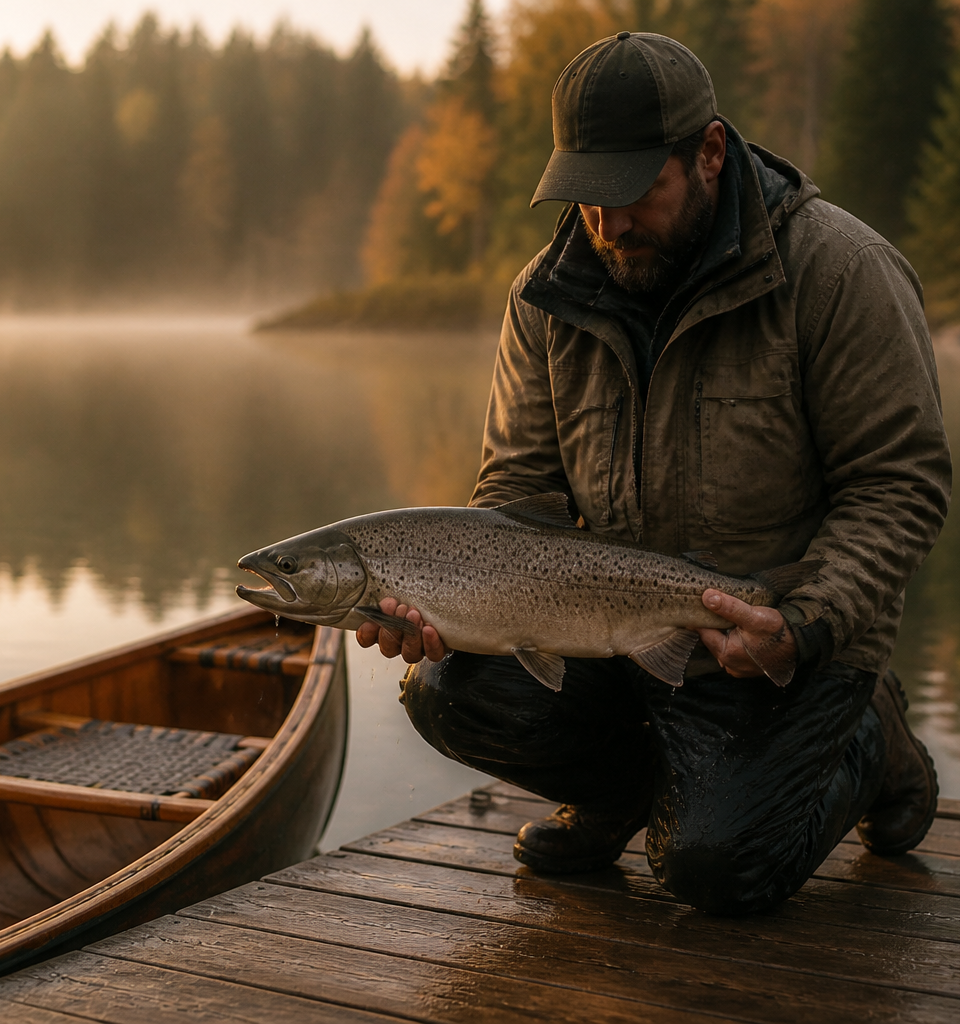
Key takeaways
- From ice-out in May through late September, spring offers the most productive surface fishing opportunities.
- Deep, well-oxygenated lakes across northwestern and southwestern New Brunswick hold the province's strongest populations.
- Flat-line trolling with streamer flies in spring and downrigging with flutter spoons in summer produce the bulk of catches.
- A valid provincial inland sport fishing licence is required to target this hard-fighting salmonid.
- Track the thermocline carefully on your sonar and maintain a steady trolling speed between two and three knots.
Identifying landlocked salmon among salmonid species
Landlocked salmon (known locally as ouananiche) is the freshwater, non-migratory form of the Atlantic salmon, celebrated for its explosive, acrobatic jumps. Unlike anadromous salmon that run to the sea, landlocked salmon spend their entire life cycle in freshwater, thriving in large lake systems connected to gravel-rich tributary rivers suited for spawning.
Physically, this fish features a sleek, streamlined body built for speed. Its bright silver flanks are marked with distinct black cross-shaped or crescent markings scattered along the back and above the lateral line. It has a deeply forked tail and a narrow, muscular caudal peduncle that provides a secure handhold when handling fish for release. Its mouth is lined with sharp teeth, and the upper jawbone (maxillary) rarely extends past the rear edge of the eye, a key trait that distinguishes it from other salmonids.
Anglers sometimes confuse it with other sport fish sharing the same waters. However, its chrome-bright sheen and relentless energy during the fight make it unmistakable. If you are already familiar with Atlantic salmon fishing in New Brunswick, you will recognize the same aggressive strikes and aerial displays in this freshwater counterpart.
Where to find landlocked salmon in New Brunswick?
Landlocked salmon thrive primarily in the deep, cold, and well-aerated lakes of the province. Key waters include lake networks in northwestern New Brunswick, such as Baker Lake and Lac Unique in Madawaska County, as well as border waters in the southwest shared with Maine, including Palfrey Lake and Spednic Lake.
These lacustrine ecosystems feature deep basins where water temperatures remain cool throughout the summer heat, alongside direct access to rocky tributary streams for natural reproduction. The presence of rainbow smelt, their primary forage, is essential for sustaining healthy population densities and strong growth rates.
Anglers exploring these large watersheds often split their time targeting multiple salmonid species. Combining your trip with Lake Trout Fishing in New Brunswick: An Expert Guide is a popular strategy on waters where both species co-exist in complementary depth zones.
Understanding the seasonal cycle of landlocked salmon
Landlocked salmon behavior is dictated by water temperature and the movements of baitfish schools. Following spring ice-out, lake turnover disperses cold water evenly, bringing salmon to hunt right beneath the surface film near sandy shorelines, creek mouths, and sun-warmed rocky points.
As summer sets in and lakes stratify thermally, salmon descend into cooler layers, generally settling between 8 and 15 metres deep. They hold comfortably within the thermocline, where water temperatures hover between 10 and 15 degrees Celsius. During this period, their feeding runs focus around steep drop-offs, sunken humps, and deep trenches.
In the fall, dropping water temperatures and the spawning instinct shift their patterns once again. Mature adults leave open water and stage near river estuaries before ascending fast-flowing streams to spawn on clean gravel beds. Non-spawning fish remain active in the main lake, taking advantage of cooling surface waters to feed aggressively ahead of winter.
When to fish for landlocked salmon in New Brunswick?
The prime window for landlocked salmon runs from mid-May through late June, right after ice-out. During these weeks, surface waters remain cold and fish hunt actively near the top, offering exciting surface strikes and dynamic light-tackle trolling or fly fishing.
Summer fishing from July through mid-August remains productive with the right deep-water presentation. Overcast days with a light surface chop create ideal conditions by breaking up sunlight and masking the boat's profile. Early morning and late evening twilight provide the most intense feeding windows.
In September, cooling daytime temperatures trigger another surge in shallow-water activity. Stable weather with moderate winds that concentrate plankton and baitfish along windward shorelines sets the stage for excellent late-season fishing.
Locating landlocked salmon schools in lakes
Finding landlocked salmon consistently starts with locating schools of smelt using your sonar. Forage schools appear as dense bait clouds on the screen, and large hook returns positioned directly underneath or along the edges indicate active, hunting predators.
Focus your search on prominent underwater structure: long points extending into deep water, narrow channels between islands, and submerged saddles adjacent to deep basins. Wind is another critical factor; it pushes warm surface layers and food organisms against specific shorelines, drawing in baitfish and hungry salmon.
In deep bays and near tributary inflows, watch the surface early in the morning. Subtle dimples or baitfish scattering on top frequently give away salmon feeding on emerging insects or schooling minnows.
Best techniques for catching landlocked salmon
Fast, light trolling is the premier method for covering water and triggering active fish. In the spring, using side-planer boards helps steer lines away from the boat's wake, presenting streamer flies or small flutter spoons naturally without spooking shallow fish.
During the summer, downriggers or leadcore lines are essential for placing lures squarely in the thermocline. To refine your open-water trolling setup, compare these tactics with landlocked salmon fishing in Quebec: complete guide and techniques, where deep-trolling systems are widely used on northern reservoirs.
Trolling flies on tandem streamer patterns that imitate smelt (such as the Magog Smelt or Grey Ghost) is lethal when pulled at speeds between 3.5 and 5 km/h with regular S-turns. Casting slender minnow-plugs or heavy inline spinners on light spinning gear is also effective when fish are concentrated over specific structure.
Choosing your landlocked salmon fishing gear
A balanced outfit is essential to absorb the sudden runs and repeated jumps of this powerful sport fish. For trolling, a medium-action rod measuring 2.10 to 2.60 metres (7 to 8.5 feet) paired with a line-counter reel provides precise depth control.
Spool up with 10 to 12-pound monofilament mainline for necessary stretch during violent strikes, tipped with a fluorocarbon leader of 8 to 10-pound test at least two metres long. For fly anglers, a 6 to 8-weight rod paired with a full-sinking or fast sink-tip line and a smooth, sealed-drag reel handles both the casts and the runs.
Stock your tackle box with thin, lightweight flutter spoons in silver, blue, green, and orange finishes, along with slender diving minnowbaits measuring 7 to 11 centimetres. Carry a knotless rubber landing net to protect the fish's slime coat and fins during landing.
Landlocked salmon fishing regulations in New Brunswick
Landlocked salmon angling is managed under provincial regulations designed to sustain wild fisheries. Every angler must hold a valid New Brunswick inland sport fishing licence and adhere strictly to possession quotas and size limits set for each specific body of water.
Certain zones mandate single barbless hooks or prohibit live bait to minimize release mortality and prevent the spread of aquatic invasive species. For detailed recreational fishing zones, season opening dates, and current variation orders, consult the Government of New Brunswick.
Practicing ethical catch-and-release is vital: keep the fish in the water while unhooking, avoid touching the gills, and support it facing into the current or alongside a slowly idling boat until it swims away vigorously under its own power. Regulations change annually: always verify catch limits, length restrictions, and official season dates with local authorities before heading out on the water.
Conservation and the future of wild landlocked salmon
Wild landlocked salmon populations rely on a delicate ecological balance that requires ongoing stewardship from biologists and fishery managers. Clean water, silt-free spawning tributaries, and stable forage bases directly govern juvenile recruitment and long-term population health.
Angling pressure and warming climate trends reinforce the importance of sustainable fishing habits. Acoustic tagging initiatives and regular stock assessments help authorities adjust harvest rules and protect sensitive thermal refuges during peak summer heat.
Voluntary catch-and-release of mature breeding fish helps ensure that future generations of anglers will continue to enjoy world-class sport on these pristine eastern lakes.
Planning a successful landlocked salmon trip in New Brunswick
Booking a professional guide or staying at a specialized fishing lodge is the most reliable way to maximize your success on the water. Local guides know seasonal fish movements, exact thermocline depths, and the most effective lure colors for current conditions.
These outfitters provide fully rigged boats equipped with modern electronics, electric downriggers, and premium tackle, eliminating the logistics of hauling specialized trolling gear. They also navigate large lakes safely, especially when winds pick up quickly.
To plan your trip and find quality waterfront accommodations, browse available packages on Fishing Outfitters in New Brunswick and book your next guided adventure directly on MyOutfitters.
Frequently asked questions
When does the landlocked salmon season open in New Brunswick?
The season generally opens at ice-out in May across most major lakes in the province. This is prime time to target active salmon feeding near the surface before summer heat warms the upper water column.
Where can you catch landlocked salmon in New Brunswick?
They are found mainly in deep, cold lakes across the northwest and southwest of the province, notably Baker Lake as well as border systems such as Palfrey and Spednic Lakes.
What is the best technique for lake fishing for landlocked salmon?
Light-tackle trolling with flutter spoons or streamer flies is the most effective approach. Run shallow lines on planer boards in spring, then switch to downriggers in summer to reach fish holding in the thermocline.
Do you need a specific licence for landlocked salmon in New Brunswick?
Anglers need a standard provincial inland sport fishing licence. Always check specific lake regulations, as certain waters require special permits, tags, or crown reserve access.
What trolling speed works best for landlocked salmon?
A trolling speed between 3.5 and 5 km/h (roughly 2 to 3 knots) triggers aggressive strikes from this fast predator. Steering in an S-pattern alters lure speed and depth to entice trailing fish.
What lures produce the best results for landlocked salmon?
Thin, lightweight silver flutter spoons and slender minnowbaits that match smelt profiles are top producers. Tandem streamer flies like the Magog Smelt and Grey Ghost remain timeless trolling staples.
How do you distinguish a landlocked salmon from a trout?
Landlocked salmon feature a chrome-silver body, a deeply forked tail, a narrow caudal peduncle, and distinct black cross-shaped markings. Their upper jaw rarely extends past the rear margin of the eye.
What depth do landlocked salmon hold at during midsummer?
During summer, landlocked salmon concentrate in the thermocline, typically between 8 and 15 metres deep, where cold water temperatures and smelt schools intersect.
Can you fly fish for landlocked salmon in New Brunswick?
Yes, fly fishing is popular during the spring when salmon cruise near the surface. Anglers use 6 to 8-weight rods with floating or sink-tip lines to cast or troll large streamer patterns.
How should you release a landlocked salmon safely?
Use a knotless rubber net and keep the fish in the water while removing hooks with long-nose pliers. Support the fish horizontally facing into the current until it regains strength and swims off on its own.