Fishing
Landlocked Salmon Fishing in Ontario: Secrets and Techniques
Discover how to target Landlocked salmon in Ontario: deep-water habitats, prime seasons, trolling tactics, and expert tips for a successful trip.
Key takeaways
- Fishing generally opens in spring right after ice-out and runs through late fall depending on the fisheries management zone.
- Landlocked salmon thrive in the cold, well-oxygenated waters of Ontario's large lakes and their tributary systems.
- Trolling with downriggers or leadcore line remains the most productive way to cover the water column.
- Every angler must hold a valid Ontario fishing licence with a conservation or sport fishing tag before heading out on the water.
- Use a stealthy fluorocarbon leader to outsmart the keen eyesight of this notoriously wary freshwater salmon.
Identifying Landlocked salmon and physical characteristics
Landlocked salmon, also known as ouananiche, are the freshwater form of the Atlantic salmon, renowned for their bright silver flanks speckled with distinct black X-shaped or cross-shaped spots. Unlike their anadromous cousins that migrate to the ocean, this salmonid spends its entire lifecycle in freshwater. Its streamlined, laterally compressed body is perfectly adapted to strong currents and vast open-water expanses. A broad, slightly forked tail provides explosive propulsion during predatory strikes and acrobatic aerial leaps.
They are easily distinguished from trout species by a smaller mouth, with the upper jaw generally not extending past the rear edge of the eye in immature specimens. The caudal peduncle of a Landlocked salmon is notably narrower than that of a brown trout, often allowing anglers to grip the fish securely by the tail. Their flanks display bluish or coppery sheens depending on water clarity, contrasted by a brilliant white belly. To explore other regional approaches for this iconic sportfish, check out our guide on Landlocked salmon fishing in Quebec: Complete guide and techniques.
Mature males develop a pronounced hooked lower jaw, known as a kype, which becomes especially prominent as the fall spawn approaches. Adults in open lake systems commonly range from two to six pounds, though trophy fish exceeding ten pounds are caught in major Ontario lake networks.
Where to find Landlocked salmon in Ontario?
Landlocked salmon inhabit large, deep, well-oxygenated lakes across central, eastern, and northern Ontario. Productive populations thrive in major waterbodies as well as prominent recreational lakes throughout the Nipissing, Timiskaming, and Algonquin regions. Tributaries featuring steady flow and clean gravel beds play a vital role for spawning runs and the early rearing of juvenile parr.
During the summer months, salmon hold below the thermocline where water temperatures remain under fifteen degrees Celsius. They frequently share these deep layers with other cold-water predators, much like what anglers encounter during Lake trout fishing in Ontario: Great Lakes secrets. Deep trenches and drop-offs situated near shallow rocky shoals provide ideal hunting grounds for salmon tracking schools of rainbow smelt and cisco.
In spring and fall, Landlocked salmon move into shallower bays, windblown rocky points, and river mouths. These transition zones offer an abundance of baitfish that remain sluggish in the cold surface water.
Seasonal behavior of Landlocked salmon in freshwater
Landlocked salmon behavior is driven primarily by water temperature, light penetration, and the movements of schooling forage fish. In spring, as soon as the ice disappears, salmon actively patrol the top five metres of the water column. As their metabolism ramps up after winter, they aggressively chase fast-moving prey along rocky shorelines and shallow structure.
As summer sets in and surface layers warm, Landlocked salmon retreat into the deep pelagic and benthic zones. They track the thermocline closely, often suspending off major structure rather than hugging the bottom. Their feeding windows become more defined, with intense feeding activity concentrated around dawn and dusk.
Autumn signals the start of spawning runs toward tributary rivers or wind-swept gravel shoals. Spawners stage near river mouths and exhibit heightened territorial aggression. Even when they feed less frequently, they will strike violently at intrusive lures that invade their territory.
When to fish for Landlocked salmon in Ontario?
Spring, from May through mid-June, is the premier window for targeting Landlocked salmon near the surface on Ontario lakes. Cold water temperatures allow for light-tackle sport fishing using flatline trolling or casting without the need for heavy sinking gear. Overcast days paired with a light chop on the surface create prime conditions by breaking up boat shadows.
Summer demands a more tactical approach focused on locating thermal breaks with marine electronics. While fish are harder to pinpoint between July and August, summer salmon are heavily fed and put up blistering fights. Stable high-pressure days keep fish holding at consistent depths, making controlled-depth presentations highly effective.
Fall delivers an exceptional second peak before the sport fishing season closes. Salmon take on vibrant spawning colors and stage near tributary mouths, delivering spectacular fights marked by repeated jumps. If you want to diversify your fall outings in these same regions, Brook trout fishing in Ontario: Guide and tips offers a fantastic complementary adventure.
Locating the best structure for Landlocked salmon
Locating Landlocked salmon comes down to finding baitfish concentrations along steep depth transitions. Rocky drop-offs that plunge quickly from ten to over thirty metres serve as primary travel corridors. Salmon patrol these vertical walls to pin schools of smelt against the submerged rock face.
Extended underwater points that stretch into open water create current breaks and funnel moving water. Wind pushes plankton against these structures, drawing in baitfish and the pelagic predators trailing them. Trolling a zig-zag pattern across these points at varying depths is a reliable search strategy.
Narrow channels between islands and the mainland, as well as the mouths of large, deep bays, are prime holding areas. A quality color sonar will reveal the telltale arches of suspended salmon holding just above or right inside bait clouds, signaling actively feeding fish.
Proven techniques for Landlocked salmon fishing in Ontario
Fast trolling is the primary method for covering vast expanses of open water and triggering reaction strikes. Trolling speeds should generally sit between 3.5 and 5.5 kilometres per hour, as Landlocked salmon favor fast, fleeing prey. Thin, lightweight flutter spoons designed specifically for higher speeds perfectly imitate the flash of a fleeing smelt.
Downriggers allow you to present lures at the exact depth identified on your fish finder. For maximum stealth, run setbacks of ten to twenty metres between the release clip and the lure. Adding a small attractor blade or rotating flasher can draw fish from a distance, especially in the gin-clear waters of the Canadian Shield.
In early spring, light-tackle casting from a drifting boat or shore offers heart-pounding action. Slender minnowbaits with short diving lips, retrieved erratically with sharp pauses, trigger savage strikes. Fly fishing with fast-sinking lines and large tandem streamer patterns is equally lethal around river mouths and current seams.
Choosing the best rod for Landlocked salmon
A medium-power, moderate-fast action rod between 2.10 and 2.70 metres long is ideal for absorbing the repeated, violent leaps of a Landlocked salmon. A forgiving upper third cushions headshakes and prevents hooks from tearing out of the fish's soft, cartilaginous mouth. For downrigger trolling, fiberglass or composite rods provide the parabolic bend needed to keep constant tension on the line.
Your reel should feature a silky-smooth, multi-disc drag capable of giving up line instantly during blistering first runs. A 2500 to 3000 size spinning reel for casting, or a line-counter trolling reel for downrigging, fits the bill perfectly. Spool up with ten- to fifteen-pound braided line for exceptional sensitivity and positive hooksets.
A six- to ten-pound fluorocarbon leader is essential for fooling sharp-eyed salmon in clear northern waters. Tie a leader of two to three metres to your main line using a slim, reliable connecting knot. Rig your lures with sticky-sharp, chemically sharpened treble or single hooks to ensure solid hook penetration on the strike.
Regulations and licences for Landlocked salmon in Ontario
Fishing in Ontario requires an Outdoors Card along with a valid fishing licence tag issued by provincial authorities. Fisheries Management Zones (FMZs) set specific catch limits, open seasons, and size restrictions that vary significantly across the province. It is critical to check local seasonal closures, especially on rivers and staging areas designated as fall fish sanctuaries.
Certain waterbodies enforce mandatory barbless hook regulations or prohibit the use of live baitfish to protect sensitive aquatic ecosystems. Respecting daily catch and possession limits helps preserve this prized sport fishery for future generations. To purchase your licence and review zone-by-zone fishing regulations, visit the official Government of Ontario website.
Regulations change annually: always verify catch limits and open seasons with the provincial ministry before heading out.
Conserving wild Landlocked salmon populations
Landlocked salmon are a delicate species that depends on clean, cold, undisturbed waters to flourish. Lake eutrophication, rising summer water temperatures, and invasive species pose ongoing challenges to wild populations. Stocking initiatives and genetic monitoring programs managed by provincial fisheries biologists help maintain healthy numbers across historic watersheds.
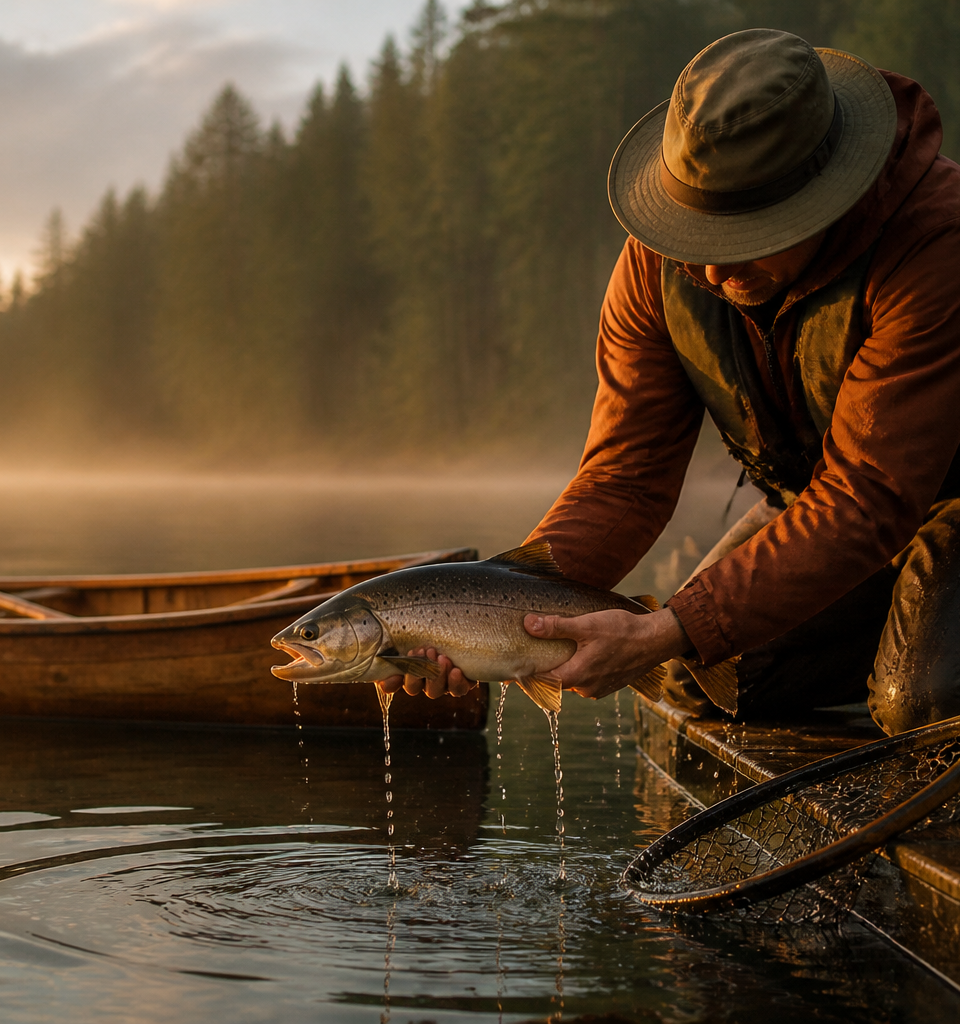
Practicing proper catch-and-release techniques drastically cuts down post-release mortality. Use a knotless rubber net to protect the fish's slime coat and prevent scale loss. Keep the fish in the water while unhooking it, and limit air exposure to just a few seconds if taking a quick photo.
Monitoring surface water temperatures is vital on hot summer days. If surface waters exceed twenty degrees Celsius, bringing a salmon up from the cold depths causes severe thermal shock that is often fatal. When surface waters warm up significantly, consider targeting more heat-tolerant species instead.
Booking a Landlocked salmon fishing trip
Booking a guided trip with a specialized outfitter is the most effective way to experience success on Ontario's expansive waters. Local guides track the daily movements of pelagic bait schools and run boats equipped with high-end sonar and deep-water trolling gear. Their expertise saves valuable time on the water while teaching you regional trolling subtleties.
Wilderness lodges provide turnkey packages that include comfortable or rustic accommodations, hearty meals, and direct access to prime salmon waters. Whether you choose a remote fly-in outpost or a drive-in resort, an immersive stay in the Ontario wilderness makes for an unforgettable angling trip. To find an outfitter tailored to your next adventure, explore our directory of Fishing outfitters in Ontario.
Start planning your next Landlocked salmon expedition with MyOutfitters, your Canadian destination for finding and booking premier outdoor adventures.
Frequently asked questions
Where can you fish for Landlocked salmon in Ontario?
Landlocked salmon are found in several deep lakes across northern, central, and eastern Ontario, particularly throughout the Nipissing, Timiskaming, and Algonquin Park regions. Deep, well-oxygenated lakes supporting healthy populations of rainbow smelt offer the highest success rates.
When does the Landlocked salmon season open in Ontario?
The fishing season generally opens in spring following ice-out in May, depending on the specific Fisheries Management Zone. Spring is the prime window to target salmon actively feeding in surface waters near rocky shorelines.
What is the best technique for catching Landlocked salmon?
Fast trolling with lightweight flutter spoons is the most consistent method for triggering reaction strikes. Using downriggers or leadcore line allows you to track and target the thermocline where salmon suspend during the summer.
What lures work best for deep-water Landlocked salmon?
Narrow metal flutter spoons in silver, blue, green, or copper patterns match primary forage like rainbow smelt. Slender seven- to eleven-centimetre minnowbaits trolled behind deep divers or downriggers also produce excellent results.
Do you need a special licence for Landlocked salmon in Ontario?
There is no separate salmon stamp required, but you must carry an Ontario Outdoors Card paired with a valid sport fishing or conservation fishing licence. Catch and possession limits vary by Fisheries Management Zone.
What fishing rod is recommended for Landlocked salmon?
A 2.10 to 2.50 metre medium-power rod with a moderate-fast action delivers the right balance of sensitivity and flexibility. The forgiving tip absorbs high-flying jumps and sudden runs without tearing hooks free.
What is the ideal trolling speed for Landlocked salmon?
A trolling speed between 3.5 and 5.5 kilometres per hour is ideal for drawing aggressive strikes from this fast predator. Trolling too slowly gives fish time to inspect and refuse your lure in clear waters.
How do you safely release a Landlocked salmon?
Use a knotless rubber landing net and keep the fish submerged while removing hooks with pliers. Minimize handling and exposure to air, and gently support the fish facing into the current until it swims away under its own power.
What is the difference between Landlocked salmon and Atlantic salmon?
Landlocked salmon are genetically Atlantic salmon that spend their entire life cycle in freshwater lakes and rivers rather than migrating to the sea. They average slightly smaller in size than sea-run salmon but share the same streamlined shape and legendary fighting ability.
Why is the thermocline so important for summer Landlocked salmon?
The thermocline holds cold water between ten and fifteen degrees Celsius with high dissolved oxygen levels, which Landlocked salmon require to survive. Schools of baitfish congregate in these same depth bands, creating prime feeding zones.