Fishing
Landlocked Salmon Fishing in Nova Scotia: Complete Guide
Discover how to fish for landlocked salmon in Nova Scotia: prime habitats, best seasons, trolling techniques, and expert tips for productive outings.
Key takeaways
- The season generally runs from spring through fall, with peak activity occurring when surface waters warm in May.
- This salmonid inhabits deep, cold, well-oxygenated lakes across the province, especially deep basins and tributary mouths.
- Light trolling with streamers or slender spoons remains the most productive early-season approach.
- A provincial Nova Scotia freshwater sportfishing licence is required for all recreational lake anglers.
- Using a discreet fluorocarbon leader significantly increases strikes from this wary predator with sharp eyesight.
How to identify landlocked salmon on the water?
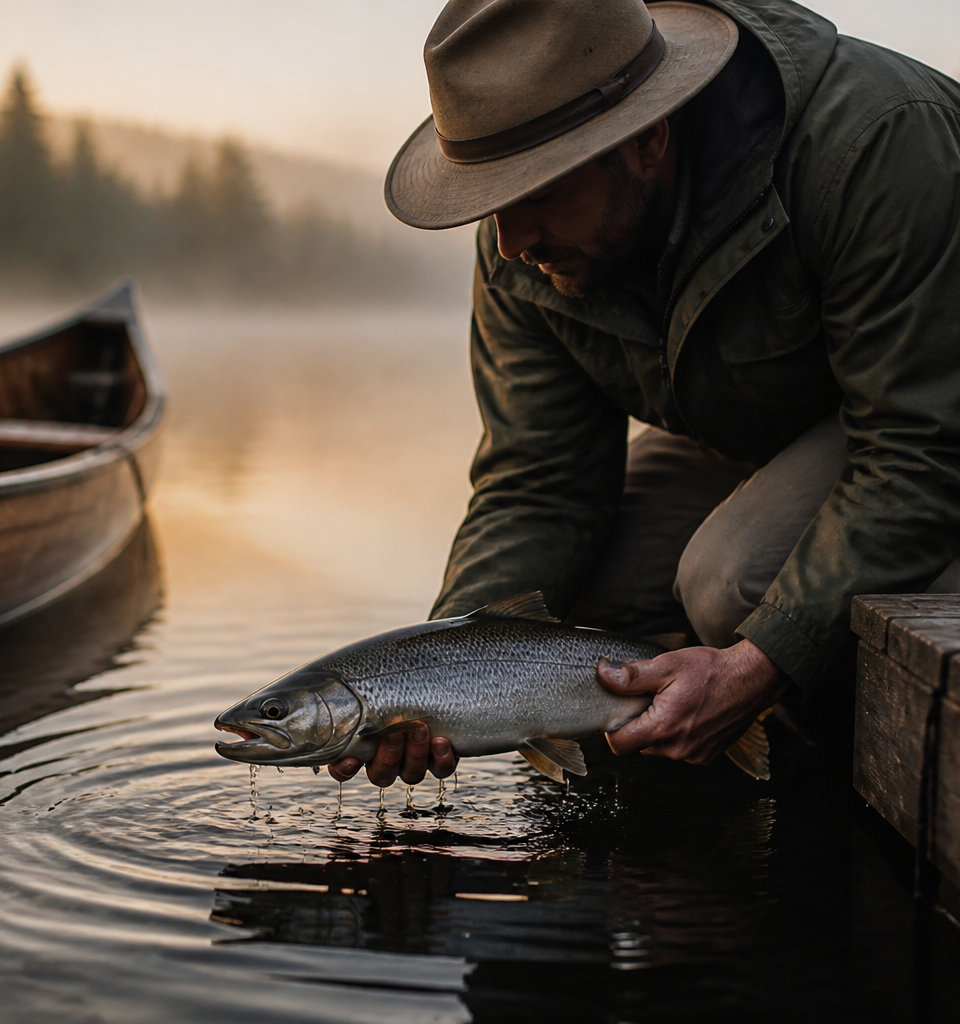
Landlocked salmon is the entirely freshwater form of Atlantic salmon, sharing its anadromous relative's streamlined profile and silver flanks marked with X-shaped black spots. Unlike trout, its tail is deeply forked with a slim, powerful caudal peduncle that provides explosive power during the fight. Its maxilla rarely extends past the back of the eye, making it easy to distinguish from large brown trout that occasionally share the same waters.
In Nova Scotia, landed specimens feature steel blue or olive green backs that fade to bright white along the belly. The gill covers often carry distinct dark spots, while the fins are clean or lightly greyish. Anglers familiar with Landlocked salmon fishing in Quebec: complete guide and techniques will instantly recognize the intense energy of this fish, renowned for its spectacular airborne jumps the moment it is hooked.
Best waters for landlocked salmon in Nova Scotia
Landlocked salmon thrive in deep, clear, oxygen-rich lakes in Nova Scotia, particularly within the central and southern watersheds. Grand Lake (Shubenacadie) stands as one of the most famous historical strongholds for the species, offering expansive cold-water habitat and an abundance of forage fish that support steady growth. Other reservoirs and lake systems fed by coastal rivers also host viable, active populations.
These waters feature diverse underwater structure, including rocky points, deep trenches dropping well past fifteen metres, and shoals bordering sharp drop-offs. Anglers who also enjoy Brook trout fishing in Nova Scotia: Complete guide will find that landlocked salmon require different tactics, preferring open pelagic zones over shallow weedbeds.
Understanding seasonal patterns of active landlocked salmon
Landlocked salmon behavior is closely tied to water temperature and the movements of preferred prey, primarily rainbow smelt. Immediately after ice-out, fish move up from the depths to feed actively in the top few metres of the water column, taking advantage of cold water and diffuse light. This period brings an accelerating metabolism and aggressive strikes on surface presentations.
As summer arrives and surface temperatures climb past 15 to 18 degrees Celsius, landlocked salmon drop into the thermocline. This layer provides optimal water temperatures alongside high levels of dissolved oxygen. Toward autumn, cooling water and spawning instincts push fish back toward rocky shoals and the staging areas outside spawning tributaries.
When to fish for landlocked salmon in Nova Scotia
Spring, from April through early June, delivers the most consistent action for landlocked salmon in Nova Scotia. Overcast days with a light chop on the surface are ideal, reducing the fish's natural wariness while triggering smelt schools to move. Early mornings and late afternoons generally offer the best feeding windows.
Fall presents another prime opportunity for anglers targeting heavy, aggressive fish. From September until the seasonal close, dropping water temperatures allow anglers to work upper water layers again with active presentations. As noted in the New Brunswick landlocked salmon fishing guide, stable weather ahead of a cold front often sparks strong feeding binges.
Finding prime structure for landlocked salmon
Locating landlocked salmon requires observant scanning of the water and good use of electronics. In early spring, focus on lake narrows, windward rocky points, and stream mouths where baitfish congregate. Wind-driven drift lines often concentrate plankton, drawing the entire food web.
During midsummer, shift attention to sharp drop-offs plunging from 6 to 20 metres. Landlocked salmon patrol these breaks to ambush prey suspended in open water. Marking balls of smelt near the thermocline on your sonar is a reliable indicator that predators are nearby.
Trolling and casting techniques for landlocked salmon
Light trolling is the standard method for covering water and finding active fish. In spring, trolling at speeds between 3.5 and 5 km/h with flat lines, leadcore, or planer boards allows you to run tandem streamers or slender fluttering spoons through the strike zone. Varying boat speed and making S-turns often triggers reaction strikes from following fish.
In summer, downriggers or dipsey divers are essential for keeping lures locked into the thermocline depth. Fly anglers can also find excellent success casting baitfish imitations along drop-offs at daybreak, using sinking or intermediate lines stripped in short, erratic pulses.
Best tackle and gear for landlocked salmon
A 7- to 8-foot light or medium-light spinning rod with a moderate-fast action provides enough cushion to absorb violent headshakes and jumps without tearing hooks from delicate mouths. Pair it with a 2500- or 3000-size reel featuring a smooth drag, spooled with 10- to 15-pound braided line and a 6- to 8-pound fluorocarbon leader.
For fly fishing, a 9-foot, 6- or 7-weight single-hand outfit offers the right balance of casting power and fighting control. For lures, stock lightweight flutter spoons in silver, blue, and copper finishes, along with proven streamer patterns like the Gray Ghost, Black Ghost, and Magog Smelt.
Regulations and licensing for landlocked salmon in Nova Scotia
Recreational angling in Nova Scotia is governed by open seasons, daily bag limits, and gear restrictions that vary across management zones. To fish legally for landlocked salmon in freshwater, all anglers must hold a valid provincial licence and respect seasonal fish sanctuaries near tributary mouths. Review complete details through the Government of Nova Scotia.
Barbless hooks are strongly recommended to facilitate quick, unharmed release of fish that are not kept. Keeping fish in the water while unhooking and using a knotless rubber net are key handling practices for protecting these fish. Regulations change yearly: always verify closing dates and quotas before heading out.
Protecting native landlocked salmon populations and habitat
Landlocked salmon populations depend on clean water and stable gravel spawning beds. Siltation, water level fluctuations, and invasive species pose persistent challenges to Nova Scotia lakes. Protecting riparian vegetation along feeder streams plays a critical role in preserving cold, clear inflows.
As apex predators in their pelagic niche, landlocked salmon help balance forage populations and serve as an indicator of overall watershed health. Practicing careful catch-and-release and supporting local habitat conservation efforts will help sustain these fisheries for the future.
Planning a guided landlocked salmon trip in Nova Scotia
Hiring a licensed guide or booking through a local lodge maximizes your chances on expansive provincial lakes. Local guides know productive structure across changing seasons, holding depths, and the exact presentations that draw strikes. They also supply suitable boats and gear for safe, comfortable outings.
Whether you want to refine your trolling spread or explore lake fly fishing, a guided outing lets you focus entirely on your fishing. Explore lodging and fishing packages through Nova Scotia fishing outfitters to plan your next trip with MyOutfitters.
Frequently asked questions
When does the landlocked salmon season open in Nova Scotia?
The fishing season generally opens in early April across most inland waters in the province. Spring provides the best window to catch landlocked salmon near the surface while waters remain cold through June.
Where can you find landlocked salmon in Nova Scotia?
Grand Lake in the Shubenacadie area is the province's best-known landlocked salmon water. They are also found in several deep, cold-water lakes and reservoirs throughout Nova Scotia.
What is the most effective technique for landlocked salmon?
Light trolling with slender spoons or tandem streamer flies is generally the most productive method. It covers large areas of open water and delivers lures at controlled depths and speeds.
Do you need a special licence for landlocked salmon in Nova Scotia?
A standard Nova Scotia general freshwater sportfishing licence is required to fish for landlocked salmon in provincial lakes. Specific waters or rivers may have special gear or retention rules to check beforehand.
What is the average size of a Nova Scotia landlocked salmon?
Most landed landlocked salmon measure between 35 and 50 centimetres (14 to 20 inches) and weigh 1 to 3 pounds. In forage-rich lakes, larger specimens can exceed 60 centimetres.
Which lures work best for landlocked salmon in spring?
Narrow flutter spoons in silver, blue, or copper, along with streamer flies such as the Gray Ghost, are reliable choices. These imitate the rainbow smelt that salmon target actively after ice-out.
How do you fish for landlocked salmon during midsummer?
Summer fishing requires downriggers or diving planers to reach the thermocline, typically between 8 and 18 metres down, where cold, oxygenated water concentrates both baitfish and salmon.
Can you fly fish for landlocked salmon in Nova Scotia lakes?
Fly fishing is very effective in spring when salmon cruise shallow shorelines and surface layers. Using sinking or intermediate lines allows you to present baitfish imitations through productive depths.
Why do landlocked salmon jump so often when hooked?
Their strong swimming musculature and Atlantic salmon lineage make them explosive fighters. Rapid aerial leaps and headshakes are instinctual maneuvers used to throw the hook.
What rod setup is recommended for landlocked salmon?
A 7-foot light to medium spinning rod with 8- to 10-pound line works well for trolling and casting. For fly fishing, a 9-foot 6- or 7-weight rod handles streamer casting and hard-fighting fish effectively.