Fishing
Atlantic Salmon Fishing in New Brunswick: Expert Guide
Discover the secrets of Atlantic salmon fishing in New Brunswick. Legendary rivers, proven fly patterns, regulations, and pro guide tips.
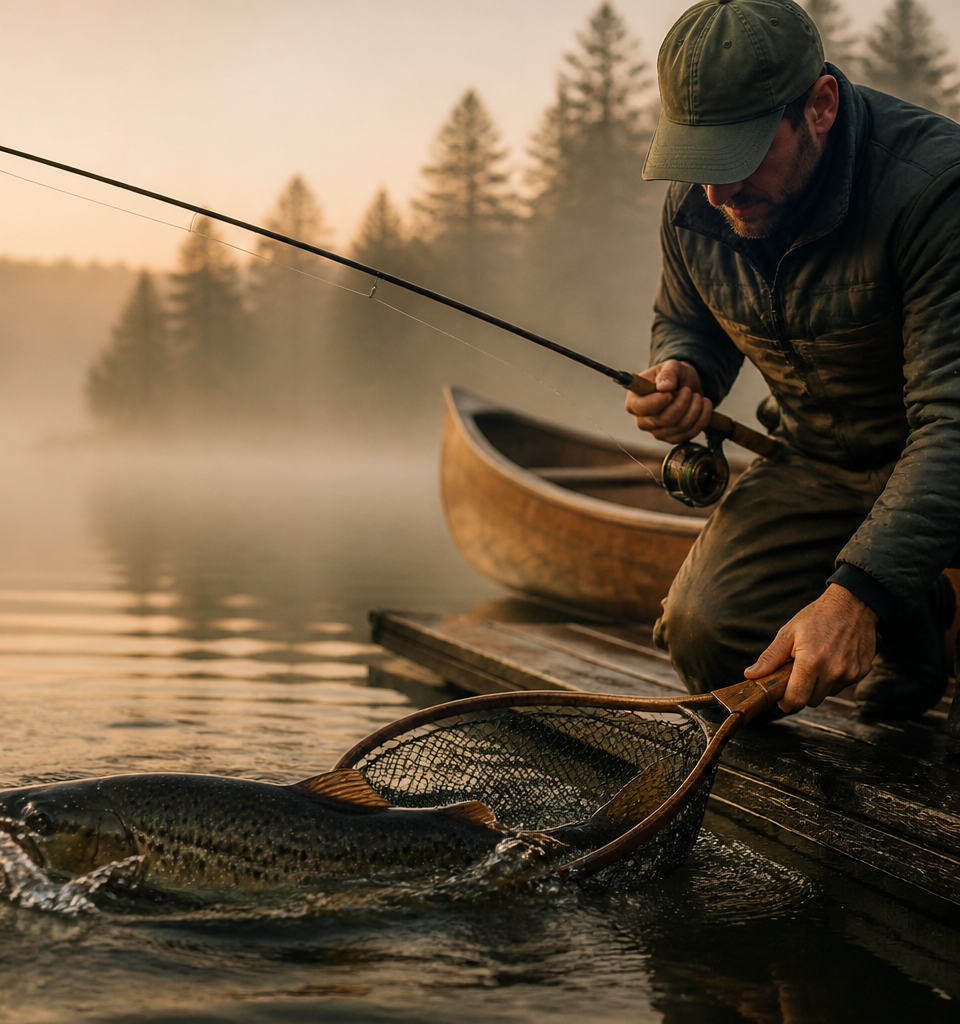
Key takeaways
- From mid-April through mid-October, spring and fall runs bring vigorous action to the province's river systems.
- Deep holding pools, rocky runs, and confluences along the Miramichi and Restigouche watersheds concentrate staging fish.
- Fly fishing only: success relies on delicate dry-fly presentations or swinging wet flies near the bottom.
- A valid provincial licence with a salmon tag and strict adherence to mandatory catch-and-release are required.
- Hire a local guide to master pool etiquette and match your fly patterns to water temperatures.
How to identify Atlantic salmon in rivers
Atlantic salmon (*Salmo salar*) are recognized by their streamlined silver body, slender head, and slightly forked tail anchored by a narrow caudal peduncle. Upon entering freshwater from the Atlantic Ocean in spring, fresh fish display a bright chrome flank dotted with small cross- or x-shaped black spots located mostly above the lateral line. Unlike Pacific salmon, Atlantic salmon do not die after spawning and can return to sea over multiple reproductive cycles.
In freshwater, their appearance undergoes a dramatic transformation. As fall spawning approaches, breeding fish take on dark bronze, copper, and olive-brown tones. Mature males develop a pronounced hook on the lower jaw, known as a kype, used to battle rivals on the spawning redds. While related to landlocked ouananiche and the sea-run fish covered in Atlantic Salmon Fishing in Quebec: Complete Angler's Guide, New Brunswick's anadromous salmon reach impressive sizes fueled by a rich marine diet of krill, capelin, and sand lance.
Anglers distinguish two main categories in provincial waters: grilse and multi-sea-winter (MSW) large salmon. A grilse is a young adult returning after a single winter at sea, typically weighing between one and two and a half kilos. Large salmon, having spent two or more winters feeding off Greenland and the Labrador Sea, frequently exceed four to ten kilos, delivering legendary aerial battles.
Top Atlantic salmon rivers in New Brunswick
New Brunswick boasts world-renowned watersheds for Atlantic salmon. The Miramichi River system is the beating heart of this tradition, draining much of the province alongside famous tributaries like the Southwest Miramichi, Northwest Miramichi, Cains, Dungarvon, and Renous. This vast system offers hundreds of kilometres of accessible pools with clear, cool waters.
Further north, the Restigouche River forms the natural boundary with Quebec's Gaspé Peninsula. Famed for trophy salmon and rugged valleys, the Restigouche is fed by premier tributaries including the Upsalquitch, Kedgwick, and Patapedia. Cold water and powerful flows create ideal holding water for heavy fish pushing upstream as soon as the snow melts. The Nepisiguit River, flowing into Chaleur Bay near Bathurst, also provides exceptional runs laced with cascading rapids.
Every river has its own character shaped by local geology and forest cover, alternating deep resting pools, smooth cobble bars, and oxygenated runs. To scout premier waters and plan your trip, consult our guide on Atlantic Salmon Fishing in New Brunswick to locate managed waters and exclusive crown leases.
Migration cycles and Atlantic salmon behaviour
Atlantic salmon river behaviour is dictated by reproductive drive and water temperature. Starting in early summer, high water and building tides push the first salmon into estuaries on their journey back to natal spawning beds. Once in freshwater, salmon stop feeding entirely, subsisting on ocean fat reserves.
This fasting makes their aggression toward artificial flies captivating. Salmon strike out of territorial reflex, curiosity, annoyance, or residual memory of marine prey. Cool, overcast days encourage fish to move actively between pools, whereas midsummer heat forces them to hold deep or seek coldwater brook confluences to conserve oxygen.
By mid-October, fish gather on clean gravel bars in steady current. Females dig redds with their caudal fins to deposit thousands of eggs, instantly fertilized by attending males. After spawning, spent fish (known as kelts or black salmon) overwinter under river ice in quiet pools before returning to sea the following spring to rebuild condition.
When to fish for Atlantic salmon in New Brunswick?
The season runs from mid-April to mid-October, split into distinct peaks. The first excitement begins in mid-April with spring fishing for black salmon (overwintered kelts). This is an active fishery, often using swung wet flies in chilly water as fish feed heavily before dropping downstream.
Bright summer salmon fishing kicks off in June and peaks through July. Fresh chrome fish push upriver in large numbers, aggressive and eager to take surface dry flies. When summer sun pushes river temperatures above twenty degrees Celsius, angling slows down and temporary thermal closures are frequently enforced to protect fish.
Fall, from late August to mid-October, delivers a second spectacular peak. Cooling water and late runs re-ignite aggressive behaviour as spawning approaches. September days, with vibrant Acadian forest colours and crisp morning mists, offer prime fishing and memorable catches on rivers like the Miramichi and Cains.
How to spot Atlantic salmon in river pools?
Locating Atlantic salmon requires reading river structure and identifying strategic resting spots. Salmon seek lies that conserve energy while providing shelter from predators and oxygen-rich current. The pool head, where fast water slows and drops into the main bowl, is the first stopping point for fresh runners.
The deeper belly of the pool holds pods of salmon during high sun. Submerged boulders, gravel drop-offs, and current seams create cushion pockets where fish hold directly in front of or behind structure. In the evening, salmon often slide back into the tailout where current quickens before the next drop.
Visual spotting is critical. Wearing quality polarized sunglasses, scan shadow lines, deep blue seams, and cold brook confluences. A leaping or porpoising fish signals presence, but subtle, motionless fish holding on the bottom are often the ones most willing to take a well-drifted fly.
Effective fly fishing techniques for Atlantic salmon
Provincial regulations mandate fly fishing only with barbless single hooks for Atlantic salmon. Two core techniques dominate: wet fly and dry fly. Wet-fly fishing involves casting downstream at a forty-five-degree angle and letting the fly swing through the pool on a controlled arc, using line mends to manage fly speed and depth.
Traditional patterns like the Green Machine, Cosseboom, Black Bear Green Butt, and Undertaker remain staples across all New Brunswick rivers. Match fly size to water conditions: larger hooks (size 2 to 4) in high, stained water down to micro patterns (size 10 to 12) during low, crystal-clear summer flows.
Dry-fly fishing delivers unmatched adrenaline when salmon rise to break the surface. Spun deer-hair Bombers in natural, green, brown, or white are deadly on the Miramichi and Restigouche. The technique demands a dead-drift presentation with zero drag over the holding fish, followed by a disciplined one-to-two-second pause before setting the hook to let the salmon turn down with the fly.
Recommended fly fishing gear for Atlantic salmon
A 9-foot, 8- or 9-weight single-handed fly rod is the versatile benchmark for Atlantic salmon. This setup delivers large Bombers into headwind and turns powerful fish without prolonging the fight. On smaller summer rivers, a 7-weight single-hander offers welcome finesse.
Two-handed Spey rods (12 to 14 feet for 7- to 9-weight lines) are widely used on big waters like the Restigouche and main Miramichi. Spey casting delivers long casts without backcast room—invaluable when fishing against high bluffs or forested banks. Reels must feature a smooth, sealed, reliable disc drag backed with 150 to 200 metres of heavy braid backing.
Weight-forward floating lines cover ninety percent of fishing situations. Tapered monofilament or fluorocarbon leaders range from 9 to 14 feet, with tippets between 8- and 15-pound test depending on clarity. Round out your gear with breathable waders, felt or studded rubber wading boots, and a soft, knotless rubber landing net.
Atlantic salmon fishing regulations in New Brunswick
Strict provincial rules protect the fishery. Anglers must hold a valid provincial licence with a salmon tag. In New Brunswick, catch-and-release is mandatory for all Atlantic salmon (both grilse and large salmon) on all public and private waters. Anglers must use single barbless hooks or hooks with barbs pinched flat.
Non-resident anglers must be accompanied by a licensed New Brunswick guide or an authorized resident when fishing designated salmon waters beyond specified shore distances. Booking logistics are straightforward through specialized resources, as outlined in How MyOutfitters Simplifies Hunting and Fishing Trips for Americans.
Observing pool etiquette is essential: enter at the head of the pool, step downstream two paces between casts to maintain rotation, and avoid wading through holding water. To review all territorial orders and legal details, visit the Government of New Brunswick portal. Regulations change annually: always verify exact dates, limits, and thermal closures on the official website before heading out.
Conservation and protection of wild Atlantic salmon
Wild Atlantic salmon face environmental pressures that unite local stewards. Climate change brings warmer summer water, while forest canopy shifts and invasive species pressure juvenile parr and smolt food webs. Watershed management groups and angler associations conduct habitat restoration, targeted stocking, and ongoing monitoring.
Salmon act as key ecological indicators for New Brunswick's river and forest ecosystems. Migrating adults transport marine nutrients inland, enriching riparian zones and supporting diverse species from aquatic insects to forest wildlife. Every careful release helps preserve these genetic lineages.
Anglers serve as frontline stewards through on-the-water presence and licence-funded conservation programs. Practicing best catch-and-release methods—keeping fish in the water, minimizing handling, and reviving salmon facing into the current—protects this iconic fishery for generations to come.
Guided Atlantic salmon fishing trips in New Brunswick
Booking a trip with a New Brunswick outfitter along legendary salmon rivers provides an authentic, seamless experience. Lodges along the Miramichi, Restigouche, and Cains offer comfortable riverside accommodations with direct access to private and public pools. Local guides share intimate knowledge of fish lies, river levels, and regional fly patterns.
An all-inclusive package typically covers comfortable lodge lodging, regional dining, access to productive water, and dedicated professional guiding. Guides help fine-tune casting, read currents, and position you over fresh holding fish.
Whether targeting your first salmon or refining your technique on storied waters, provincial outfitters welcome you with warm Maritime hospitality. Explore top lodging and guiding options through the Fishing outfitters in New Brunswick on our platform.
Plan your next Atlantic salmon fishing adventure in New Brunswick with MyOutfitters, your trusted resource for world-class Canadian outdoor experiences.
Frequently asked questions
When does the Atlantic salmon season open in New Brunswick?
The fishing season opens in mid-April with spring fishing for black salmon (kelts) and runs through mid-October for summer and fall runs. Prime time for fresh summer salmon typically spans mid-June to late July, followed by another productive window in September.
Where can you fish for Atlantic salmon in New Brunswick?
The Miramichi and Restigouche river systems are the province's premier destinations. Renowned tributaries like the Cains, Dungarvon, Upsalquitch, and Kedgwick offer hundreds of legendary pools, as does the Nepisiguit River further north.
Is a guide mandatory for salmon fishing in New Brunswick?
Yes, non-resident anglers must be accompanied by a licensed guide or an authorized resident to fish for salmon on most provincial waters. This rule promotes angler safety, regulatory compliance, and pool conservation.
What fly rod is recommended for Atlantic salmon?
A 9-foot, 8-weight single-handed fly rod is the most versatile choice for the province's rivers. Two-handed Spey rods measuring 12 to 14 feet are popular for covering broad pools on the Restigouche and main Miramichi.
What are the top fly patterns for salmon in New Brunswick?
Classic wet flies like the Green Machine, Cosseboom, Undertaker, and Black Bear Green Butt are essential. On top, spun deer-hair Bombers in green, white, or brown trigger explosive surface takes throughout summer and fall.
Can you keep an Atlantic salmon in New Brunswick?
No, mandatory catch-and-release applies to all Atlantic salmon and grilse caught by angling across all New Brunswick rivers. Every fish must be unhooked and released quickly and gently with minimal handling out of the water.
How much does a New Brunswick salmon fishing licence cost?
Licence fees depend on residency status and trip duration, with distinct rates for residents and non-residents. Licences include the provincial tags required to legally fish for Atlantic salmon.
What is the difference between a grilse and a large Atlantic salmon?
A grilse is an adult salmon that spent one winter at sea before returning to spawn, weighing roughly one to two and a half kilos. A large salmon spent two or more winters feeding in the ocean and regularly exceeds four to ten kilos.
How do you fish for salmon during midsummer heat in New Brunswick?
During heat waves, focus your outings on early mornings or late evenings when water temperatures are lowest. In extreme heat, observe temporary thermal closures issued by wildlife authorities to avoid stressing oxygen-depleted fish.
Do hooks need to be barbless for salmon in New Brunswick?
Yes, provincial regulations require single barbless hooks or hooks with the barb pinched completely flat against the shank. This ensures quick underwater release and minimizes the risk of injury.