Fishing
Atlantic Salmon Fishing in Prince Edward Island
Discover the secrets of Atlantic salmon fishing in Prince Edward Island: iconic rivers, fall runs, essential fly tackle, and proven angling techniques.
Key takeaways
- The fall season, spanning from September through the end of October, delivers the best runs of spawning salmon in the island's rivers.
- Sandstone rivers like the Morell River feature cool pools sustained by vital groundwater springs.
- Fly fishing with floating or sinking artificial flies is the exclusive, mandatory method on designated salmon rivers.
- A valid provincial angling licence with a salmon endorsement is required before wetting a line in these waters.
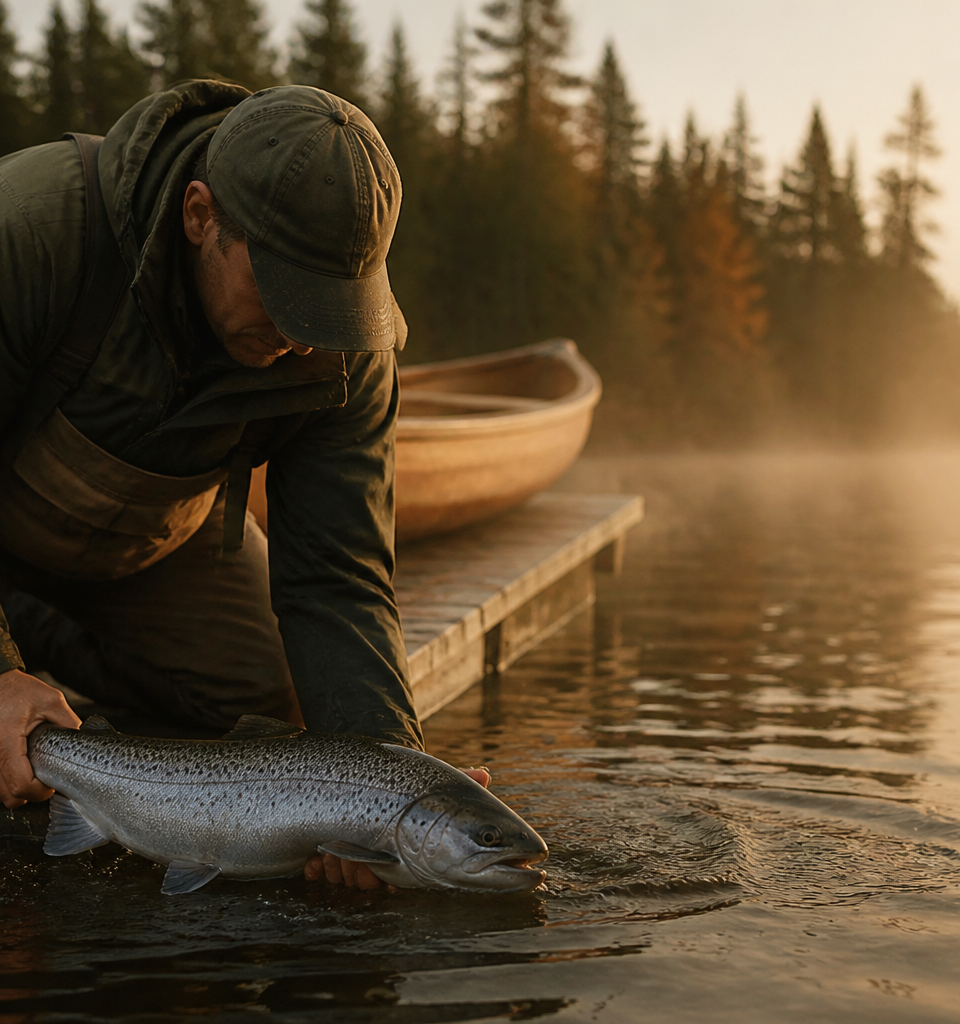
- Handle your catch carefully in the water and practice prompt catch-and-release to protect the island's spawning stock.
Identifying Atlantic salmon in Prince Edward Island
Atlantic salmon (*Salmo salar*) are recognized by their streamlined bodies, silver flanks dotted with dark cross-shaped spots, and slightly forked tails. Fresh out of the ocean into the island's fresh waters, adult fish carry a brilliant metallic sheen that gradually darkens to bronze and copper hues as the fall spawning period nears. Males develop a distinctive hooked lower jaw known as a kype.
While they share certain river stretches with sea-run brook trout, Atlantic salmon stand out due to their slender caudal peduncle and the absence of vermiculated markings across the back. In contrast to what anglers find during Brook Trout Fishing in Prince Edward Island, salmon have a jawline whose rear corner rarely extends past the back edge of the eye, except in very large, mature males.
Accurate identification ensures proper handling. Parr and smolts, frequently found in the same riffles, display dark vertical bars and small red dots along their lateral lines, closely resembling young trout; however, their adipose fins are distinctly edged in brown or grey rather than red.
Where does Atlantic salmon live on the island?
Atlantic salmon inhabit a unique river system characterized by small coastal streams flowing over soft red sandstone. Unlike the large, turbulent rivers of the mainland, Prince Edward Island's waterways are short, meandering, and strongly influenced by tides near their estuaries. The Morell River, located in the eastern region of the province, is the historic gem and primary salmon producer on the island.
These river habitats benefit from a steady influx of cold groundwater filtering through the porous bedrock. This geological feature maintains stable, cool water temperatures throughout the summer, creating micro-habitats that foster juvenile survival despite the low-gradient terrain and surrounding agricultural and forested landscapes.
Beyond the Morell system, a few small rivers in eastern and northern PEI host sporadic runs of anadromous salmon. Nutrient-rich estuaries serve as essential staging grounds where smolts acclimatize to salt water before migrating toward feeding areas in the Gulf of St. Lawrence and the North Atlantic.
Atlantic salmon behaviour and seasonal cycles
Atlantic salmon behaviour in Prince Edward Island is defined by a very late run compared to other Atlantic provinces. While mainland rivers often see summer runs beginning in June, island streams welcome the bulk of their spawners between late September and November. Fish take advantage of fall storms and high spring tides to push upriver.
Once in freshwater, salmon stop feeding actively and channel all their energy into reproduction. Strikes on artificial flies stem from territorial aggression, residual predatory reflexes, or curiosity. During crisp October days, salmon hold in deep, quiet pools during daylight hours, then move up into gravel riffles as night falls.
Following the late-fall spawn, some adult salmon—known as kelts or black salmon—overwinter in deep pools or under estuarine ice. The following spring, once the ice breaks up, these survivors head back down to the ocean to feed aggressively. This remarkable resilience allows certain fish to spawn multiple times during their lifespan.
When to fish for Atlantic salmon in Prince Edward Island?
The fall period, specifically from early October until the season closes at the end of the month, offers the prime window for salmon fishing on the island. During this stretch, seasonal rains raise river flows and lower water temperatures, triggering large cohorts of mature salmon to push out of estuaries and into upstream pools.
The best fishing conditions typically emerge 24 to 48 hours after heavy rainfall, once the water begins to clear while maintaining a strong current. In these sandstone-bed rivers, spates can stain the water with a characteristic terracotta tint; it is best to wait until visibility reaches at least half a metre to maximize your chances of connecting with fish.
Anglers familiar with Atlantic Salmon Fishing in Nova Scotia: Guide or Atlantic Salmon Fishing in New Brunswick: Expert Guide will note that midday hours are particularly productive during PEI's fall fishery. The October sun gently warms the water, stirring fish that remain sluggish during cold morning hours.
Finding island Atlantic salmon pools
Locating Atlantic salmon in small island rivers demands keen observation and a stealthy approach. Due to the modest scale of PEI streams, holding pools are often compact and tucked beneath undercut banks, shaded by overhanging alders, or situated behind submerged logs.
Focus on transitional zones where swift runs slow into deeper depressions two to three metres deep. The classic resting spot often sits at the tailout of the pool, just above the break where current accelerates into the next riffle. Salmon hold here to monitor incoming fish while conserving energy.
Approach riverbanks lined with vegetation with extra care. Soft, sandy soil transmits vibrations easily; step lightly and avoid casting a shadow across the water. Polarized sunglasses with amber or copper lenses are essential for cutting through tea-coloured water and spotting the dark silhouettes of holding salmon on the sandy riverbed.
Effective techniques for Atlantic salmon
Traditional wet fly fishing on a swung presentation is the most versatile technique for tempting Atlantic salmon in Prince Edward Island. Casting your wet fly across and downstream at a 45-degree angle and letting it swing across the current without excessive twitching presents the pattern directly in front of a holding fish.
In cool October waters, dark, high-contrast fly patterns perform exceptionally well on the Morell River. Classics like the Black Bear Green Butt, Cosseboom, Rusty Rat, and lightly dressed hair-wing patterns tied on single barbless hooks deliver reliable results. When river levels are low and clear, dropping fly sizes down to #8 or #10 triggers strikes without spooking wary salmon.
Surface fishing with small deer-hair Bombers in natural or olive tones can generate explosive topwater takes during mild, sunny fall afternoons. A dead drift without any surface drag is key to bringing a resting spawner up to the surface.
What gear to choose for Atlantic salmon?
A 9-foot, single-handed fly rod weighted for a 7-weight or 8-weight line is the ideal tool for navigating the island's narrow rivers. Spey or long double-handed rods are generally cumbersome along alder-choked banks, though a short 10- to 11-foot switch rod can assist with roll casting in tight spots.
Match your rod with a reel featuring a smooth, sealed drag system and 100 to 150 metres of 20- to 30-pound backing. A weight-forward floating fly line covers nearly all fishing scenarios, paired with a 9- to 12-foot tapered leader ending in an 8- to 12-pound test fluorocarbon or stout monofilament tippet.
Pack breathable chest waders with soles suited for soft and occasionally slippery river bottoms. A soft, knotless landing net allows you to secure fish safely in the water without damaging their protective slime layer.
Regulations for Atlantic salmon fishing in Prince Edward Island
Sport fishing for Atlantic salmon throughout the island is subject to strict regulations designed to protect this vulnerable resource. Only fly fishing using a single barbless hook (or a hook with the barb pinched flat) is permitted on designated salmon waters. All Atlantic salmon caught must be released alive immediately.
To fish legally, anglers must hold a valid provincial angling licence along with a dedicated Atlantic salmon endorsement. Seasonal closures and sanctuary boundaries are enforced to protect sensitive spawning grounds from disturbance during the spawning cycle.
Based on guidelines from the Government of Prince Edward Island, provincial and federal wildlife authorities monitor river health closely. Regulations change each year: always verify official dates and current conditions with local authorities before heading out.
Conservation and the future of island Atlantic salmon
The recovery of Atlantic salmon populations in Prince Edward Island is the result of dedicated community and scientific efforts spanning several decades. Historic clear-cutting and intensive agriculture caused severe siltation in riverbeds, suffocating natural redds under heavy red clay sediment.
Through the work of watershed groups such as the Morell River Management Cooperative, sediment traps have been excavated and riverbanks reforested to stabilize soils. In-stream habitat structures, including current deflectors and rock sills, help scour clean gravel required for egg incubation.
Anglers play a critical role in conservation by practising ethical handling on the water. Minimizing fight times, keeping fish submerged during unhooking, and avoiding angling when water temperatures rise to stressful levels directly safeguard the future of wild salmon in island rivers.
Planning an Atlantic salmon trip to Prince Edward Island
A fall fishing trip to Prince Edward Island immerses you in a pastoral maritime setting where salty sea breezes blend with the rich autumn colours of the Acadian forest. To maximize your success on these intimate, technical streams, hiring an experienced local guide is an excellent investment, offering access to productive pools and fine-tuning fly selections to current river conditions.
Island accommodations, ranging from welcoming coastal inns to riverside cottages, serve as comfortable base camps for exploring eastern PEI's rivers. You can explore specialized lodging and guiding options through Prince Edward Island Atlantic salmon fishing outfitters to build a tailored angling package.
For an unforgettable outdoor adventure in the Maritimes and the best guided trips across Canada, book your next outfitter getaway with MyOutfitters.
Frequently asked questions
When does the Atlantic salmon run begin in Prince Edward Island?
The main run typically begins in mid-September and peaks throughout October. Unlike other Atlantic Canadian provinces where runs occur during the summer months, island rivers receive almost all their mature salmon during this cool fall window.
Where is the best place to fish for Atlantic salmon in Prince Edward Island?
The Morell River, located in eastern PEI, is the top destination for Atlantic salmon. Its well-defined pools, established public access points, and steady groundwater flows make it the premier salmon river in the province.
Is catch-and-release mandatory for Atlantic salmon in PEI?
Yes, mandatory catch-and-release is in effect for all Atlantic salmon across Prince Edward Island rivers. This rule protects wild breeding populations and ensures that returning spawners can complete their reproductive cycle.
What type of fly rod is best for island salmon rivers?
A 9-foot, 7-weight or 8-weight single-handed fly rod is the standard and most versatile setup. Because PEI rivers are relatively narrow and tree-lined, a shorter rod offers better line control and easier casting in tight quarters.
Which flies work best for fall Atlantic salmon?
Classic wet flies like the Black Bear Green Butt, Cosseboom, Rusty Rat, and Blue Charm are among the most effective. Surface patterns like natural or olive deer-hair Bombers also produce strikes on mild, overcast afternoons.
How much does a salmon fishing licence cost in Prince Edward Island?
Licence fees depend on resident or non-resident status and include a general provincial angling licence plus a salmon conservation endorsement. Exact rates are updated annually by the provincial wildlife department.
Are anglers required to hire a guide in Prince Edward Island?
No, hiring a guide is not a legal requirement for Canadian or international anglers fishing in Prince Edward Island. However, a local guide is highly recommended for navigating access points and locating productive pools on these small streams.
What is the difference between a fall-run salmon and a summer-run salmon?
Fall-run salmon enter freshwater late in the season carrying full energy reserves and rapidly take on their dark spawning colours. On the island, this late arrival is an adaptation to favourable fall water flows and cooler river temperatures.
Why do Prince Edward Island rivers have a reddish tint?
The red colour comes from the iron-oxide-rich red sandstone bedrock and soil across the province. Following heavy fall rains, runoff carries fine red clay particles into the water, temporarily giving the rivers their distinctive tint.
Can you fish for Atlantic salmon using spin gear in Prince Edward Island?
No, spin casting with lures or bait is strictly prohibited on designated Atlantic salmon waters. Fly fishing with an artificial fly tied on a single barbless hook is the only legal method permitted.