Fishing
Sea-Run Brook Trout Fishing in New Brunswick: Complete Guide
Discover how to target sea-run brook trout in New Brunswick: premier estuaries, summer run timings, effective flies, and expert tactics for success.
Key takeaways
- The main run extends from late May through mid-summer depending on coastal tidal cycles.
- Brackish estuaries and river systems draining into New Brunswick bays hold the largest migratory specimens.
- Fly fishing with baitfish-imitating streamers delivers spectacular action around the tide turn.
- A valid provincial inland angling licence is mandatory when pursuing this salmonid in flowing freshwater.
- Focus your efforts on the two-hour window surrounding high tide to intercept pods of fresh, sea-bright trout moving in from the sea.
How to identify Sea-run brook trout?
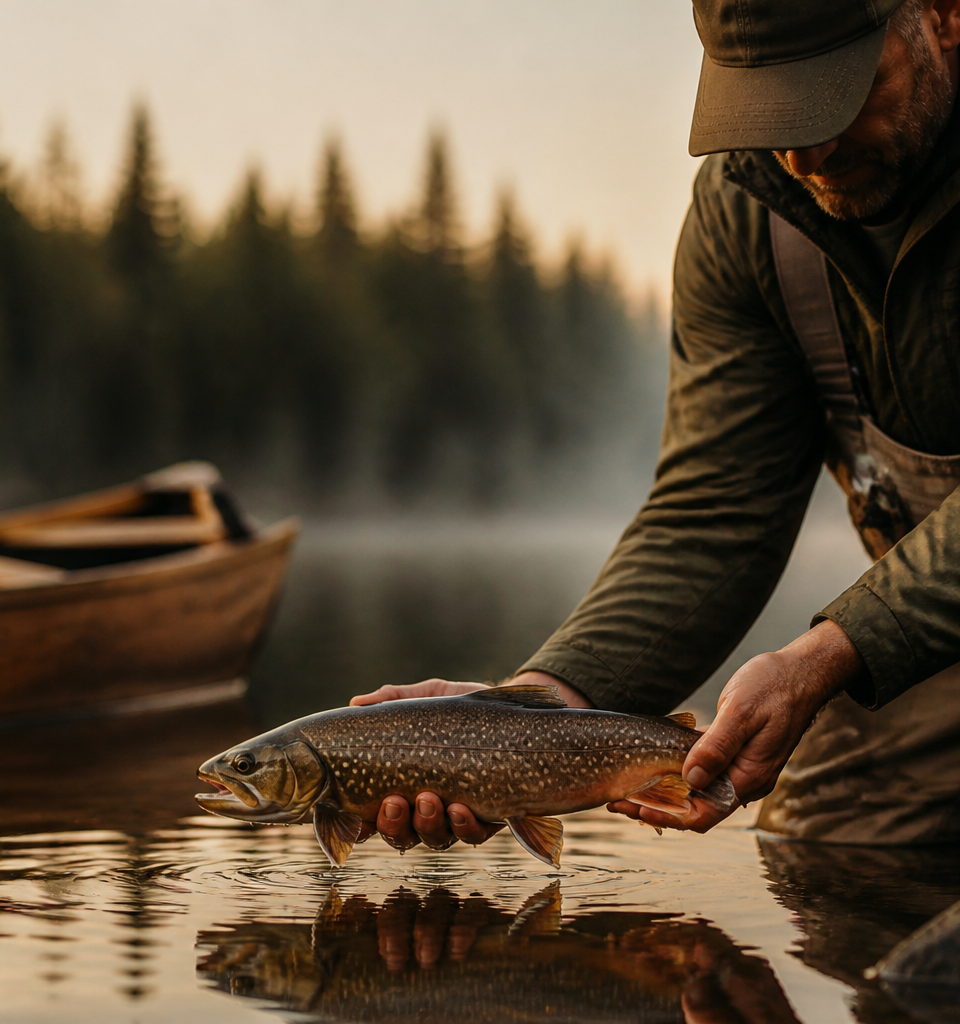
Sea-run brook trout are not a distinct biological species, but rather brook trout that migrate to saltwater habitats to feed. This anadromous life cycle dramatically alters their appearance compared to their resident freshwater counterparts. In the sea, their bodies thicken noticeably and take on a brilliant chrome sheen that masks their distinctive red and blue halo spots. These classic markings gradually reappear once the fish journey back up their natal rivers to spawn.
Anatomically, they retain the large mouth and the crisp white leading edges bordered with black on the pectoral, pelvic, and anal fins characteristic of all brook char. Their flesh turns deep pink or vibrant orange due to a nutrient-dense marine diet dominated by crustaceans such as shrimp and coastal forage fish. To learn more about the freshwater resident form, explore our Brook Trout Fishing in New Brunswick: Complete Guide.
Where to find Sea-run brook trout in New Brunswick?
Sea-run brook trout thrive in most major coastal watersheds flowing into the Gulf of St. Lawrence, the Northumberland Strait, and the Bay of Fundy. The Miramichi, Restigouche, and Nepisiguit river systems, along with the coastal streams of the Acadian Peninsula and eastern shore, offer exceptional estuarine habitat. These transition zones, where freshwater mixes with tidal saltwater, act as vital travel corridors and feeding grounds packed with smelt, sand lance, and shrimp.
Sandy estuaries and river mouths fringed by salt marshes support trout during their spring and early-summer foraging binge. As water temperatures rise or spawning urges kick in, these fish head upstream toward gravel-bottomed, well-oxygenated river stretches. Salmon anglers often cross paths with them during an outing for Atlantic Salmon Fishing in New Brunswick: Expert Guide, as both species frequently hold in the same pools.
Understanding Sea-run brook trout migrations
The migratory cycle typically begins in early spring shortly after ice-out, when kelts and smolts move down into estuaries to capitalize on marine food abundance. For several weeks to months, they feed aggressively in nutrient-rich coastal waters, packing on weight and building powerful muscle mass. This anadromous behavior mirrors migration patterns found across Eastern Canada, much like when targeting Sea-Run Brook Trout on the Côte-Nord: When Brook Trout Meet the St. Lawrence.
The return migration into freshwater usually gets underway between late May and July, depending on the river system and water temperatures. Trout use high spring tides to navigate shallow coastal bars and push upstream in tight pods. Once in the river, they hold in deep pools and cooler tributaries before spawning in the fall, subsequently overwintering under the ice in river pools or protected estuaries.
When to fish for Sea-run brook trout in New Brunswick?
The peak window to target sea-run brook trout runs from late May through mid-July, coinciding with the first major summer runs. Overcast days with a light drizzle often provide the most productive estuary conditions, as diffused light gives these wary fish added confidence to feed aggressively. Freshly arrived, sea-bright trout hit artificial flies and lures with remarkable tenacity.
Tides play a decisive role in coastal fishing success. The most productive window falls within the two hours before high tide and the first hour after the tide turns. During this stage, traveling pods push up tidal channels and along sand flats in search of prey dislodged by the incoming surge.
Locating the best Sea-run brook trout spots
To find sea-run brook trout, focus your attention on underwater structures that create current breaks in estuaries and lower river sections. Rocky points extending into bays, sand flat drop-offs, lagoon entrances (barachois), and the mouths of cold feeder streams all serve as prime ambush spots. Watching the water surface on an incoming tide often reveals boils, wakes, or clean jumps that give away traveling schools.
In freshwater river stretches, trout seek out the heads of shaded holding pools, undercut banks, and deep pockets directly downstream of gravel riffles. Submerged logs and large boulders provide essential shelter from heavy current and overhead predators. A stealthy approach is critical, as sea-run brook trout are notoriously cautious and sensitive to bankside vibrations.
Effective techniques for Sea-run brook trout
Fly fishing remains the premier method for targeting these hard-fighting migrants in both estuarine and river settings. In brackish waters, stripping large streamers that imitate sand lance or rainbow smelt with quick, erratic pulls triggers aggressive strikes. Traditional patterns like the Mickey Finn, Grey Ghost, and Black Ghost, along with synthetic shrimp patterns, prove exceptionally effective.
As the season advances and fish settle into freshwater pools, traditional wet-fly techniques and surface dry flies produce excellent results at dusk. Presenting large sedge patterns on top or swinging dark nymphs deep along the riverbed tempts more selective fish. Vary your retrieve between fast strips and pauses to simulate wounded or fleeing prey caught in shifting currents.
Choosing the right gear for Sea-run brook trout
A 9 to 9.5-foot fly rod rated for 6-weight or 7-weight line is ideal for cutting through coastal winds and handling strong fish. Pair it with a reel featuring a smooth, sealed drag system and spool at least 100 metres of backing. A weight-forward floating line casts bulky streamers easily, while an intermediate or sink-tip line is indispensable for dredging deeper tidal channels on moving water.
Leaders must balance strength with stealth, utilizing fluorocarbon tippet rated from 8 to 12 pounds to handle abrasive rocks and shell beds. For wading tidal flats comfortably, equip yourself with breathable waders fitted with sticky-rubber or felt soles, a wading staff to test shifting sand bottoms, and polarized sunglasses to spot cruising fish.
Regulations for Sea-run brook trout in New Brunswick
Sportfishing in New Brunswick is governed by designated open seasons, daily bag limits, and specific management zones. A valid provincial inland angling licence is required when fishing upstream of tidal boundaries and on designated river sections. Several premier rivers enforce fly-fishing-only restrictions with single barbless hooks to safeguard migratory populations.
Practicing careful catch-and-release on large spawners helps sustain future runs across provincial estuaries. For complete details on management zones, allowable gear, and possession limits, visit the official website of the Government of New Brunswick. Regulations are updated annually: always verify the local rules before heading out.
Ecological role and conservation of Sea-run brook trout
As an intermediate predator connecting marine and freshwater ecosystems, sea-run brook trout transport vital marine nutrients into the upper reaches of coastal watersheds. Their presence signals healthy water quality, unobstructed river connectivity, and intact coastal habitats. However, they face notable environmental challenges, including rising summer water temperatures, siltation of spawning beds, and riparian habitat degradation.
Local conservation groups and watershed committees actively work on bank stabilization, river restoration projects, and population monitoring. By practicing responsible angling—such as limiting fight times in warm water and handling fish exclusively with wet hands in the water—anglers play an active role in protecting this prized wild fishery.
Planning your Sea-run brook trout trip in New Brunswick
Booking a professional guide or staying at a specialized fishing lodge significantly enhances your time on complex tidal waters. Experienced local guides understand run timings, coastal sandbar dynamics, and the hidden holding pools where trophy trout rest. They also ensure your safety around rapid incoming tides.
Whether you want to try two-handed casting in open estuaries or track sea-bright trout in wilderness river pools, a guided package provides comfortable lodging and prime water access. Explore the fishing outfitters in New Brunswick listed on MyOutfitters to plan and book your next angling adventure.
Frequently asked questions
When does the sea-run brook trout run start in New Brunswick?
The main run generally begins in late May and peaks through mid-July depending on the river system. Large runs coincide with spring tides and warming coastal waters in the Gulf of St. Lawrence and the Bay of Fundy.
Where can you fish for sea-run brook trout in New Brunswick?
Primary destinations include the estuaries and rivers of the Miramichi, Restigouche, and Nepisiguit watersheds, as well as streams along the Northumberland Strait. Sandy barachois lagoons and river mouths offer productive starting points.
What flies work best for sea-run brook trout in estuaries?
Large streamers mimicking baitfish—such as the Mickey Finn, Grey Ghost, and Black Ghost—along with shrimp imitations are top producers. Later in the river season, dark nymphs and surface sedge dries also perform well.
Do you need a special licence to fish for sea-run brook trout in New Brunswick?
A valid provincial inland sportfishing licence is required whenever fishing above designated tidal boundaries. Certain designated river stretches also require compliance with strict fly-fishing-only regulations.
What is the best tide for catching sea-run brook trout?
The prime window occurs during the two hours before high tide and the first hour of the falling tide. Trout use this influx of water to cross shallow bars and hunt actively in estuarine channels.
What fly rod is recommended for sea-run brook trout?
A 9-foot, 6-weight or 7-weight fly rod is ideal for casting larger streamers into coastal breezes and controlling strong fish. Pair it with a sturdy reel, quality drag, and a floating or intermediate line.
What is the difference between a resident brook trout and a sea-run brook trout?
Sea-run brook trout are the same species (Salvelinus fontinalis) that migrate to saltwater to feed before returning to rivers. Marine feeding gives them a bright chrome appearance, faster growth rates, and rich pink flesh.
How many sea-run brook trout can you keep per day?
Daily retention limits vary according to regional management zones and specific river regulations across New Brunswick. Always consult the official provincial regulations guide before your trip for current harvest limits.
Can you fish for sea-run brook trout with spin gear in New Brunswick?
Yes, spin fishing is permitted in tidal estuaries and river sections not classified under fly-fishing-only rules. Casting light silver spoons or small minnow plugs produces solid results on schooling fish.
Why hire a guide for sea-run brook trout fishing?
A local guide understands migratory patterns across shifting tidal cycles, navigates hazardous mudflats safely, and provides direct access to prime holding water and private pools.