Fishing
Sea-Run Brook Trout Fishing in Newfoundland and Labrador
Discover the complete guide to sea-run brook trout fishing in Newfoundland and Labrador: coastal estuaries, summer runs, winning techniques, and pro advice.
Key takeaways
- Summer runs extend from late June through early September across coastal estuaries and rivers.
- Tidal mouths, saltwater lagoons, and cool lower-river pools hold the largest specimens.
- Fly fishing with capelin-imitating streamers or classic wet flies remains the premier approach.
- A provincial freshwater fishing licence is required, with specific rules governing scheduled salmon rivers.
- Time your outings around incoming tides to intercept fresh fish pushing in directly from the ocean.
Identifying Sea-run brook trout in rivers
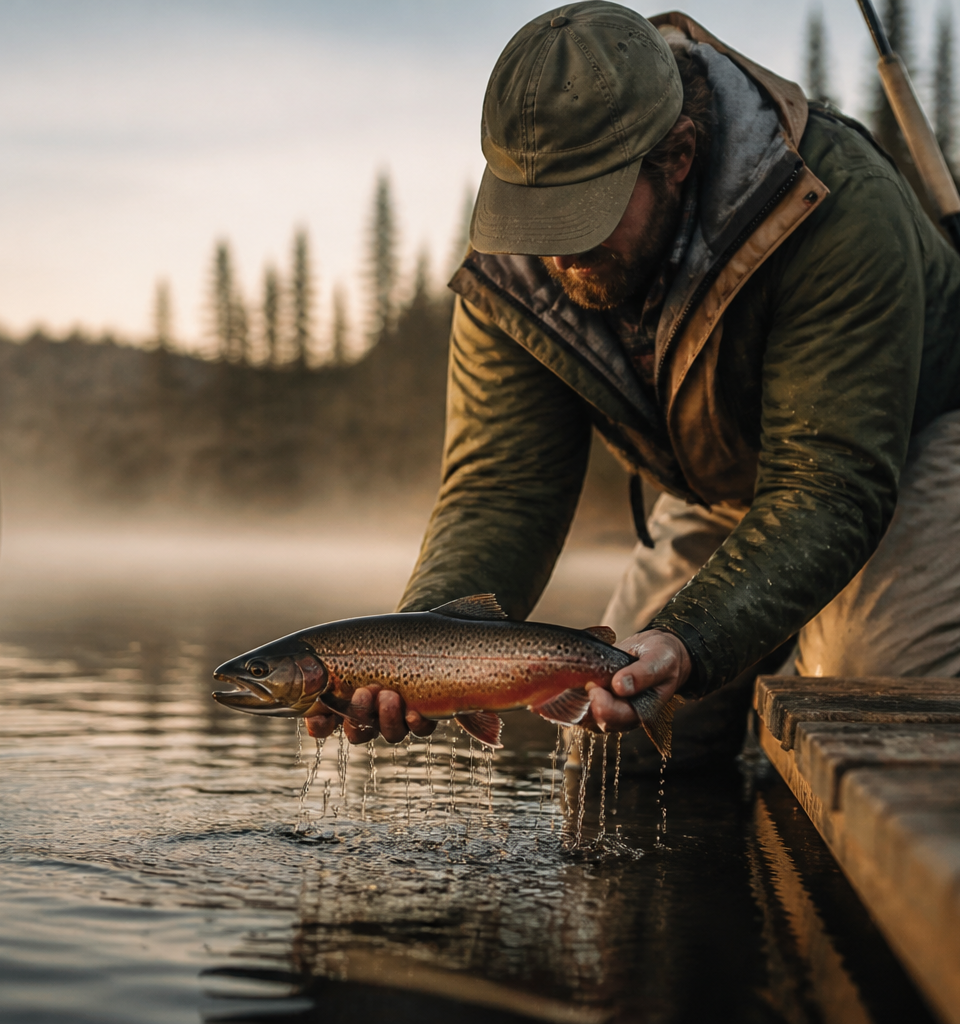
In Newfoundland and Labrador, sea-run trout primarily refers to anadromous brook trout as well as anadromous brown trout that migrate to sea to feed. These fish stand out immediately from their resident counterparts by their brilliant silvery flanks, dark backs with bluish or greenish sheens, and sides dotted with subtle pink or red spots. In river currents, their morphology is stout, powerful, and streamlined to slice through heavy flows and navigate the open Atlantic.
Unlike specimens that spend their entire lives in lakes or streams, sea-run trout develop substantially denser muscle mass thanks to a marine diet packed with crustaceans and forage fish. Their flesh takes on a rich, vibrant orange hue comparable to wild salmon. As they hold longer in freshwater ahead of the autumn spawn, their silver sheen gradually softens, revealing the classic vermiculated markings and vivid spawning colours. To learn more about resident populations of the species, check out our guide on Brook trout fishing in Newfoundland and Labrador.
Where do Sea-run brook trout live in Newfoundland and Labrador?
Sea-run brook trout frequent coastal estuaries, sheltered bays, and interconnected river networks across the island of Newfoundland and along the rugged Labrador coast. On the Avalon Peninsula, coastal watersheds hold storied populations of trophy sea-run brown trout, while west coast rivers and Labrador systems host spectacular runs of sea-run brook trout.
These fish thrive in hybrid environments where saltwater meets incoming freshwater tributaries. They show a strong affinity for sandy flats rich in sand lance, kelp-lined tidal channels, eelgrass beds, and rocky bottlenecks. As inshore water temperatures rise or spawning instincts kick in, pods push into the lower reaches of rivers, holding behind large boulders or in deep, well-oxygenated pools.
Annual migration cycle of Sea-run brook trout
Every season, sea-run brook trout transition between their natal freshwater systems and the rich feeding grounds of the marine environment. In spring, once coastal ice clears around May or June, kelts and smolts drop downriver into estuaries to feed on the seasonal bloom of capelin, shrimp, and amphipods. This saltwater stay typically lasts anywhere from several weeks to more than two months, depending on the region.
By mid-summer, the return migration begins as mature spawners move back into river systems to escape warming coastal shallows. This migratory pattern closely mirrors behaviours documented across Eastern Canada, as highlighted in our guide to Sea-run brook trout fishing in Quebec: the ultimate guide. Spawning occurs in autumn over clean, oxygenated gravel beds, after which some fish drop back into deep holding pools or brackish estuaries to overwinter until the next spring.
When to fish for Sea-run brook trout in Newfoundland and Labrador?
The peak window for sea-run brook trout stretches from late June to mid-August, coinciding with the massive inshore capelin roll and peak river migration. During these prime weeks, fish are in peak physical condition, full of energy, and eager to strike when an imitation crosses their path.
Ideal conditions include overcast skies, a moderate breeze that breaks up the water surface, and an incoming tide that brings cool seawater and food into the system. The final two hours of the rising tide and the first hour of the ebb provide the most productive bite in tidal waters. Rainy days that bring a slight bump in river flow also trigger major pushes of fresh fish out of the estuaries.
Locating the best Sea-run brook trout holding water
Targeting sea-run brook trout requires focusing on transition zones where river currents meet the tidal surge. Rocky points that generate shoreline eddies, gravel bars at the mouths of saltwater arms, and the heads of tidal pools are prime holding lies for traveling fish.
Watching the surface closely during high tide often reveals subtle rolling fish or explosive surface blitzes on baitfish schools. In freshwater stretches, position yourself above rapids or along the shady tail-outs of pools, where migrating trout pause to rest before tackling the next section of heavy current.
Best Sea-run brook trout fishing techniques
Swinging wet flies and stripping streamers rank among the most effective and thrilling methods for these wary salmonids. Casting down-and-across with a baitfish streamer mimicking a sand lance or capelin fry, retrieved with rhythmic strips, provokes aggressive strikes. Hits often come right on the swing as the fly straightens in the main seam.
When fish turn selective in lower flows, dead-drifting large dry flies like Bombers or swinging traditional wet flies on double hooks produces steady results. On unscheduled waters where spin fishing is permitted, casting silver or gold spoons along tidal drop-offs triggers aggressive reaction strikes. This variety of presentations aligns closely with the tactical approaches featured in our Atlantic salmon fishing in Newfoundland and Labrador: A guide.
Essential gear for Sea-run brook trout fishing
A 9- to 10-foot, 6- to 8-weight fly rod is the ideal setup to handle powerful fish and constant coastal winds. A durable reel featuring a smooth, sealed drag system is essential to withstand saltwater spray and control hard runs toward the open sea.
Pair your rod with a weight-forward floating line for river pools, and pack an intermediate line or sink-tip for working deep coastal channels and tidal flats. Leaders should be built from abrasion-resistant fluorocarbon testing between 8 and 12 pounds. High-quality breathable waders, a windproof waterproof wading jacket, and copper or amber polarized sunglasses are indispensable for handling unpredictable North Atlantic weather.
Sea-run brook trout fishing regulations in Newfoundland and Labrador
Sport fishing in Newfoundland and Labrador is governed by detailed regulations that distinguish between scheduled salmon rivers and unscheduled waters. On scheduled rivers, fly fishing with single barbless or pinched-barb artificial flies is the only legal method, and specific daily retention and catch-and-release quotas apply to trout.
Non-resident anglers must purchase the required licences and, on certain scheduled waters, fish alongside a licensed guide depending on the zone. Anglers must respect seasonal closures and local spawning sanctuaries. To review the latest management measures and zone-specific dates, consult the official Government of Newfoundland and Labrador website. Regulations change annually: always verify catch limits, season dates, and guiding requirements with provincial authorities before heading out.
Ecological role and conservation of Sea-run brook trout
Sea-run brook trout serve as vital bio-indicators in the province's coastal and river ecosystems. By transporting significant marine nutrients back to headwater streams during their spawning migrations, they nourish aquatic food webs and support local wildlife, including fish-eating birds and coastal mammals.
The vulnerability of their habitat to climate shifts and coastal developments demands responsible angling ethics. Keeping handling to a minimum on released fish, using barbless hooks, and keeping fish in the water ensure high post-release survival rates. Mindful practices on the water safeguard these exceptional wild fisheries for generations to come.
Outfitters for Sea-run brook trout in Newfoundland and Labrador
Booking a trip with a professional outfitter is the most reliable way to experience safe, productive fishing in the province's most remote regions. Experienced guides know tidal timing inside and out, monitor run progressions across different river basins, and provide access to secluded pools.
Outfitter camps deliver turnkey logistics, including boat or helicopter transfers, comfortable accommodations, and meals featuring regional fare after long days on the water. Whether you are targeting trophy sea-run browns on the Avalon Peninsula or heavy sea-run brook trout in coastal Labrador, a guided package maximizes your time on the water. Explore available packages on Fishing outfitters in Newfoundland and Labrador to plan your ultimate coastal angling expedition.
Ready to test your skills against the hard-fighting salmonids of the North Atlantic? Plan your next outfitter fishing adventure with MyOutfitters and experience wild waters of unmatched beauty.
Frequently asked questions
When does the sea-run brook trout run start in Newfoundland?
The run generally kicks off in late June, peaking between mid-July and mid-August in most coastal rivers. Initial arrivals frequently coincide with the massive capelin roll onto beaches and coastal bays.
Where can you catch the biggest sea-run brown trout in the province?
The Avalon Peninsula and the estuaries around Placentia Bay produce the largest sea-run brown trout in Newfoundland. These coastal watersheds regularly yield trophy fish weighing between 5 and 10 pounds or more.
What fly rod is best for coastal sea-run brook trout?
A 9- to 10-foot 7-weight or 8-weight fly rod is ideal for turning over large streamers and punching through coastal winds. This rod class provides the backbone needed to turn strong fish in heavy currents.
Do non-residents need a guide to fish in Newfoundland?
Non-resident anglers are required by provincial law to be accompanied by a licensed guide on most scheduled salmon rivers. Even on unscheduled waters, hiring a knowledgeable outfitter guide significantly improves your odds of success.
Which fly patterns work best for sea-run trout in estuaries?
Streamers that imitate capelin and sand lance—such as Clouser Minnows, Muddler Minnows, and white or olive Woolly Buggers—are top producers. Traditional wet flies and surface Bombers also deliver great action in river stretches.
What tide phase is best for estuary sea-run trout fishing?
The rising tide is by far the most productive period, particularly the final two hours before high water. Sea-run trout use the incoming surge of cold ocean water to enter lagoons and push into lower river pools.
What is the daily bag limit for sea-run trout?
Daily retention and possession limits depend on the specific management zone and whether you are fishing scheduled or unscheduled waters. Always check the current provincial angling guide before retaining any fish.
Can you use spinning gear for sea-run brook trout in Newfoundland?
Spinning gear with spoons or soft plastics is permitted exclusively in unscheduled freshwaters and coastal tidal zones. On all scheduled salmon rivers, fly fishing with unweighted artificial flies is the only legal method.
What licence do non-residents need for sea-run trout?
Non-residents must purchase a valid provincial freshwater fishing licence. If you plan to fish on scheduled salmon waters, you must hold a salmon licence, even when strictly targeting sea-run trout.
How do you distinguish a fresh sea-run trout from an Atlantic salmon?
A sea-run trout features a square or only slightly indented tail with a thicker caudal peduncle (tail wrist) than an Atlantic salmon. Additionally, a trout's mouth is larger, with the maxillary extending well past the rear edge of the eye.