Fishing
Sea-Run Brook Trout Fishing in Nova Scotia: Complete Guide
Discover the secrets of sea-run brook trout fishing in Nova Scotia: coastal estuaries, tidal patterns, fly fishing techniques, and peak run timings.
Key takeaways
- The prime season runs from mid-May to late June, when trout return to estuarine rivers after feeding heavily in saltwater.
- Schools primarily hold in brackish estuaries, tidal rips, and deep holding pools across Nova Scotia's coastal river systems.
- Fly fishing with streamers imitating sand lances, silversides, and shrimp remains the most productive technique in coastal waters.
- A Nova Scotia provincial freshwater sportfishing licence is required as soon as you fish upstream of designated tidal boundaries.
- Time your outings around incoming tides and maintain a stealthy approach to avoid spooking wary sea trout.
How to identify sea-run brook trout in Nova Scotia
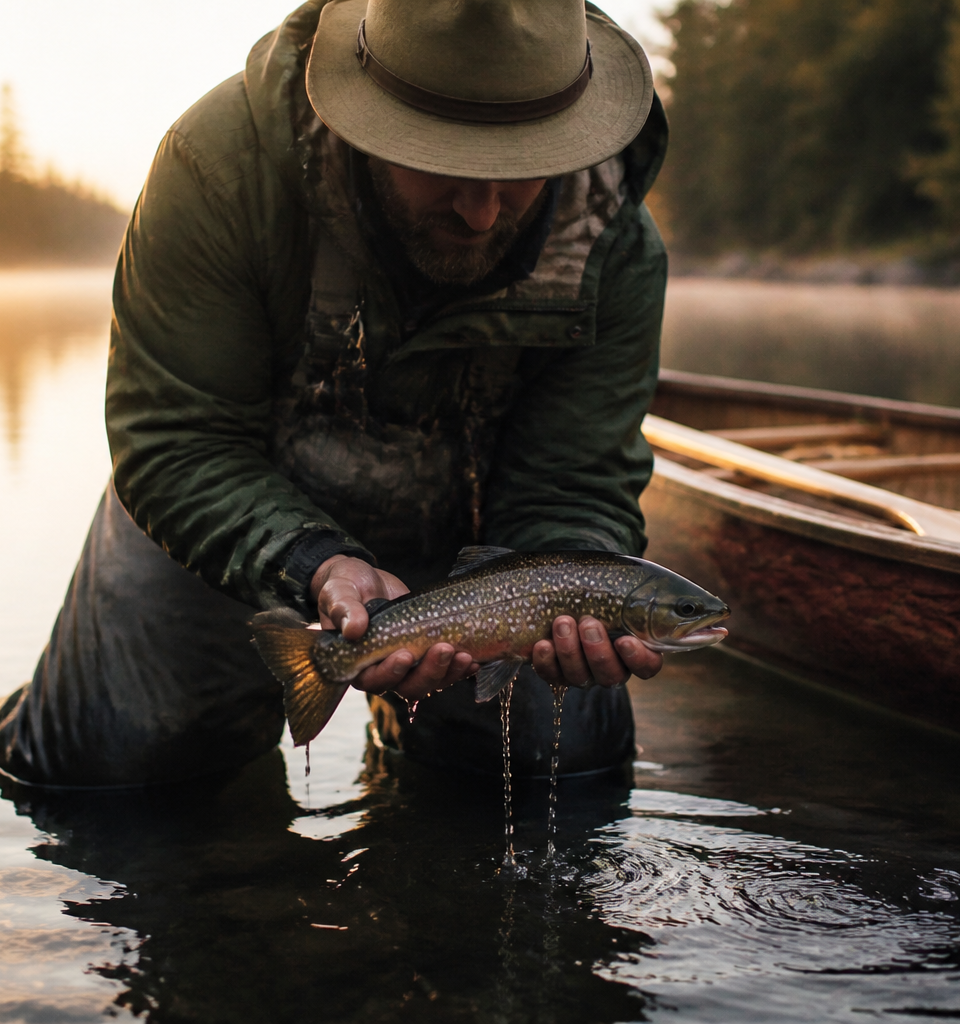
Nova Scotia's sea-run brook trout is an anadromous form of native brook trout (or occasionally sea-run brown trout) that migrates into the Atlantic Ocean to feed aggressively. This marine phase dramatically alters its physical appearance: its flanks turn brilliant silver, often masking its original freshwater vermiculations and halos, while its back takes on deep steel-blue or olive-green tones.
Fresh from the salt, its flesh is firm and deep orange from a rich diet of marine crustaceans and sand lances. As the fish spends time in freshwater, its spawning colours gradually return, revealing the distinctive red dots with blue halos typical of native brook trout, or the dark spots characteristic of sea-run browns. Its body profile is noticeably thicker and more muscular than that of resident stream trout.
Biologically, this marine feeding adaptation fuels rapid growth. Anadromous specimens regularly reach sizes and weights far exceeding those of resident forest stream populations, making them prized trophy game fish for Maritime anglers.
Where to find sea-run brook trout in Nova Scotia?
Sea-run brook trout inhabit most coastal river systems opening into the Atlantic Ocean, the Gulf of St. Lawrence, and the Bay of Fundy. Rivers across Cape Breton Island, the Eastern Shore, and the Northumberland Strait provide exceptional migratory corridors where fish travel between freshwater headwaters and sheltered saltwater bays.
Prime holding lies vary with tide stages and water salinity. In estuaries, trout gather along sand drop-offs, eelgrass beds, wharf structures, and near coldwater tributary confluences. As summer water temperatures rise, they push upstream into deep, well-oxygenated pools above tidal limits. To explore other regional freshwater tactics, check out our guide on Brook trout fishing in Nova Scotia: Complete guide.
The province's maritime geography creates a dynamic mosaic of environments where large tidal swings constantly circulate nutrients. This tidal exchange supports a rich food web of smelts, capelin, and mysid shrimp, creating ideal coastal feeding grounds just yards from shore.
Understanding sea-run brook trout migration runs
Sea-run brook trout follow a cyclical life pattern between freshwater for spawning and marine waters for feeding. After overwintering under lake ice or in deep river pools, trout drop down to the sea in spring to capitalize on coastal biological blooms. This saltwater feeding phase typically lasts from several weeks to a few months.
Beginning in late spring and continuing through summer, fish initiate their upstream migration in tight schools, driven by the spawning instinct. These migratory pulses often coincide with spring tides and river rises following coastal rain events. Unlike Atlantic salmon, anadromous trout frequently continue feeding voraciously during their first days in brackish estuaries. These complex migrations mirror patterns detailed in our guide to Atlantic salmon fishing in Nova Scotia: Guide.
In autumn, mature adults reach gravel spawning beds in headwater streams to spawn. Once spawning is complete, many kelt survive and spend the winter resting in deep river pools before repeating their ocean migration the following spring.
When to fish for sea-run brook trout in Nova Scotia?
The most productive window for sea-run brook trout spans from mid-May through early July, coinciding with the peak of the primary estuarine runs. During this period, fish are in peak physical condition and actively cruise brackish water chasing schools of baitfish.
Tides and weather conditions dictate success on the water. The incoming tide, particularly the last two hours before high water, pushes fresh sea trout directly onto coastal flats and sandbars. Overcast skies paired with a light surface chop reduce fish wariness and trigger aggressive strikes near the shoreline. Anglers familiar with Sea-run brook trout fishing in New Brunswick: Complete guide will recognize similar estuarine dynamics along Nova Scotia's coast.
A secondary activity peak often occurs in late summer and early autumn when seasonal rains swell coastal rivers. Trout use these higher flows to push upstream past shallow riffles into wooded river stretches, offering exciting sight-fishing opportunities.
Locating sea-run brook trout in coastal estuaries
Finding sea-run brook trout requires reading tidal currents and underwater structure in estuarine environments. Fish follow distinct travel lanes, holding in submerged channel beds at low tide and pushing onto shallow tidal flats as the water rises to hunt shrimp and baitfish.
Scan the water's surface for subtle boils, nervous baitfish scattering, or flashing silver flanks. Rocky points creating current seams, freshwater stream mouths, and drop-offs along eelgrass beds serve as primary ambush points where predators hold.
Wading stealth is essential on tidal flats. Move slowly through shallow water to avoid sending shockwaves across the flat, as a spooked sea trout will immediately bolt back to the main channel.
Best techniques for catching sea-run brook trout
Fly fishing is the premier method for targeting sea-run brook trout in Nova Scotia's estuaries and coastal rivers. Baitfish streamers such as Clouser Minnows, Deceivers, Mickey Finns, and grey shrimp patterns are deadly when stripped with erratic twitches followed by distinct pauses.
In brackish water, cast across tidal currents and retrieve your fly through varying depths depending on water clarity. In freshwater holding pools upstream, traditional wet flies, large nymphs, and waking dry flies like Muddler Minnows skated across the surface trigger explosive evening strikes.
For spin anglers where regulations permit, small silver or gold spoons and compact inline spinners effectively imitate fleeing baitfish. Vary your retrieve speed steadily until you dial in the cadence that triggers aggressive strikes from cruising schools.
Choosing the right gear for sea-run brook trout
To handle stiff coastal winds and hard-fighting estuarine fish, a 9- to 10-foot 6- to 8-weight fly rod is the ideal setup. This configuration provides the backbone needed to punch bulky streamers into coastal breezes while maintaining the sensitivity required for subtle takes.
Pair your rod with a reel featuring a smooth, sealed drag system built to resist saltwater corrosion and absorb the blistering runs of sea-bright fish. A weight-forward floating line covers shallow flats, while a sink-tip or intermediate line is invaluable for dredging deeper tidal channels and fast currents.
Leaders should measure 9 to 12 feet, tapered down to an abrasion-resistant fluorocarbon tippet testing 8 to 12 pounds. Breathable waders, a windproof waterproof wading jacket, and polarized sunglasses with amber or copper lenses are essential for spotting cruising fish over sandy flats.
Sea-run brook trout fishing regulations in Nova Scotia
Sea-run brook trout fishing in Nova Scotia is governed by strict provincial and federal regulations designed to safeguard anadromous stocks. Recreational anglers must hold a valid Nova Scotia provincial freshwater sportfishing licence when fishing inland waters and designated coastal river sections.
Daily bag limits, possession limits, seasonal closures, and barbless hook requirements vary across recreational fishing areas (RFAs) and individual river watersheds. Several premier rivers mandate catch-and-release for all trout or restrict angling exclusively to artificial flies. Consult the official regulations published by the Government of Nova Scotia to confirm specific rules for your intended waters.
Practice ethical catch-and-release by keeping fights short, handling fish only with wet hands, and unhooking them in the water. Fishing regulations are updated annually; always verify current official orders with local authorities before heading out.
Conservation challenges for anadromous sea-run brook trout
Nova Scotia's sea-run brook trout populations face notable environmental pressures, including aquatic habitat degradation and warming water temperatures. Siltation of gravel beds, summer thermal stress in river headwaters, and fish passage barriers impact historical spawning success.
Local conservation groups and watershed biologists actively work on riparian restoration, bank stabilization, and acoustic tracking studies of migratory runs. Maintaining intact forest canopy along nursery streams is critical for preserving coldwater thermal refuges that juvenile trout require during peak summer heat.
As key apex predators in estuarine food webs, sea-run trout are vital indicators of coastal ecosystem health. By supporting watershed protection initiatives and practicing responsible catch-and-release angling, sport anglers play an active role in conserving this Maritime wild resource.
Planning a successful guided trip for sea-run brook trout
Booking a professional guide or staying with a specialized outfitter is the most efficient way to experience Nova Scotia's coastal trout fishery. Local guides possess intimate knowledge of tide timing for specific river mouths, secret holding pools, and fly patterns tailored to local water conditions.
A guided outing saves valuable time navigating a complex, tide-dependent coastline. Your guide will tailor daily itineraries to prevailing marine weather, ensure safe wading along shifting tidal bars, and share rich local insights into the province's coastal heritage.
To plan an unforgettable angling adventure along the Maritimes' finest coastal runs, explore vetted packages on Fishing outfitters in Nova Scotia and start preparing your next outing with the experts at MyOutfitters.
Frequently asked questions
When does the sea-run brook trout run start in Nova Scotia?
The main sea-run brook trout migration typically begins in mid-May in southern estuaries and extends into July in northern rivers and Cape Breton. Peak arrivals of fresh fish coincide with spring tides and rising river levels following coastal rains.
Where can you fish for sea-run brook trout on Cape Breton Island?
Cape Breton Island's coastal rivers and estuaries offer prime sea-run brook trout waters, particularly systems draining into the Gulf of St. Lawrence and the open Atlantic. Estuarine pools, tidal rips, and coldwater tributary confluences provide the best fishing.
What fly fishing gear is best for sea-run brook trout?
A 9-foot 7- or 8-weight fly rod is ideal for casting into coastal winds. Pair it with a corrosion-resistant reel featuring a sealed drag, a weight-forward floating line, an intermediate sink-tip line, and abrasion-resistant fluorocarbon leaders.
What are the most effective fly patterns for sea-run brook trout in estuaries?
Baitfish streamers such as Clouser Minnows, Deceivers, and Mickey Finns are top producers. Patterns imitating grey marine shrimp and scuds are also highly effective when trout cruise over eelgrass flats on incoming tides.
Do you need a provincial fishing licence to fish for sea-run brook trout in tidal waters?
A Nova Scotia provincial freshwater sportfishing licence is required when angling upstream of designated tidal boundary markers. In open coastal saltwater zones, specific federal regulations apply depending on the target species.
How do tides affect sea-run brook trout fishing?
The incoming tide is the most productive period, pushing fresh schools of trout onto shallow flats and estuarine drop-offs to feed. The two hours leading up to high tide and the first hour of the falling tide offer peak feeding activity.
How do you distinguish a sea-run brook trout from a juvenile Atlantic salmon?
A sea-run brook trout features a nearly square tail with little to no fork, a thicker caudal peduncle, and leading white edges on its lower fins. Its upper jaw extends past the rear edge of the eye, whereas an Atlantic salmon has a more deeply forked tail and a smaller mouth.
Can you fish for sea-run brook trout with spin gear in Nova Scotia?
Spin fishing is permitted on select coastal bays and non-restricted river sections, though many renowned trout rivers are strictly fly-fishing-only. Where legal, small silver casting spoons and compact spinners work exceptionally well.
What is the average size of a sea-run brook trout in Nova Scotia?
An adult sea-run brook trout typically measures between 14 and 20 inches (35 to 50 cm) and weighs between 1.5 and 4 pounds. Trophy specimens exceeding 5 pounds are landed each season in nutrient-rich estuaries.
Why hire a local fishing guide for sea-run brook trout?
A local guide understands tide tables, safe wading routes across shifting coastal sandbars, and the exact holding lies of migrating schools. Their local knowledge ensures you fish the right water at the right stage of the tide with the right patterns.